
About Ali Yusif
Lived 1900 – 1937. Ali Yusif was a Russian and Azerbaijani scientist, poet and politician.
Ali Yusif, Ali Yusif Rai, Ali Yusifzade, or Aghaali Yusifzade — Azerbaijani poet, politician, student of the ADR, member of the Central Committee of the Secret Musavat, victim of repression.
From the age of 11, he appeared in the press with his translations and poems. After the establishment of the Azerbaijan Democratic Republic, he began working as a dragoman in the Government Chancellery. He was a member of the board of the “Green Pen” society and of the editorial board of "Azerbaijan", the official state newspaper of the Azerbaijan Democratic Republic. By a special decision of the Parliament of the Azerbaijan Democratic Republic, he was sent abroad at state expense to pursue higher education. He received his higher education at the School of Political Sciences in Paris.
After completing his studies, he returned to Baku. He was appointed executive secretary of "Maarif va Medeniyyet", a journal of the Ministry of Education of the Azerbaijan SSR, and was active in the Azerbaijan Society for Research and Study and the Azerbaijan Terminology Committee. He was one of the 21 founding members of the Azerbaijan Literature Society. In addition, he joined the secretly operating Musavat Part y in Baku and, in 1923, was elected a member of the Central Committee of the Secret Musavat.
Although he was first arrested in 1924, he was released after a few months. In 1926, he was arrested for the second time and sentenced to 10 years of imprisonment, being exiled to the Solovetsky Islands. During his exile, he carried out propaganda among Musavatist prisoners and took part in organizing them. Although he was released in 1935, he was not allowed to return to Baku and was instead exiled to Tashkent, where he worked for some time as an accountant in the Food Trade Department. In 1937, he was arrested again by the NKVD and, by decision of the NKVD troika, was executed together with his associates.
He was the son of Mirza Jalal Yusifzade a poet, writer, member of the National Council of the Azerbaijan Democratic Republic, and one of the founders of the secret anti-Soviet organization “Independent Azerbaijan,” established in 1928.
Life
Early years Aghaali Jalal oghlu Yusifzade was born on 1 January 1900 in the city of Shusha. From 1911 he was engaged in creative activity. He first translated Ivan Krylov’s poem “Two Ploughs” into Azerbaijani, and this translation was published in 1911 in the 3rd issue of the newspaper "Ishig". In the following issues of the newspaper, works written by Ali Yusifzade himself such as “The Fish and the Cat” and “The Difference of Mothers” were also published. In addition to publishing his writings in newspapers and journals, he also participated in a number of literary competitions. In 1915 the journal Gurtulush in Baku announced a competition on the topic “The Condemnation of an Orphan at Sunset”. Ali Yusifzade also took part in the competition. For the first time he appeared there with the signature “Ali Yusif Rai”. Among the winners were Jafar Jabbarly, Ummugulsum and Ali Yusifzade. In 1917 he completed his secondary education at the Shusha Real School. In 1917 he became a member of the Musavat party. After the October Revolution he became a member of the Shusha National Committee established in Shusha. At the beginning of 1918, by the assignment of the National Committee, he went to Batum and met with Enver Pasha.
In the Azerbaijan Republic
On 28 May 1918 the Azerbaijan Republic was established. Ali Yusif bey, who came to Baku, began to work as a dragoman in the Chancellery of the Government of the Azerbaijan Republic because he knew English, French, and Russian. In addition, he was a member of the board of the “Green Pen” society.
On 1 September 1919, the Parliament of the Azerbaijan Republic adopted a decision to send 100 Azerbaijani young people to foreign higher educational institutions at the state’s expense in the 1919–1920 academic year in order to train highly educated specialist personnel. Seven million manats were allocated for the implementation of this decision. For each student sent to European higher educational institutions, a monthly scholarship of 400 francs and travel expenses amounting to 1000 francs were determined. Ali Yusif was also one of the students sent abroad to receive higher education.
On 14 January 1920, the first group of 24 students sent abroad was seen off at the Baku Railway Station with the participation of members of Parliament and the Government, well-known philanthropists, religious figures, representatives of the public, and parents. Ali Yusif was one of these 24 students. At the end of the ceremony, Ali Yusif spoke on behalf of the students, In 1923 he completed his education and returned from Paris to Baku.
In the USSR After returning to Baku, Ali Yusif was appointed responsible secretary of the journal "Maarif va madaniyyat", the press organ of the Ministry of Education of the Azerbaijan SSR. He began to take part in the activities of the Musavat party, which was operating secretly in Baku. After being held for several months in the prison of the Azerbaijan Extraordinary Commission, he was released from arrest in May 1924. Three days after the congress concluded, on March 11, by order of an employee of the Azerbaijan Extraordinary Commission, Vasin, searches were conducted in the homes of Ahmad Hajinski, Dadash Hasanzadeh, and Ali Yusif, after which they were arrested. He was accused of engaging in counter-revolutionary activities since 1917, of continuing this struggle during his exile, of being a member of the Musavat Central Committee established in prison camps, and of being one of the organizers of hunger strikes and protest actions in the camps. Additionally, he was accused of maintaining contact, after his release, with Musavatists remaining in the camps as well as those living in Tashkent, and of intending to establish a nationalist organization composed of Azerbaijanis in Tashkent.
Haji Mirza Alakbar’s son, and also the father of Ali Yusif, Mirza Jalal Yusifzade, was a poet and writer. He was the publisher of the first newspaper published in the Tajik language, and one of the 44 members of the National Council of the Azerbaijan Democratic Republic. He participated as a translator in the First Turkological Congress held in Baku in 1926. He served in the military in 1938, completed officer school, and was discharged in 1940. During World War II, he was called back to the army in 1941 and sent to the Counterintelligence School for training. After completing his studies, he participated in combat as part of the 219th Rifle Division. He took part in the battles of Stalingrad, Orel-Kursk, and in the liberation of Kharkiv, Kyiv, and Prague. "Order of the Red Star", and the “Medal for Victory over Japan", along with 14 other medals. From the 1950s onwards, he worked at the Institute of Foreign Languages as head of department, dean, and vice-rector at different times. He passed away in Baku on March 23, 2001.
Don’t just read it —
keep it.
Full-length biographies made to live with: read them, listen on the way to work, watch them tonight.
- E-book
- Audio
- Video
Instant download · yours to keep · every purchase keeps this site free
Important facts
People in Ali Yusif's life
Named in this biography and alive at the same time
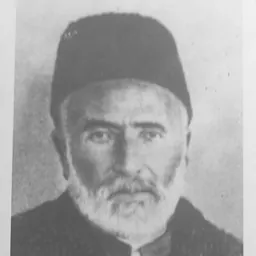

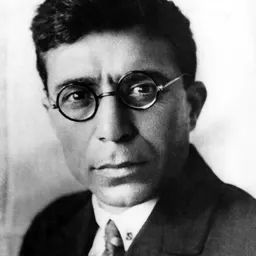
Related people
Same field, nearest in time

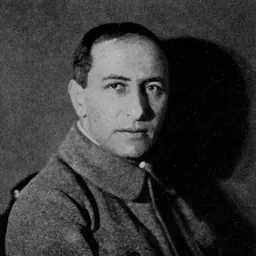
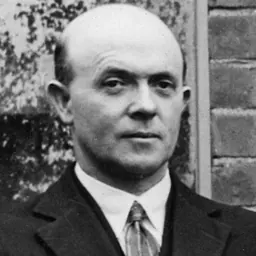

Contemporaries
People whose lives overlapped Ali Yusif's



Frequently asked questions
Who was Ali Yusif?
Azerbaijani poet, victim of repression
When was Ali Yusif born?
Ali Yusif was born in 1900 in Shusha.
When did Ali Yusif die?
Ali Yusif died on 18 August 1937 in Tashkent.
What was Ali Yusif's occupation?
Ali Yusif was a scientist, poet and politician.
What nationality was Ali Yusif?
Ali Yusif was Russian and Azerbaijani.
Sources & further reading
Cite this page
APA: Biography.guide. (2026). Ali Yusif. https://biography.guide/ali-yusif/
MLA: "Ali Yusif." Biography.guide, https://biography.guide/ali-yusif/.
Chicago: "Ali Yusif." Biography.guide. https://biography.guide/ali-yusif/.
Data last updated: 2026-09-20 · Spot an error? Report a correction.
Page generated 2026-09-27 05:28 UTC