
About Ali Mustafa
Lived 1984 – 2014 (aged 29). Ali Mustafa was a Canadian journalist.
Ali Mustafa (July 18, 1984 – March 9, 2014), was a Canadian freelance photographer, multi-media journalist and writer based in Toronto, Ontario, Canada. He was killed along with seven others on March 9, 2014, in Aleppo, Syria, in an aerial bombing carried out by the Assad government. Working as a freelance photojournalist, he did not have much institutional support. He was also a documentary filmmaker. Some of his documentaries are "Aftermath of the Port Said Massacre: Ultras Strike Back," "Syria's War: The View from Turkey," and "Interview with Mohammad Mahjoub." A barrel bomb was dropped by the Syrian military on the rebel-controlled Haydariah area of Aleppo. Mustafa along with seven others were killed during this bombing. During the attack that killed him, he was with a civilian rescue team.
Impact Since its civil war began, Syria has become one of the world's most dangerous places for journalists. Ali's death has been added to a long list of journalists killed in the field. In his work as a freelance photojournalist and activist, he struggled alongside the oppressed subjects of his work, regardless of the cost to himself. Journalists before Mustafa and after will continue to travel and put themselves in dangerous positions in order to "cover the gaps that are missing in mainstream media."
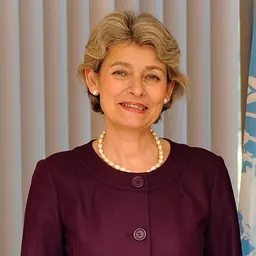
Reactions Irina Bokova, director-general of UNESCO, said, "I am deeply concerned by the death of Abdul Qader and Ali Mostafa [sic], two media professionals whose names are to be added to the all too long list of civilian victims in Syria. It is essential that journalists be able to report on difficult situations and I urge all parties to help media workers do their work as well as possible, even in the extreme conditions they face in Syria."
The Ali Mustafa Memorial Collective hosted an exhibit of Mustafa's photographic work from Syria in 2016 and said, "Mustafa’s reporting expanded far beyond stories of death, displacement and destruction. Instead, his intimate portraits of Syrians living and resisting in the face of devastation were guided by a commitment to show, above of all, people’s strength, survival and resilience against all odds. More than a mere vocation, photojournalism represented for Mustafa a tool for realizing his radical vision of social justice. Through his principled people’s journalism, he worked to sow the seeds for what he called ‘genuine people-to-people solidarity."
After his death, his friend Donya Ziaee said, "He didn’t just do journalism or photojournalism as a matter of curiosity or vocation. Every location he chose to cover was for him part of his political activism. It was a show of solidarity with the people whose struggles he was covering."
Don’t just read it —
keep it.
Full-length biographies made to live with: read them, listen on the way to work, watch them tonight.
- E-book
- Audio
- Video
Instant download · yours to keep · every purchase keeps this site free
Important facts
People in Ali Mustafa's life
Named in this biography and alive at the same time
Related people
Same field, nearest in time



Contemporaries
People whose lives overlapped Ali Mustafa's


Frequently asked questions
Who was Ali Mustafa?
Pakistani-Canadian photographer and journalist
When was Ali Mustafa born?
Ali Mustafa was born on 18 July 1984 in Toronto.
When did Ali Mustafa die?
Ali Mustafa died on 9 March 2014 in Aleppo.
What was Ali Mustafa's occupation?
Ali Mustafa was a journalist.
What nationality was Ali Mustafa?
Ali Mustafa was Canadian.
Sources & further reading
· DBpedia: Ali Mustafa (journalist)
Cite this page
APA: Biography.guide. (2026). Ali Mustafa. https://biography.guide/ali-mustafa-journalist/
MLA: "Ali Mustafa." Biography.guide, https://biography.guide/ali-mustafa-journalist/.
Chicago: "Ali Mustafa." Biography.guide. https://biography.guide/ali-mustafa-journalist/.
Data last updated: 2026-09-22 · Spot an error? Report a correction.
Page generated 2026-09-27 05:25 UTC