
About Ali Musa Daqduq
Lived 1969 – 2026 (aged 56). Ali Musa Daqduq was a Lebanese military personnel.
Ali Musa Daqduq (; 1969 – 12 June 2026) was a Lebanese militant who served as a senior Hezbollah leader and advisor to Asa'ib Ahl al-Haq leader Qais al-Khazali in Iraq.
He commanded Hezbollah's Department 2800 before playing a key role in establishing Iranian-backed Shiite militias in Iraq as part of Unit 3800 following the US invasion of Iraq. He was also responsible for planning the 2007 Karbala provincial headquarters raid, in which five American soldiers were captured and killed during the Iraq War.
Early life Daqduq was reportedly born in 1969 in Ayta ash-Shaab, a municipality and village in Lebanon's Nabatieh Governorate. Other sources place his birth between 1969 and 1974 in Beirut, Lebanon, or in Karrada, Baghdad, Iraq.
Early militant career Daqduq joined Hezbollah in 1983 and was soon appointed head of its Department 2800, the group's special operations unit. He soon advanced through the ranks, eventually taking on the role of directing activities across most of Lebanon, and then in the 1990s became responsible for managing Hezbollah leader Hassan Nasrallah's personal security.
In March 2003, following the 2003 invasion of Iraq under US President George W. Bush, Iran discovered US forces on two frontiers (Iraq and Afghanistan). Tehran feared that the Bush administration would seek regime change and that the US or Israel would attack its nuclear facilities. Iran had one tactic at its disposal: it supported a variety of Iraqi insurgents who targeted American forces. Daqduq was sent to Iraq in 2005 to help Hezbollah and the Iranian Quds Force train Iraqi fighters against Western coalition forces in the country, in a move intended to establish a "resistance axis" in Iraq similar to Hezbollah. He oversaw the establishment of several pro-Iranian Iraqi militias, which according to his designation as a Specially Designated Global Terrorist by the U.S. in 2011, were responsible for the killing of more than 600 American soldiers. This included the training of fighters in the Mahdi Army into what became Asa'ib Ahl al-Haq (AAH). According to U.S. Brig. Gen. Kevin J. Bergner, he would train groups of 20–60 Iraqis at three camps near Tehran, where they would be taught how to use explosives and snipers, as well as intelligence and kidnapping operations.
In May 2006, he traveled to Iran alongside senior Hezbollah member Yussef Hashim to organize these groups into a Hezbollah-inspired structure. During this meeting, he was in contact with Quds Force leader Qasem Soleimani and his deputy, Abdolreza Shahlaei. Daqduq went on to make four trips to Iraq that year, monitoring the training and arming of the Iraqi groups. While in Iraq, he served under Hashim, who was the commander of Unit 3800, Hezbollah's division in the country. In June, he became the chief advisor to AAH leader Qais al-Khazali and advised Laith al-Khazali, as well as other members of the organization, serving as a liaison between the Quds Force and the Iraqi militia. in Basra on 20 March 2007 along with Qais al-Khazali and his brother Laith al-Khazali. During the raid, a 22-page document was seized detailing the planning of several operations, including the 2007 Karbala provincial headquarters raid that killed five U.S. soldiers. The documents revealed that Daqduq was personally involved in military operations, including a plan to abduct a British soldier. US Intelligence has alleged that Daqduq's testimony during his internment is key evidence for collaboration between Iran and Hezbollah. He is alleged to have been a key facilitator of an IRGC-Quds Force sniper network in Iraq. They asserted he was a member of Hezbollah, and was operating with support from Iran. The 2 July press briefing published images of Daqduq's forged identity documents. Iranian officials denied that assertion on 4 July 2007. Daqduq pretended to be deaf and mute when he was captured, and refused to speak for weeks. An agreement could not be reached, and Daqduq was transferred to Iraqi custody on 18 December 2011.
Release On 7 May 2012, Iraq dismissed terrorism and false documents charges against Daqduq. The case was automatically appealed, and he remained imprisoned until the appeal was heard in the superior court. The United States opposed his release, believing that there was clear evidence against him and that he was likely to commit more acts of resistance against US forces if released. Officials in the military commissions system in the United States began procedures to charge Daqduq with war crimes (specifically, that he killed or ordered killed four US soldiers captured during a raid).
On 16 November 2012, Daqduq was released from Iraqi custody as the Iraqi government determined that it no longer had a legal basis to hold him. Following his release, the US added Daqduq to its list of Specially Designated Global Terrorists (SDGT) pursuant to Executive Order 13224.
According to Israel, he arrived in Syria in 2018 to form Hezbollah's "Golan File" unit, which would operate against Israel from southern Syria and southern Lebanon. The unit was based in the Druze village of Hader and was kept secret from the Assad regime. It was revealed on 13 March 2019 by IDF spokesperson Lt. Col. Jonathan Conricus, who accused Daqduq of having come back to Lebanon and then Syria, and founded a Hezbollah-operated network of "a few" Syrian operatives manning outposts in Hader and collecting intelligence against Israeli targets. The accusation included video footage of men walking to and from the outposts.
Personal life and death Daqduq's son, Hassan Ali Daqduq, was killed in an Israeli airstrike in Syria's Quneitra Governorate in December 2023.
On 10 November 2024, NBC News reported, citing an American defense source, that Daqduq was killed by an Israeli airstrike in Damascus, Syria. The strike killed nine people, however a Lebanese security source and the Syrian Observatory for Human Rights reported that Daqduq survived with injuries. On 14 June 2026, Israeli forces announced that they had killed Daqduq in an airstrike south of the Litani River in southern Lebanon on 12 June.
Don’t just read it —
keep it.
Full-length biographies made to live with: read them, listen on the way to work, watch them tonight.
- E-book
- Audio
- Video
Instant download · yours to keep · every purchase keeps this site free
Important facts
People in Ali Musa Daqduq's life
Named in this biography and alive at the same time

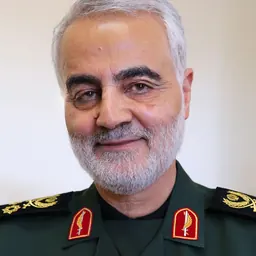



Related people
Same field, nearest in time


Contemporaries
People whose lives overlapped Ali Musa Daqduq's


Frequently asked questions
Who was Ali Musa Daqduq?
Hezbollah member captured by U.S. in Iraq (1969–2026)
When was Ali Musa Daqduq born?
Ali Musa Daqduq was born on 9 August 1969 in Ayta ash Shab.
When did Ali Musa Daqduq die?
Ali Musa Daqduq died on 12 June 2026 in Southern Lebanon.
What was Ali Musa Daqduq's occupation?
Ali Musa Daqduq was a military personnel.
What nationality was Ali Musa Daqduq?
Ali Musa Daqduq was Lebanese.
Sources & further reading
Cite this page
APA: Biography.guide. (2026). Ali Musa Daqduq. https://biography.guide/ali-musa-daqduq/
MLA: "Ali Musa Daqduq." Biography.guide, https://biography.guide/ali-musa-daqduq/.
Chicago: "Ali Musa Daqduq." Biography.guide. https://biography.guide/ali-musa-daqduq/.
Data last updated: 2026-09-20 · Spot an error? Report a correction.
Page generated 2026-09-27 05:31 UTC