
About Alhad Bikaneri
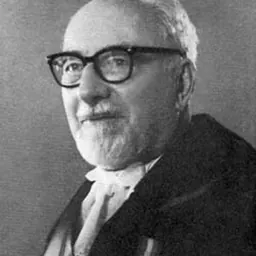
Lived 1937 – 2009 (aged 72). Alhad Bikaneri was an Indian author.
Alhar/Alhad Bikaneri (17 May 1937 – 17 June 2009) was a renowned Hindi Hasya Ras (Humor) and an Urdu poet of India. His original name was Shyamlal Sharma. He was born on 17 May 1937 in a small village named Bikaner, Rewari district, Haryana, India.
Awards and recognition
Honored with "Hasya Ratna," he is considered one of the most famous Hindi humor poets who used to recite poems by singing. He was considered an expert of Chandd Kavita (Rydhym Poems). He was awarded & honored with some of India's most prestigious awards of Hindi humor poetry, like the Theetoli Award Delhi (1981), the Kaka Hathrasi Award (1986), the Akhil Bharteeya Nagrik Parishad (1993), the Yatha-Sambhav Award Ujjain (1997), the Kavya Gaurav Award Delhi (1998), the Narendra-Mohan Award, the Maanas Award (2000), the Tepa Award Ujjain (2004), the Vyangya-Shri Award (2004), & the Athasaas-Shikar Award (2007). In 1996 his work was appreciated by Honorable President of India Dr. Shankar Dayal Sharma. In 2000 the Delhi State Government honored him with Kaka Hathrasi Sammaan, which is considered one of the most prestigious awards of Hindi humor poetry in India. In 2004, the Haryana State Govt. awarded him with the Haryana Gaurav Award. His popularity was not only limited in India but was also known outside India for his work. Haryana State Sathiya Academy had declared "Aditya-Alhar Hasya Samman" in order to honor contributions in literature. This award was declared under "Sahityakar Samman Yogna." Since 2012 this award will be given every year to motivate contributions to literature. This award carries a cash price of INR 100,000.
Life Alhar was born on 17 May 1937 in Bikaner, Haryana. He was the only son in the family. His father's name was Sh. Chuutanlal Sharma, and his mother's name was Smt. Parvati Devi. Since childhood he was fascinated by music, literature, and stage shows. But his father always wanted him to become an Eegineer. In class 10th, he was in first division & got a scholarship. He took admission in the science stream at Aheer College Rewari, Haryana. After the second year of college, he dropped studies. In Dec 1955 he started his first job at the custodian office in Gurgaon, Haryana. He worked there for three months until Mar 1956. In April 1956 he joined the Telegraph Training Center at Saharanpur. But soon he fell ill with malaria & typhoid. He was admitted to Irwin Hospital, Delhi and recovered.
Death and memory events On 17 June 2009, at age 72, Alhar died. He had been suffering from respiratory health problems. He was admitted to a hospital in Noida, Uttar Pradesh. In his memory every year on his birthday, various functions are organized by his family and friends. In 2010, Kavi sammelan was organized, which was attended by various famous poets. On the occasion, "Alhar ji" was remembered & poets expressed their feelings & respect for him by dedicating their poems to Alharji. In 2011, on his 74th birthday, Haryana Chief Minister Honorable Mr. Bhoopendra Singh Hooda had released his last book, "An Mast Hua," at Haryana Bhawan, New Delhi. In 2012, Kaka Hathrasi honored Alhar Bikaneri with the Kaka Hathrasi award (1986). On his 75th birthday, a large gathering was organized at the Akhil Bharatiya Kavi Sammelan, organized at the LTG Auditorium by Haryana Sahitya Academy and Chetna India of Delhi. This program was attended by the Delhi Assembly Speaker, and many ministers & poets were also available on the occasion.
Poems About his writing skills Dr. Devendra Arya said "Alhar ji humor is like a ray of glowing light in darkness. He is ean xpert in expressing the pain, andtears using his humor skills tso hat the message goes to the heart of pthe erson directly with a great impact without causing any hurting"
23 Jan 1971, he participated for the first time in Lal Qila Kavi sammelan and recited his poem.
Influences In 1962 he started his writing career as a Ghazal writer with the pen name of "Mahir Bikaneri". During that time he was working as a clerk in the main post office, Kashmiri Gate, Delhi. One day while working, one thought clicked in his mind. He looked around in the office & wrote his first humorous poem, "Afsar Ji ki Amar Kahani." When he narrated that poem in the office, it had created a magic. Everyone liked & appreciated it very much. In 1967. Those days he was very much impressed & motivated with writing the work of "Shri Kaka Hathrasi." In that motivation he also wrote a few humorous poems. One day he was sharing his poems with one of his friends, "Shayar Razaa Amrohi." After listening to those poems, Amrohiji suggested he write for Hindi humor poetry. This appreciation was the beginning. But the final turning point in his poetic career was the book Kaka Ki Phuljhariya. After reading this book, he decided to stop writing serious songs & ghazals & entered the world of humorous poems. He changed his pen name to "Alhar/Alhad Bikaneri" & started writing Hindi humor poetry.↵ After this, his long journey of humorous poetry was started. He touched heights of successes & glory and gave a special contribution to Hindi poetry & literature. He did his first Kavi sammelan in 1967 at North Block, Delhi, in front of Dada Bhawani Prasad Mishr. There he narrated his poem titled Kamaal Dekte Hain. After listening to the poem, Dada was very much impressed with Alharji. He gave his blessing to him & motivated him to keep going on this journey of humor poems. In 1968 one evening, his friend Krish Swarup took him to the house of Shri. Gopal Prasad Vyas. Those days Vyasji was residing at Bhagirath Palace, Delhi. Alhar was excited to present his poems in front of Vyas ji. When he finished his poem, Vyas ji told him to first study & get in-depth knowledge of literature. He asked him to study the complete literature, which was written by him, & thoroughly analyze it. After complete learning, then start & create something new of his own. If able to do that, then only come back to him again. This conversation had a strong impact on Alhar. Again, life was giving him a challenge. Either take the challenge or stop writing. He accepted this challenge. For the next two complete years, he studied literature & improved his skills. After 2 years of strong hard work, finally in 1970 Vyasji had accepted Alhar as his student. In Nov 1970, Vyasji asked Alhar to travel with him to Kolkata. There, in the traditional & ceremonial way he accepted him as his student. 2On 3 Jan 1971, for the first time ,he participated in Lthe al Qila Kavi sammelan & recite dhis poem. In the background of his most poems we can see a devotional background. The reason for this is linked with his personal life. When he was only 22 years old ,his father died. As an asset to his son, he left one Mmusical istrument, Ssme Hindu Rreligious books (amayana, Gita-Manthan, Ghandhi-Manthan, Ghandhi Vani, Bhuddha Vani, Tand amil Ved.) In Feb 1970, Alhar was reading one of the religious books and found a Llne written by the famous Urdu Ppet, Nazeer Akbarbaadi,: "oore hain Wahi Mard, Jo Har Haal Mai Khush Hain"."After reading these line s,he felt as if some magic had happened and a chain of new thoughts originated in his mind. He felt he found a treasure wthathe whad beensearching fror fom years. Using these lines ,he wrote his own poem named “"ar Haal Mei Khush Hain", and later this poem was incorporated in his book Mun Mast Hua. All over India his popularity was at titspeak. The poem " ar Haal Mei Khush Hain "gives a lesson to keep patience ainany situation in life. Accept the challenges of life and face them boldly. A Pprson should be able to keep himself happy in all situations. Life is never the same, sometimes tough and other times tougher, but instead of crying about the situation ,the person who boldly face sthem, accept sthe things ,and remain shappy is the man in rthe eal way. Value the things wthathave been offered to you and accept it as athebest gift from gGd.
Published His work & poems was published by many magazines. In mthe ost popular weekly magazine ,"Saptahik Hindustan", the first poem ,which was published in this magazine ,was Har haal mei khush hain. Later many more poems were published by this magazine. It was in fact accepted by Alharji ;the reason for his & his poems 'popularity gis that it was atthat time pthe ublisher of "Saptahik Hindustan", Mr. Manohar Shyam Joshi, who had given a platform through his magazine to make it possible to convey poems to a general man at Nthe ntional level. In just two years time, Alhar became a Nnational pet.
Some of the most famous poems are Hasya Kawaali-Moongphali, Vote Mangan Nikle Neta ji, Market Value, Har Haal Mai Khush Hai, Anphad Dhanno, Ghaat-Ghaat Ghoomei, Chunaav Ghosna-Patra.
Other work Apart from writing ghazals and poems, he also worked for cinema. In 1986 he had written the story, script, and songs for a regional Haryana Language movie named Choti Saali. He regularly used to recite poems from Akashvaani (India Radio Service) & Doordarshan (India TV Service). His poems were regularly printed in newspapers & Hindi magazines. He wrote many books. The most popular of them were Bhaj Pyare Tu Sita Raam, Ghaat-Ghaat Ghoome, Abhi Hasta Hun, Ab Toh Aansso Paunch, Bhaisa Peewae Somras, Thaath Ghazal ke, Unchuae Haath, Jai Madam Ki Bol Re, Har Haal Mai Khush Hai, Khol Na Dena Dwar, and Mun Mast Hua.
Don’t just read it —
keep it.
Full-length biographies made to live with: read them, listen on the way to work, watch them tonight.
- E-book
- Audio
- Video
Instant download · yours to keep · every purchase keeps this site free
Important facts
People in Alhad Bikaneri's life
Named in this biography and alive at the same time






Related people
Same field, nearest in time



Contemporaries
People whose lives overlapped Alhad Bikaneri's



Frequently asked questions
Who was Alhad Bikaneri?
Indian author
When was Alhad Bikaneri born?
Alhad Bikaneri was born on 17 May 1937.
When did Alhad Bikaneri die?
Alhad Bikaneri died on 17 June 2009.
What was Alhad Bikaneri's occupation?
Alhad Bikaneri was an author.
What nationality was Alhad Bikaneri?
Alhad Bikaneri was Indian.
Sources & further reading
Cite this page
APA: Biography.guide. (2026). Alhad Bikaneri. https://biography.guide/alhad-bikaneri/
MLA: "Alhad Bikaneri." Biography.guide, https://biography.guide/alhad-bikaneri/.
Chicago: "Alhad Bikaneri." Biography.guide. https://biography.guide/alhad-bikaneri/.
Data last updated: 2026-09-20 · Spot an error? Report a correction.
Page generated 2026-09-27 05:14 UTC