
About Alfred W. McCune
Lived 1849 – 1927 (aged 77). Alfred W. McCune was an American businessperson.
Alfred William McCune Owner of several retail and construction businesses, he helped build the Montana Central Railway and a portion of the Utah Southern Railroad, founded the Utah and Pacific Railroad, and built railways in Peru, among other projects. He also owned many profitable mines in Canada, Montana, Peru, and Utah, including the Payne Mine—which paid the most dividends in the history of British Columbia. He was one of Utah's first millionaires.
He nearly became a U.S. Senator in 1899, but after being unable to receive a majority after numerous ballots and accusations of bribery, the state legislature adjourned without electing anyone to the seat. The Senate seat remained vacant for two years, and in 1901 another man was elected to the position. It was listed on the National Register of Historic Places in 1974.
Early life McCune was born at Fort William in Calcutta, India, on June 11, 1849, to Matthew and Sarah (Scott) McCune. Raised from infancy in Scotland, Matthew McCune traveled to London in 1835, joined the British Army, and married Sarah Elizabeth Caroline Scott. After three months in New York City, the family traveled by rail to Chicago, where they proceeded by wagon to Salt Lake City, arriving on September 21, 1857. In 1878, McCune added a third business partner, Walter P. Read, and they built the Utah Southern Railroad Extension from Milford to Frisco in 1880–1881. The three opened a general store in Milford, which proved highly profitable. Elizabeth, born February 19, 1852, in Hemel Hempstead, England, was the daughter of Samuel Claridge, a convert to the Latter-day Saints movement who had emigrated to the United States in 1853 and became prominent local leader in the church. The couple made their home in Nephi,
McCune participated in a number of railroad, mining, and other business ventures in the late 19th century. Beginning in 1879, McCune's joint business venture—Grover, McCune & Read—helped grade portions of the Rio Grande Railroad, Denver and South Park Railroad, Denver and New Orleans Railroad, and Oregon Short Line Railroad. It also supplied wood fuel to Lexington Mines in the state of Montana. The new firm also extended the Union Pacific Railroad's Oregon Short Line to Anaconda, Montana and Butte. McCune formed a new company with Caplis and another man (John Branagan) to supply the wood. Three years later, with McCune having fulfilled most of his wood supply contracts, the couple moved to Salt Lake City.
McCune's interest in railroads and other businesses had not abated, however. In April 1889, and converted it from mule-drawn wagons to electric. He also formed a company which in May 1891 took over the Salt Lake Herald (at the time, the Salt Lake Tribune's biggest competitor). In 1895, he co-founded and became part-owner of the Utah Power Company. In February 1897, the McCunes undertook a lengthy tour of the United Kingdom, France, Italy, and the Far East. They rented a large home in the English seaside town of Eastbourne. In August 1898, McCune and other investors formed the Utah and Pacific Railroad (U&P), with the purpose of building of track from Milford to Uvada, Utah.
McCune's business interests in the last three decades of his life focused on Peru. In 1887, he formed a mining syndicate with mine investor James Ben Ali Haggin to investigate mine properties in the Pasco Region of Peru. McCune visited Peru for several months in the spring of 1901 to assess these properties. McCune and his family traveled in Peru in 1902 to visit his various business ventures there. Six years later, the government gave him a contract to build both the Cerro de Pasco Railroad which he had previously survey as well as the Ucayali Railroad along the Ucayali River in the Ancón District. In 1912, McCune incorporated the Amazon and Pacific Railway Company, with the intent of building of railroad from Cerro de Pasco to the Pacific Ocean. The Peruvian government gave McCune of land if he completed the route, and operated it for 25 years. It soon owned the Oroya Railroad, a very large copper mine in the Morococha District, and the giant productive Casapalca mine. By 1916, the company had more than $30 million invested in copper mining in Peru. (In 1957, the "McCune Pit"—named for Alfred W. McCune—opened in Cerro de Pasco. Roughly 80 percent of all copper mined in the Pasco Region came from the McCune Pit in 1960.)
Political career McCune was actively involved in politics in Utah in the late 19th and early 20th centuries. State legislators had already indicated they would not support the incumbent, Frank J. Cannon for reelection. Cannon, a Republican, had voted against the Dingley Act, which would have raised tariffs on sugar and helped the Utah sugar industry. The Dingley bill was strongly supported by the LDS Church hierarchy, who now opposed his reelection. From the beginning, McCune was considered the leading candidate. McCune strenuously denied the charge, and a seven-member legislative committee was established to investigate the allegation. and McCune traveled in Europe for several weeks to regain his health (returning in June 1899). On January 22, Kearns won the election by a vote of 37-to-25 (with a unanimous block of Democrats voting for McCune).
McCune ran for governor of Utah in 1916. His Democratic primary opponent was 70-year-old millionaire Simon Bamberger, state senator, and a Jew. Neither man won a majority of the vote on the first ballot at the Democratic State Convention. B. H. Roberts, then LDS Church historian and member of the First Council of the Seventy, delivered what historians have characterized as a "brilliant" speech declaring that voters should not select candidates on the basis of their religion. Bamberger was elected on the second ballot, and went on to easily defeat his opponent in the general election. Judge Orlando Powers, Associate Justice of the Utah Supreme Court, said in 1906 that he understood that McCune was not a Mormon. and B. H. Roberts, LDS Church historian and member of the First Council of the Seventy, said in 1930 that McCune was not a church member. Historian Orvin Malmquist, however, says that church records show he was baptized into the LDS Church at the age of eight in 1857, and that his marriage to Elizabeth Claridge in a Mormon temple in 1872 could not have occurred without his being a church member. It is not in dispute that he was baptized by proxy in 1969. At this time, the couple decided to build their own home. Alfred gave his wife, Elizabeth, carte blanche in designing and furnishing the home. The home Dallas designed was built in a combination of the Shingle and the Stick architectural styles. The McCunes vacated Gardo House (probably in 1900), and moved into the home of McCune's business partner and friend, Thomas R. Ellerbeck (at 140 B Street). It was for many years considered the costliest home in Salt Lake City. The home has been described as a showpiece and one of the grandest homes in the Western United States. (It was listed on the National Register of Historic Places in 1974.) Grant believed McCune's children had lost their faith as well due to their father's avarice.
In 1920, the McCunes moved to Los Angeles, California. Alfred was 71 years old, and the move was apparently prompted by California's mild climate. In January 1921, they purchased the home of W.W. Mines at 626 South Kingsley Drive for $30,000. When the Los Angeles Stake was formed in January 1923, McCune's nephew, George W. McCune, was selected as president of the Stake.
Elizabeth McCune's health began to deteriorate over the next several years. In 1923, the couple sold their California home, returned to Salt Lake City, and began construction of a new home in the northeast part of the city. He never returned to the United States. McCune died on March 28, 1927, in Cannes, France. He was buried next to his wife in Nephi.
Don’t just read it —
keep it.
Full-length biographies made to live with: read them, listen on the way to work, watch them tonight.
- E-book
- Audio
- Video
Instant download · yours to keep · every purchase keeps this site free
Important facts
Family & relationships
People in Alfred W. McCune's life
Named in this biography and alive at the same time

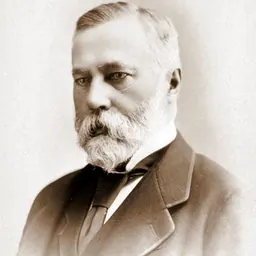

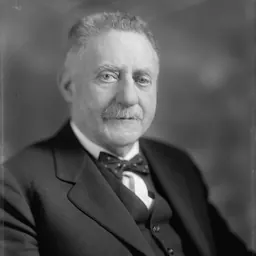
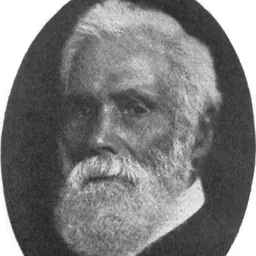
Related people
Same field, nearest in time
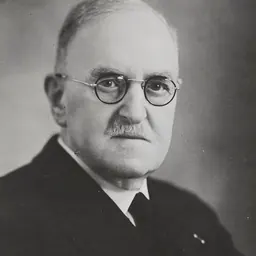


Contemporaries
People whose lives overlapped Alfred W. McCune's



Frequently asked questions
Who was Alfred W. McCune?
American politician (1849–1927)
When was Alfred W. McCune born?
Alfred W. McCune was born on 11 June 1849 in Kolkata.
When did Alfred W. McCune die?
Alfred W. McCune died on 28 March 1927 in Cannes.
What was Alfred W. McCune's occupation?
Alfred W. McCune was a businessperson.
What nationality was Alfred W. McCune?
Alfred W. McCune was American.
Sources & further reading
Cite this page
APA: Biography.guide. (2026). Alfred W. McCune. https://biography.guide/alfred-w-mccune/
MLA: "Alfred W. McCune." Biography.guide, https://biography.guide/alfred-w-mccune/.
Chicago: "Alfred W. McCune." Biography.guide. https://biography.guide/alfred-w-mccune/.
Data last updated: 2026-09-22 · Spot an error? Report a correction.
Page generated 2026-09-27 05:20 UTC