
About Alfred Stephens
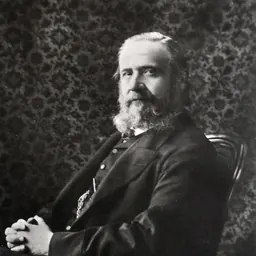
Lived 1865 – 1933 (aged 67). Alfred Stephens was an Australian biographer and literary critic.
Alfred George Stephens (28 August 1865 – 15 April 1933), commonly referred to as A. G. Stephens, was an Australian writer and literary critic, notably for The Bulletin. He was appointed to that position by its owner, J. F. Archibald in 1894.
Early life and journalism
Stephens was born on 28 August 1865 in Tooowomba to Samuel George and Euphemia Tweedle Stephens, members of a pioneering family of the area. He was educated at the Toowoomba Grammar School, and then started an apprenticeship in the printing trade with The Toowoomba Chronicle. and in this year was also published "The Griffilwraith" ('An Independent Criticism of the Methods and Manoeuvres of the Queensland Coalition. Government, 1890–1893'), an able piece of pamphleteering attacking the coalition of the old rivals, Sir Samuel Griffith and Sir Thomas McIlwraith.
The Bulletin
In April 1893 having sold his share in the Cairns paper he left Australia for San Francisco, travelled across the continent, and thence to Great Britain and France. He had begun to do some journalistic work in London when he received the offer from J. F. Archibald of a position on The Bulletin. He was also the author of The Pearl and the Octopus, The Lady Calphurnia Royal (with Albert Dorrington), The Red Pagan, Oblation, and Bill's Ideas (1913).
Later career
In September 1906, newspapers suggested Stephens was going to London where it was expected he would remain, but this was confusion with another Stephens. In October 1906 however 'Red Page' Stephens had left The Bulletin; the exact reason for the break has never been known. He initially set up a bookshop.
For the remaining 27 years of his life Stephens was a freelance writer, excepting a brief period as a leader writer on the Wellington Post in 1907. In 1914 he penned, with music, work entitled "The Australian National Anthem".
Over time, he undertook criticism of Henry Kendall (1839–1882) and Christopher Brennan (1870–1932). He recognised the works of poet Shaw Neilson (1872–1942). High praise was also given to the works of Scottish-Australian poet and bush balladeer Will H. Ogilvie (1869–1963). Despite the volume of written verse, Stephens considered his own work to be no more than "quite good rhetorical verse"; whilst he was considered a good interviewer and critic. had six children, two sons Dr J. G., D. G., and four daughters, including Cynthia, Alison, and Alwyn. The Bulletin Story Book : A Selection of Stories and Literary Sketches from the Bulletin 1880–1901 (1901) Anzac Memorial (1916)
Don’t just read it —
keep it.
Full-length biographies made to live with: read them, listen on the way to work, watch them tonight.
- E-book
- Audio
- Video
Instant download · yours to keep · every purchase keeps this site free
Important facts
more
Lucifer, Melchizedek, P.J. Miller, P.J.Miller, PJ Miller, P. J. Miller, P J Miller, Jack Point, S, A. G. S., A G S, AGS, A.G.S., Redde Titian, Gower Stephens, A. G. StephensPeople in Alfred Stephens's life
Named in this biography and alive at the same time
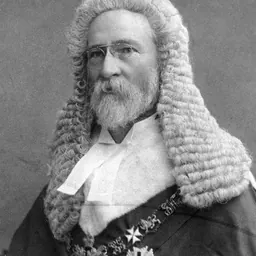
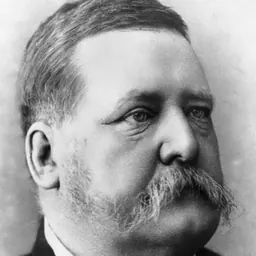



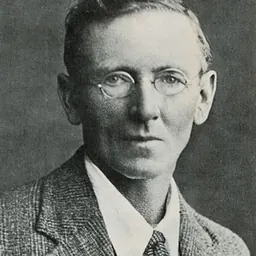


Related people
Same field, nearest in time

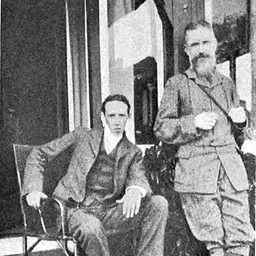
Contemporaries
People whose lives overlapped Alfred Stephens's



Frequently asked questions
Who was Alfred Stephens?
Australian writer
When was Alfred Stephens born?
Alfred Stephens was born on 28 August 1865.
When did Alfred Stephens die?
Alfred Stephens died on 15 April 1933.
What was Alfred Stephens's occupation?
Alfred Stephens was a biographer and literary critic.
What nationality was Alfred Stephens?
Alfred Stephens was Australian.
Sources & further reading
Cite this page
APA: Biography.guide. (2026). Alfred Stephens. https://biography.guide/alfred-stephens-biographer/
MLA: "Alfred Stephens." Biography.guide, https://biography.guide/alfred-stephens-biographer/.
Chicago: "Alfred Stephens." Biography.guide. https://biography.guide/alfred-stephens-biographer/.
Data last updated: 2026-09-20 · Spot an error? Report a correction.
Page generated 2026-09-27 05:28 UTC