
About Alfred Stepan
Lived 1936 – 2017 (aged 81). Alfred Stepan was an American political scientist and university teacher.
Alfred C. Stepan (July 22, 1936 – September 27, 2017) was an American political scientist specializing in comparative politics and Latin American politics. He was the Wallace S. Sayre Professor of Government at Columbia University, where he was also director of the Center for the Study of Democracy, Toleration and Religion. He is known for his comparative politics research on the military, state institutions, democratization, and democracy.
Life and academic career Stepan was born in Chicago, Illinois in 1936.
He subsequently taught at Yale University, before being appointed Dean of the School of International and Public Affairs at Columbia in 1983. He became the first Rector of Central European University (CEU) in 1993, and in 1996 was appointed Gladstone Professor of Government at All Souls College, Oxford University. He returned to Columbia University in 1999. He has been a Fellow of the American Academy of Arts and Sciences since 1991 and a member of the British Academy since 1997. Stepan was a member of the National Endowment for Democracy's International Forum for Democratic Studies Research Council.
He died at his home in New York on September 27, 2017 from cancer.
Awards
in 1991, Stepan was elected to the American Academy of Arts and Sciences.
In 2002, Stepan was awarded the Order of Rio Branco by the Brazilian government. He has also been awarded the Kalman Silvert Award for his lifetime contribution to Latin American studies.
In 2007, he was included on a list of the 400 most highly cited US-based political scientists.
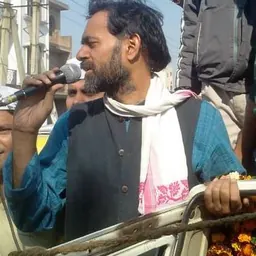
Academic research He authored and edited a number of books, including Arguing Comparative Politics (Oxford University Press, 2001), Crafting State-Nations. India and Other Multinational Democracies (co-authored with Juan Linz and Yogendra Yadav; 2011), Problems of Democratic Transition and Consolidation: Southern Europe, South America, and Post Communist Europe (with Juan Linz; 1996) and Democracies in Danger (2009).
The Military in Politics
The Military in Politics, Stepan analyzes the breakdown of democracy in Brazil in 1964. Stepan "challenged the prevailing view in comparative research that saw the military as a force for achieving modernization and national integration." He also showed that "understanding the military’s political behavior ... required a focus on the broader context of civil-military relations."
The State and Society. Peru in Comparative Perspective In this book, Stepan "critiqued both pluralist and Marxist approaches for focusing insufficient attention on state elites." This work defined Stepan "as an early and key contributor to the ‘‘new institutional’’ research that emphasized the potential autonomy of political institutions from economic, societal, and cultural forces." It emphasizes "how the actions of democratically elected incumbents contributed to the demise of democracy."
Rethinking Military Politics. Brazil and the Southern Cone
In Rethinking Military Politics, Stepan "argued that to achieve stable democracy, civilian elites in newly democratic regimes had to find ways to handle the problem of establishing civilian control over the armed forces."
Major works The Military in Politics. Changing Patterns in Brazil. Princeton, NJ: Princeton University Press, 1971. The State and Society. Peru in Comparative Perspective. Princeton, NJ: Princeton University Press, 1978. The Breakdown of Democratic Regimes. 4 Vols, edited with Juan José Linz. Baltimore, Md.: The Johns Hopkins University Press, 1978. Rethinking Military Politics. Brazil and the Southern Cone. Princeton, NJ: Princeton University Press, 1988. "Constitutional frameworks and democratic consolidation: Parliamentarianism versus presidentialism", with Cindy Skach. World Politics 46(1) (1993): 1-22. Problems of Democratic Transition and Consolidation: Southern Europe, South America and Post-Communist Europe, with Juan José Linz. Baltimore, Md.: The Johns Hopkins University Press, 1996. Arguing Comparative Politics Oxford: Oxford University Press, 2001. Democracies in Danger, ed. Baltimore, Md.: The Johns Hopkins University Press, 2009. Crafting State-Nations. India and Other Multinational Democracies, with Juan José Linz and Yogendra Yadav. Baltimore, Md.: The Johns Hopkins University Press, 2011. Boundaries of Toleration, edited with Charles. Taylor. New York.: Columbia University Press, 2014.
Don’t just read it —
keep it.
Full-length biographies made to live with: read them, listen on the way to work, watch them tonight.
- E-book
- Audio
- Video
Instant download · yours to keep · every purchase keeps this site free
Important facts
People in Alfred Stepan's life
Named in this biography and alive at the same time



Related people
Same field, nearest in time




Contemporaries
People whose lives overlapped Alfred Stepan's





Frequently asked questions
Who was Alfred Stepan?
American political scientist
When was Alfred Stepan born?
Alfred Stepan was born on 22 July 1936 in Chicago.
When did Alfred Stepan die?
Alfred Stepan died on 27 September 2017 in New York City.
What was Alfred Stepan's occupation?
Alfred Stepan was a political scientist and university teacher.
What nationality was Alfred Stepan?
Alfred Stepan was American.
Sources & further reading
Cite this page
APA: Biography.guide. (2026). Alfred Stepan. https://biography.guide/alfred-stepan/
MLA: "Alfred Stepan." Biography.guide, https://biography.guide/alfred-stepan/.
Chicago: "Alfred Stepan." Biography.guide. https://biography.guide/alfred-stepan/.
Data last updated: 2026-09-20 · Spot an error? Report a correction.
Page generated 2026-09-27 05:05 UTC