
About Alfred S. Hartwell
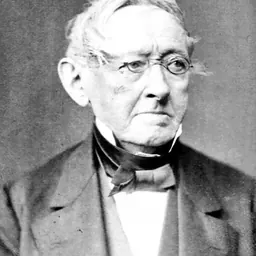
Lived 1836 – 1912 (aged 76). Alfred S. Hartwell was an American lawyer, politician and judge.
Alfred Stedman Hartwell (June 11, 1836 – August 30, 1912) was a lawyer and American Civil War soldier, who then had another career as cabinet minister and judge in the Kingdom of Hawaii.
Early life Alfred Stedman Hartwell was born June 11, 1836, in Natick, Massachusetts. His father was Stedman Hartwell (1800-1872) and mother was Rebecca Dana Perry (1805–1872) .
Education He graduated from Harvard University in 1858 where he was elected into Phi Beta Kappa society.
Career He moved to St. Louis, Missouri, and worked as an instructor at Washington University.
Civil War In April 1861, at the outbreak of the American Civil War, he enlisted as Corporal in the Third Missouri Reserve regiment. Missouri was officially neutral but supporters of the Confederacy had captured Liberty Arsenal, and his company was called up to help recapture the weapons. This resulted in the Camp Jackson Affair.
In June he returned to Boston and enrolled in Harvard Law School, but by September 1862 became a first lieutenant in the 44th Massachusetts regiment. When the United States Colored Troops (USCT) were formed for African-American recruits, he was promoted to captain on March 31, 1863, of the 54th Massachusetts. However, the number of volunteers was higher than expected, so he was promoted to lieutenant colonel, and helped organize the 55th Regiment Massachusetts Volunteer Infantry under command of Norwood Penrose Hallowell. The 54th's role in the Second Battle of Fort Wagner was depicted in the film Glory. The 55th moved into their former barracks, and was ordered to embark in July 1863. They served building trenches on Folly Island supporting the siege of Charleston, South Carolina. When Hallowell had to resign for treatment of an old wound, Hartwell was promoted to command the regiment on November 3, 1863.
In the Battle of Honey Hill on November 30, 1864, he commanded a brigade that included the 55th and 54th Massachusetts and the 102nd USCT. He was wounded and had his horse shot from under him leading three charges. Captain Thomas F. Ellsworth received the Congressional Medal of Honor because "Under a heavy fire [Ellsworth] carried his wounded commanding officer [Hartwell] from the field." The battle was generally a failure, but proved another example where the African-American troops could be used in battle. On January 23, 1865, President Abraham Lincoln nominated Hartwell for the award of the honorary grade of brevet brigadier general, to rank from December 30, 1864, for gallant services at the battle of Honey Hill. The U.S. Senate confirmed the award on February 14, 1865. After the fall of Charleston, he marched his forces through the city, with the African-American troops at the head of his brigade. They occupied the city and dealt with the large number of refugees.
On April 5, 1865, he commanded another combined force that marched through Charleston again, although by now the Confederate army was generally dispersing. Their duties now were mostly peace-keeping and rebuilding bridges. On May 1 his units were based in Orangeburg, South Carolina, and finally in June his promotions of black officers were finally approved. In August the 55th was taken out of service. However, Hartwell was sent to investigate Milton S. Littlefield who was accused of fraud (known as the "Prince of carpetbaggers").
Boston He was finally discharged on April 30, 1866. He returned to Boston, and was elected to the legislature of Massachusetts as a Republican. After the war he finished his last year of law school and graduated with an LLB degree from Harvard in 1867. He briefly started a law practice in Boston with classmate Samuel Craft Davis. On August 15, 1868, he left at the suggestion of fellow Massachusetts lawyer Elisha Hunt Allen, intending to spend a year or two on an adventure to the Hawaiian Islands.
There were so few trained lawyers in Hawaii, one of the other supreme court justices, Hermann A. Widemann, had never been to law school. Elisha Hunt Allen was still acting as chief justice, despite living in the United States much of the time. On December 5, 1876, he was appointed again, replacing William Richards Castle. This time he served until July 3, 1878,
In late 1890 he traveled to Washington, D.C., to negotiate on a cable connection between Hawaii and west coast of the United States. Although he did not support the overthrow of the Kingdom of Hawaii, he did lobby for its annexation to the US. In 1899 he traveled to Washington, D.C., as unofficial representative until Robert William Wilcox was elected. On the same trip he attended the International commercial congress in Philadelphia. In 1895 Hartwell wrote the document signed by Liliuokalani in which she agreed to abdicate, avoiding death sentences for those (including herself) convicted after the 1895 Counter-Revolution in Hawaii. Liliuokalani remained bitter about what she saw as a former friend working for her enemies.
He formed a law firm with Lorrin Andrews Thurston, one of the leaders of the overthrow, and then added his assistant William F. L. Stanley. In 1901 he was hired to challenge the income tax in the Hawaii territorial court. His daughter's brother-in-law George Robert Carter became Territorial Governor of Hawaii in 1903. On June 15, 1904, he was appointed again to the Supreme Court of what was now the US Territory of Hawaii, and became chief justice August 15, 1907. who later joined him in law practice. They had eight children:
Daughter Mabel Rebecca Hartwell was born April 5, 1873, and married Alfred Townsend in 1897. Daughter Edith Millicent Hartwell was born May 25, 1874, and married Alfred Wellington Carter (1867–1949) in 1895. Bernice Hartwell was born August 15, 1882. Alice Dorothy Hartwell was born July 27, 1884, and married Ferdinand Frederick Hedemann in 1927.
For his honeymoon the couple traveled first to San Francisco in February 1872, where he found out his father had died on his wedding day. When they arrived in Natick, his mother was also ill, and they stayed until she died on June 11, 1872. They returned and rented a house in Honolulu in August 1872.
Death He died in Honolulu on August 30, 1912, and was buried in Oahu Cemetery. one of the First Settlers of New England; who arrived in Dorchester, Massachusetts in 1630s. His paternal grandmother was Rachel Atherton.
Don’t just read it —
keep it.
Full-length biographies made to live with: read them, listen on the way to work, watch them tonight.
- E-book
- Audio
- Video
Instant download · yours to keep · every purchase keeps this site free
Important facts
People in Alfred S. Hartwell's life
Named in this biography and alive at the same time


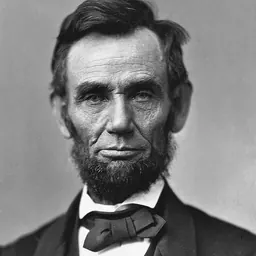



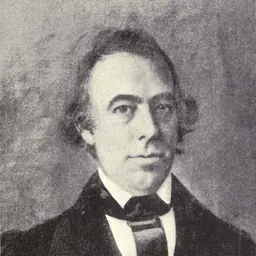
Related people
Same field, nearest in time
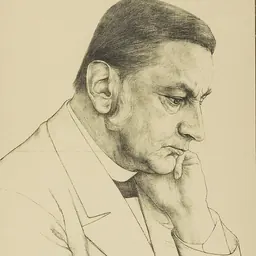

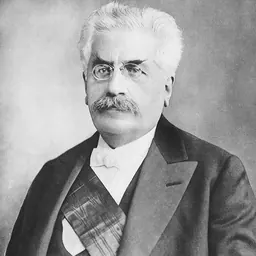

Contemporaries
People whose lives overlapped Alfred S. Hartwell's



Frequently asked questions
Who was Alfred S. Hartwell?
American politician
When was Alfred S. Hartwell born?
Alfred S. Hartwell was born on 11 June 1836 in Natick.
When did Alfred S. Hartwell die?
Alfred S. Hartwell died on 30 August 1912 in Honolulu.
What was Alfred S. Hartwell's occupation?
Alfred S. Hartwell was a lawyer, politician and judge.
What nationality was Alfred S. Hartwell?
Alfred S. Hartwell was American.
Sources & further reading
· Wikipedia: Alfred S. Hartwell
Cite this page
APA: Biography.guide. (2026). Alfred S. Hartwell. https://biography.guide/alfred-s-hartwell/
MLA: "Alfred S. Hartwell." Biography.guide, https://biography.guide/alfred-s-hartwell/.
Chicago: "Alfred S. Hartwell." Biography.guide. https://biography.guide/alfred-s-hartwell/.
Data last updated: 2026-09-22 · Spot an error? Report a correction.
Page generated 2026-09-27 05:24 UTC