
About Alfred Pippard
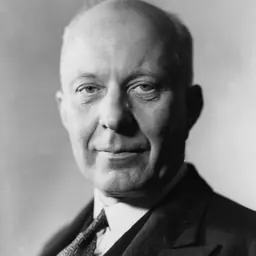
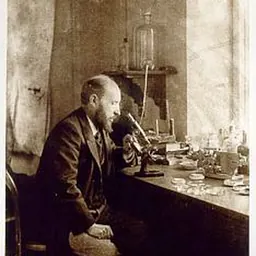
Lived 1891 – 1969 (aged 78). Alfred Pippard was a British civil engineer, engineer, writer and university teacher.
Alfred John Sutton Pippard (6 April 1891 – 2 November 1969) was a British civil engineer and academic. Pippard was the son of a carpenter and joiner and spent much of his early life helping his father on construction sites. Initially supposed to follow his father into the family business, Pippard instead decided to study for a bachelor's degree in civil engineering at the University of Bristol, supporting himself with an Exhibition award. Pippard worked for a Bristol based consulting engineer and for the Pontypridd and Rhondda Valley Joint Water Board in his early career. He also completed his master's degree during this period.
At the start of the First World War Pippard joined the Admiralty Air Department where he studied aircraft stresses. After the war he joined an aeronautical engineering consultancy with many of his colleagues and was involved in accident investigation cases. He gained his Doctorate of Science from Bristol in 1920 and took up the chair in Civil Engineering at University College, Cardiff in 1922. This began a long career in academia at Cardiff, Bristol and Imperial College during which he was responsible for the analysis of the methods used in the design of the R100 and R101 airships. The public enquiry into the latter's crash, which ended British participation in airship development, found no faults with Pippard's work but he withdrew from the field of aeronautical engineering – feeling keenly the loss of several of his friends amongst the 48 dead.
During the Second World War Pippard was a member of the Civil Defence Research Committee which met at Princes Risborough and continued his teaching at Imperial College. Pippard was a member of the council of the Institution of Civil Engineers for fifteen years and was their president for the 1958-9 session. During his later career he chaired the fifteen-year investigation into pollution in the Thames tideway the length of which he was criticised for by the press. He was elected a Fellow of the Royal Society
Apprenticeship The laws of the Institution of Civil Engineers (ICE) at the time required prospective members to undertake articled work for two years for a corporate member and Pippard arranged to work for Mr Cotterell of Bristol, the father of one of his friends who he had undertaken work for with his father as a joiner. However the family finances were still poor and his mother could not afford to provide him with his keep for two years and pay the premium that all apprenticeships entailed. Fortunately the Royal Commission for the Exhibition of 1851 had just started an industrial bursary scheme and invited applications from universities across the country. Bristol University submitted Pippard's name and he was accepted as one of ten successful applicants from across the country. Pippard joined an engineering consultancy in 1919 which was set up by Alec Ogilvie, an Air Department engineer, and several colleagues. Later that year Pippard and JL Pritchard, another colleague, wrote Aeroplane Structures which became a standard reference for aeronautical engineers and was revised in 1935. For this work, amongst others, he was awarded a Doctorate of Science by Bristol University in 1920. The firm was awarded several accident investigation contracts such as investigating the failure of the Tarrant Tabor triplane and the R38 airship disaster but was unable to win many large contracts due to the military and large aeronautical firms controlling the market.
Academic life
Upon arriving at Cardiff Pippard set about modernising the department and attracting research opportunities. Pippard's most important research client was the Aeronautical Research Committee which agreed to pay the salary of a full-time assistant from January 1924. During this time Pippard and his assistant, John Baker, worked on proving the methods used to analyse airship frames which were proposed for use on the R100 and R101 airships. In 1928 Pippard was invited to take over the chair of civil engineering at Bristol University which he accepted. Pippard himself remained involved with the department's research, being particularly interested in the structural aspects of dams. In 1946 he introduced concrete and soil mechanics lecturers to the staff of Imperial College for the first time. In 1951 he was appointed by Hugh Dalton, the Minister of Local Government and Planning, to investigate pollution in the Thames tideway. This was a highly complex task which involved fifteen years of detailed investigation for which he was, perhaps unfairly, ridiculed in the press. Pippard was elected a Fellow of the Royal Society in 1954 Pippard continued to write on the theory of structures throughout his retirement and over the course of his life authored (or co-authored) more than 80 academic papers and six books. Towards the end of his life he began writing an autobiography which remained unfinished on his death. Pippard died in Putney, London on 2 November 1969 and the memorial service was held at St. Margaret's Church in Westminster.
Don’t just read it —
keep it.
Full-length biographies made to live with: read them, listen on the way to work, watch them tonight.
- E-book
- Audio
- Video
Instant download · yours to keep · every purchase keeps this site free
Important facts
People in Alfred Pippard's life
Named in this biography and alive at the same time




Related people
Same field, nearest in time




Contemporaries
People whose lives overlapped Alfred Pippard's


Frequently asked questions
Who was Alfred Pippard?
British engineer
When was Alfred Pippard born?
Alfred Pippard was born on 6 April 1891 in Yeovil.
When did Alfred Pippard die?
Alfred Pippard died on 2 November 1969 in Putney.
What was Alfred Pippard's occupation?
Alfred Pippard was a civil engineer, engineer, writer and university teacher.
What nationality was Alfred Pippard?
Alfred Pippard was British.
Sources & further reading
Cite this page
APA: Biography.guide. (2026). Alfred Pippard. https://biography.guide/alfred-pippard/
MLA: "Alfred Pippard." Biography.guide, https://biography.guide/alfred-pippard/.
Chicago: "Alfred Pippard." Biography.guide. https://biography.guide/alfred-pippard/.
Data last updated: 2026-09-20 · Spot an error? Report a correction.
Page generated 2026-09-27 05:03 UTC