
About Alfred Holland Smith
Lived 1863 – 1924 (aged 60). Alfred Holland Smith was an American executive.
Alfred Holland Smith (April 26, 1863 – March 8, 1924) was the President of New York Central Railroad from January 1914 to May 1918 and from June 1919 until his death. The entirety of Smith's forty-five-year career was dedicated to the railroads. He started his career as a messenger boy at the age of fourteen, earning 4 dollars a week, and became the highest-paid railroad manager in the U.S., receiving an annual salary of more than $100,000 according to one survey.
After the American entry into World War I, Smith joined the federal service as the Eastern Director of the United States Railroad Administration and temporarily assumed control over the largest pool of railroads in U.S. history, carrying one half of the nation's freight. He successfully alleviated traffic congestion and the buildup of Europe-bound cargoes in the docks.
Smith spoke and acted in favor of government-sponsored consolidation of American, Promotions within the office did not encourage him enough, and five years later Smith transferred to a railroad construction crew in Toledo, Ohio, area, paid $1.50 a day. The change from an office job to physical work was not easy for Smith, but he eventually developed "a physique which was the marvel of railroad men who learned their job only in the office."
Smith's proficiency in both physical labor and clerical work led to his promotion to a foreman. He spent the 1890s supervising different construction teams of Lake Shore and Michigan, and in 1901 became the principal construction superintendent for the railroad, based in Cleveland. The three commissioners agreed on their assessment of preexisting conditions, that of excessive government aid and overdevelopment of railway lines that undermined their performance, but split on the future role of the government in reforming the system. Drayton and Acworth called for the nationalization of three principal Canadian railroads (Grand Trunk Railway, Grand Trunk Pacific Railway and Canadian Northern Railway) and argued that the expense of tax dollars was in the best interest of the Canadian nation. They insisted on separation of business from politics through an elaborate corporate government scheme.
Smith opposed nationalization. His 1917 minority report noted that no legal safeguard can prevent the parliament from changing its mind and taking direct control of the nationalized assets. Smith analyzed each railroad and found that each one had a healthy, profitable component. He advised stripping the railroads of redundant, loss-making lines through exchange or closure: "The scrap heap is frequently the most economical disposition available for inefficient plant and machinery."
Federal service
In the very end of 1917 William Gibbs McAdoo, head of the United States Railroad Administration, appointed Smith as assistant director for the north-eastern quadrant of the United States (east of Chicago and north of the Ohio and the Potomac rivers); in January 1918 Smith became Director of Eastern District of the Federal Railroad Administration.
In 1917 the railroad system faced a severe freight congestion, aggravated by shortage of coal and a streak of bad weather. His first job was to supervise transfer of assets from the federal government back to private ownership.
Smith approved the improvements brought by the Transportation Act of 1920, but spoke against any further restriction by the government. A critical observer from The New Republic wrote about Smith's take on the federal effort to optimize the system: "Mr. Smith's ideas, boiled down, show a maximum of thought about New York Central and a minimum, and a very small one at that, about the consolidation scheme – whether it is sound or unsound, right or wrong." Smith the competitor was noted for his fierce rivalry with the Pennsylvania Railroad and for his business alliance with the Cleveland-based Van Sweringen brothers.
In the beginning of 1924 Smith spent several weeks in Cuba inspecting the Cuban railroads that were being consolidated into a single corporation under the Tarafa Bill. Smith was to be appointed chairman of the Board of the new Cuban company. According to the annual report authored by Smith and released after his death, net income in 1923 increased by 120% compared to 1922.
Death
According to the New York Times obituary, "horseback riding was Mr. Smiths's hobby and practically his only form of outdoor exercise ... He liked golf, tennis and baseball but did not have enough time" for these sports.
Memorial services for Smith were held at his estate in Chappaqua and at the Saint Thomas Church on the 53rd Street. Smith was buried at the Kensico Cemetery in Valhalla, New York. The Alfred H. Smith Memorial Bridge between Castleton-on-Hudson and Selkirk, opened in 1924 after his death, is named for him.
Don’t just read it —
keep it.
Full-length biographies made to live with: read them, listen on the way to work, watch them tonight.
- E-book
- Audio
- Video
Instant download · yours to keep · every purchase keeps this site free
Important facts
People in Alfred Holland Smith's life
Named in this biography and alive at the same time

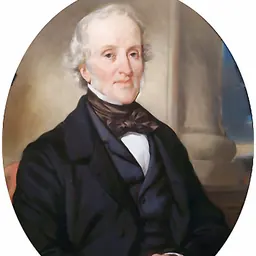
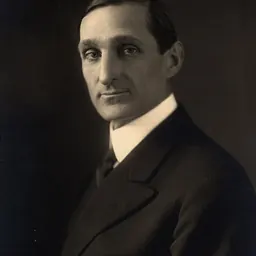


Related people
Same field, nearest in time



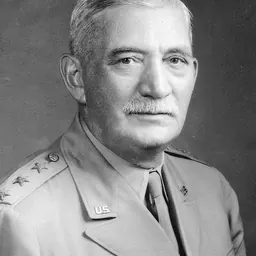
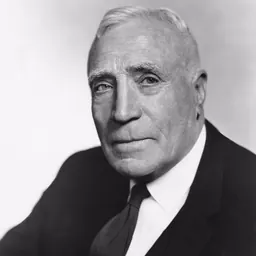
Contemporaries
People whose lives overlapped Alfred Holland Smith's



Frequently asked questions
Who was Alfred Holland Smith?
United States railway official (1863-1924)
When was Alfred Holland Smith born?
Alfred Holland Smith was born on 26 April 1863 in New York City.
When did Alfred Holland Smith die?
Alfred Holland Smith died on 8 March 1924 in New York City.
What was Alfred Holland Smith's occupation?
Alfred Holland Smith was an executive.
What nationality was Alfred Holland Smith?
Alfred Holland Smith was American.
Sources & further reading
· Wikipedia: Alfred Holland Smith
· DBpedia: Alfred Holland Smith
Cite this page
APA: Biography.guide. (2026). Alfred Holland Smith. https://biography.guide/alfred-holland-smith/
MLA: "Alfred Holland Smith." Biography.guide, https://biography.guide/alfred-holland-smith/.
Chicago: "Alfred Holland Smith." Biography.guide. https://biography.guide/alfred-holland-smith/.
Data last updated: 2026-09-20 · Spot an error? Report a correction.
Page generated 2026-09-27 05:26 UTC