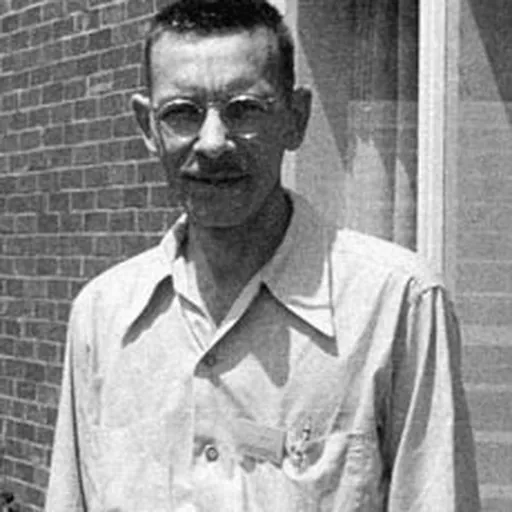
About Alfred Hershey
Lived 1908 – 1997 (aged 88). Alfred Hershey was an American chemist, geneticist and microbiologist.
Alfred Day Hershey (December 4, 1908 – May 22, 1997) was an American Nobel Prize–winning bacteriologist and geneticist.
Early years Hershey was born in Owosso, Michigan to Robert Day and Alma Wilbur Hershey. He earned a B.S. in chemistry in 1930, and Ph.D. in bacteriology in 1934 from Michigan State University. Shortly after, Hershey accepted a faculty position at Washington University in St. Louis, serving as an instructor of bacteriology and immunology from 1934 to 1950.
Bacteriophage research At Washington University, Hershey worked closely with department head Jacques Bronfenbrenner to investigate bacteriophages, or phages—viruses that infect and replicate inside bacteria. Hershey's work on the factors impacting the virus' ability to infect its targets brought him to the attention of fellow phage researchers Max Delbrück and Salvador Luria.
The Phage Group In 1943, Delbrück invited Hershey to Vanderbilt University to discuss his phage research. Their work confirmed that DNA, not protein, was the genetic material of life.
Later years and death In 1962, Hershey was named director of the Department of Genetics, a position he held until his retirement in 1970. He would live on the grounds of Cold Spring Harbor Laboratory for the rest of his life.
Hershey's work with bacteriophage would earn him a share of the 1969 Nobel Prize in Physiology or Medicine with Delbrück and Luria, "for their discoveries concerning the replication mechanism and the genetic structure of viruses."
Although officially retired from scientific research, Hershey would continue to pursue new projects. In 1971, he edited The Bacteriophage λ, an extensive volume on the subject, published by CSHL Press that same year.
Hershey died from congestive heart failure on May 22, 1997 at his home in Laurel Hollow, New York. He was 88 years old. At the time, he was survived by his wife Harriet Davidson (1918–2000) and their only child, Peter Manning Hershey (1956–1999).
Following his death, Frank Stahl, a member of The Phage Group, wrote: "The Phage Church, as we were sometimes called (see Phage group), was led by the Trinity of Delbrück, Luria, and Hershey. Delbrück's status as founder and his ex cathedra manner made him the pope, of course, and Luria was the hard-working, socially sensitive priest-confessor. And Al (Hershey) was the saint."
Don’t just read it —
keep it.
Full-length biographies made to live with: read them, listen on the way to work, watch them tonight.
- E-book
- Audio
- Video
Instant download · yours to keep · every purchase keeps this site free
Important facts
People in Alfred Hershey's life
Named in this biography and alive at the same time





Related people
Same field, nearest in time

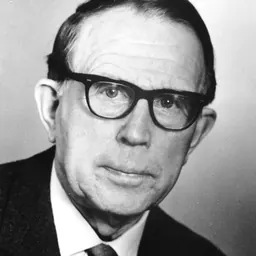
Contemporaries
People whose lives overlapped Alfred Hershey's


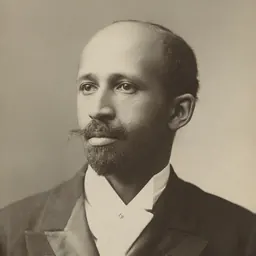

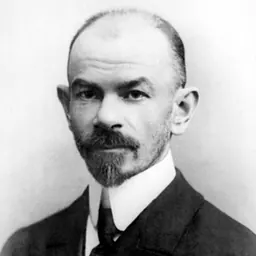
Frequently asked questions
Who was Alfred Hershey?
American chemist (1908–1997)
When was Alfred Hershey born?
Alfred Hershey was born on 4 December 1908 in Owosso.
When did Alfred Hershey die?
Alfred Hershey died on 22 May 1997 in Syosset.
What was Alfred Hershey's occupation?
Alfred Hershey was a chemist, geneticist and microbiologist.
What nationality was Alfred Hershey?
Alfred Hershey was American.
Sources & further reading
Cite this page
APA: Biography.guide. (2026). Alfred Hershey. https://biography.guide/alfred-hershey/
MLA: "Alfred Hershey." Biography.guide, https://biography.guide/alfred-hershey/.
Chicago: "Alfred Hershey." Biography.guide. https://biography.guide/alfred-hershey/.
Data last updated: 2026-09-22 · Spot an error? Report a correction.
Portrait: Wikimedia Commons · author & licence
Page generated 2026-09-27 05:02 UTC