
About Alfred Drury
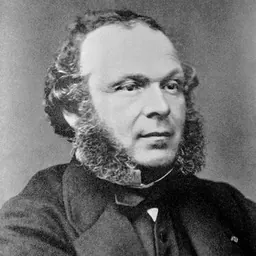
Lived 1856 – 1944 (aged 88). Alfred Drury was a British sculptor and visual artist.
Edward Alfred Briscoe Drury (11 November 1856 – 24 December 1944) was a British architectural sculptor and artist active in the New Sculpture movement. During a long career Drury created a great number of decorative figures such as busts and statuettes plus larger monuments, war memorials, statues of royalty and architectural pieces. During the opening years of the 20th century he was among the foremost architectural sculptors active in Britain and in that period created the series of works in central London for which he is perhaps now best known. These include the figures on the Old War Office building in Whitehall, elements of the facade of the Victoria and Albert Museum and four of the colossal statues on Vauxhall Bridge.
Biography Education and training Drury was born in Islington, London but raised in Oxford, where his father was a pub landlord. While in Paris he assisted Dalou on the monumental Triumph of the Republic in the Place de la Nation.
When he returned to London, Drury worked as an assistant to the sculptor Joseph Edgar Boehm and began establishing himself as an independent artist.
Early commissions
Alongside work on his exhibition pieces, Drury also began undertaking architectural commissions. In 1897, for example, he created a set of terracotta spandrels, representing Art and Design, for a coach builder's premises, now demolished, at Hammersmith in London and is thought to have completed other projects outside of London at this time for which records have been lost. He collaborated with architect Inigo Thomas on a decorative scheme for the gardens at Barrow Court near Bristol. Tasked with providing sculptures for twelve pillars along a boundary wall, Drury carved a sequence of female heads from a baby to that of an old women to represent the months of the year from January to December. The art historian Benedict Read considered the latter as one of the 'major icons' of the New Sculpture movement. The model for this composition was shown at the Royal Academy in 1904 and was widely praised.
Major works
By 1904, Drury had become established as one of the foremost architectural sculptors active in Britain at the time and this led to the series of commissions for which he is perhaps best known, for the War Office in Whitehall, for the facade of the Victoria and Albert Museum and for Vauxhall Bridge. The artistic choices Drury made with the pairings and the amount of detail he incorporated into the carvings drew much attention in the newspaper coverage of the new building. For example, the War pairing contrasted a figure of Minerva holding a sword and shield with a more fearful figure holding a skull while some of the figures had gilded bronze attachments such as Victory who holds a small gilded statuette and Truth who has a gilded mirror. Although the works were 70 feet above street level it was reported that crowds of sightseers gathered to view them. The area under the arch and the remainder of the main entrance were allocated to Drury. Within the curve of entrance arch he created nine low-relief panels featuring kneeling or crouching female figures holding plaques with gold lettering that when read together form a quotation from Sir Joshua Reynolds. He exhibited works at the academy each year from 1885 to 1942, and at the Royal Scottish Academy between 1903 and 1917.
Personal life Drury lived and worked at Gunter Grove in Chelsea, London.
In 1900, Drury married the artist Phoebe Maud Turner. The couple had two children, including artist Paul Dalou Drury.
Selected public works 1885–1904
1905–1909
1910–1919
1920–1931
Other works The Boer War Memorial, a plaque in deep relief, in the Cloisters at New College, Oxford Rhodes University (Grahamstown) War Memorial to the 1914-1918 and 1939-1945 conflicts, depicting a medieval knight in armour and chain mail, with gauntletted hands resting on the hilt of his sword. Two relief panels and two spandrels in marble, 1916, representing the Golden Jubilee of Queen Victoria, the Queen's proclamation of 1858, Industry and Commerce for the Victoria Memorial, Kolkata
Don’t just read it —
keep it.
Full-length biographies made to live with: read them, listen on the way to work, watch them tonight.
- E-book
- Audio
- Video
Instant download · yours to keep · every purchase keeps this site free
Important facts
People in Alfred Drury's life
Named in this biography and alive at the same time

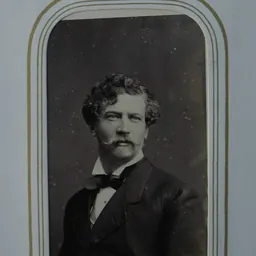


Related people
Same field, nearest in time



Contemporaries
People whose lives overlapped Alfred Drury's



Frequently asked questions
Who was Alfred Drury?
English sculptor (1856–1944)
When was Alfred Drury born?
Alfred Drury was born on 11 November 1856 in Islington.
When did Alfred Drury die?
Alfred Drury died on 24 December 1944 in Wimbledon.
What was Alfred Drury's occupation?
Alfred Drury was a sculptor and visual artist.
What nationality was Alfred Drury?
Alfred Drury was British.
Sources & further reading
Cite this page
APA: Biography.guide. (2026). Alfred Drury. https://biography.guide/alfred-drury/
MLA: "Alfred Drury." Biography.guide, https://biography.guide/alfred-drury/.
Chicago: "Alfred Drury." Biography.guide. https://biography.guide/alfred-drury/.
Data last updated: 2026-09-20 · Spot an error? Report a correction.
Page generated 2026-09-27 05:32 UTC