
About Alexandru George
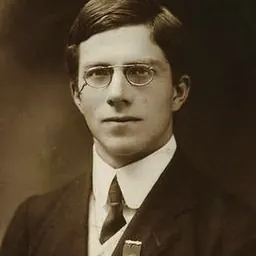
Lived 1930 – 2012 (aged 82). Alexandru George was a Romanian literary critic, translator and writer.
Alexandru George, born George-Alexandru Georgescu (6 April 1930 – 28 September 2012), was a Romanian literary historian, critic, and fiction writer, also known as a translator, illustrator, and political commentator. He was always proud of belonging by birth to the upper-middle-classes of the monarchic era, constructing himself an ideological system that combined elements of elitism, cosmopolitanism, and economic liberalism. Such visions clashed with the social agenda imposed after 1948 by the Romanian communist regime. Sensing that he would end up expelled, George ended his studies at the University of Bucharest; he took up unskilled or semi-skilled jobs, managing to survive through the 1950s. Not yet interested in writing fiction or essays (though he had published his illustrations as a child, and also kept a diary), he was instead an avid reader, who ended up buying off, and bringing together, large portions of Eugen Lovinescu's scattered book collection. He only came to literature by way of the Romanian Academy Library, where he worked after 1959; his actual debut as a short-story writer was postponed by another ten years, when he was finally published in Luceafărul.
Upon his delayed breakthrough, George dazzled critics of several generations, and became widely recognized as a highly original voice in modern Romanian literature. Containing his criticism of the regime to where it only appeared as political hints and divagations in his published works, he was tacitly tolerated during the liberalization period. In his critical essays, he ways of reading Lovinescu, Tudor Arghezi, and Mateiu Caragiale; heavily influenced by the latter, his own autofictional, bookish prose was impenetrable to the stylistic remnants of socialist realism, and is often annexed by exegetes to the "Târgoviște School" of dissenting writers (though he himself once rejected the label). George was additionally a columnist at Viața Românească, an editor of various books, a translator, anthologist, and (increasingly after 1980) also a polemicist. His contribution to the public debate became fully political after the fall of communism in 1989, when he undertook a reexamination of the past, with calls for moral transparency. From 1990, George himself was a self-avowed propagandist for the National Liberal Party, believing that its political program overlapped with his own dogmas.
During the final twenty years of his life, George dedicated himself to defending the standards and reputation of Romanian liberalism, in essays that were initially admired for their erudition, but thereafter skewered, or just ignored, for their perceived rigidity. He excoriated both Neo-Marxism and the far-right of Romanian nationalism, mocked the National Peasantists and Transylvanians in general, and created scandal with his pronouncements on contemporary colleagues (variously including Sorin Alexandrescu, Marin Preda, Eugen Simion, and Mircea Zaciu). While increasingly isolated from literary circles, he still earned accolades for his fiction writing—returning in 1996 with Oameni și umbre, glasuri și tăceri, an unclassifiable and massive text that represented his lifelong contribution as a novelist. He died in poverty at the age of 82, three years after receiving an award from the Writers' Union of Romania.
Origins and early life Born in Bucharest on 6 April 1930, as George-Alexandru Georgescu, the future author descended from the commercial bourgeoisie; both his mother Eliza (née Constantinescu) and his father, George Sr (who died when his son was aged six), were clerks at the National Bank of Romania. From his elders, the boy inherited a sentimental commitment to the old-regime National Liberal Party, on which basis he constructed his lifelong anti-communism. He lived his first years, and all following years until 1980, in Moșilor quarter, near Olari Church, which is also a core setting of his autofiction.
Georgescu attended Sfântul Silvestru School (1937–1941), then Mihai Viteazul High School (1941–1946). By 1957, the political prose and theory he had read, and had been influenced by, included tomes by Guglielmo Ferrero, Walter Lippmann, Francesco Saverio Nitti, José Ortega y Gasset, Hermann Rauschning, Max Scheler, and Oswald Spengler.
Georgescu grew up during the Ion Antonescu regime (1940–1944), which aligned Romania with Nazi Germany. Though he derided its far-right ideology, he was adamant that Antonescian guidelines in the field of culture were much less oppressive than the "unified front" imposed by the communist regime in the 1950s. Young Georgescu did not graduate immediately, due to health issues, and was sent to recover near Târgoviște, where he lived with one of his relatives. He returned to Bucharest in 1947, taking his Romanian baccalaureate in 1949. He remained discreet about his "self-taught" status, but confessed to those in the know that he had never even attended class while enlisted. afterward earning his living as editor and translator for an engineer's syndicate. Zamfir believes that he averted persecution and even physical annihilation (Tonegaru's fate) in the 1940s and 1950s, finding an "honorable exit". This implied that he demanded very little of society, also that he never bowed down to the censorship apparatus. In turn, Zamfir notes, government tolerated a number of "allusions" that appeared in his work—and especially in his patented "small, bookish fiction" (a genre selected precisely because of its unsuitability with socialist realism). A friendly author, Gheorghe Grigurcu, observes that liberalization and its limits were being alluded to within Georgescu's own essays, which mentioned that Lovinescu was being republished, but with piousness rather than as a "generative" influence. As "Alexandru George" (a pseudonym constructed from his two Christian names), he was almost immediately brought into the cultural environment of the 1970s, being recognized for his work as a critic and essayist. His first contributions here date to 1970, when his essay on Tudor Arghezi came out to much acclaim—almost at the same time as his short-story collection, Simple întîmplări cu sensul la urmă ("Simple Accounts That Will Only Make Sense at the End"). George once thanked Gafița for having a decisive role in his literary breakthrough, by approving his books for print—though he believed that Gafița had never fully read them, he credited him with enough flair to "discover within them the very things that could help speed up the editorial process." The Villiers model is also noted by scholar Eugen Negrici—alongside modulated echoes of the Gothic novel, of Mircea Eliade's short prose, and of Mateiu Caragiale's Craii de Curtea-Veche. Overall, the works are "pastiches and paraphrases on classical themes", tapping into "the huge reservoir of our cultural memory". Though a Bucharester, his literary style drew comparisons with the "Târgoviște School", established in the same period by Simionescu and Radu Petrescu. George had a lasting feud with Petrescu, who nevertheless wanted him annexed to the current, alongside Dan Culcer; in 1991, after discovering that Petrescu had once depicted him as one of the participants in communist censorship, he formally demanded that "I am extracting myself, urgently and as categorically as possible, from this 'Târgoviște School'." He still continued to be regarded as a major contributor to that literary nucleus—as for instance by Simionescu, by Negrici,
Meanwhile, in his critical commentary, George stood out against the dominating trend: according to Negrici, most of his colleagues were indebted "in shameful measure" to the philological works of George Călinescu, and George refused to accept that overwhelming influence. George's Arghezi book, centered on the poet's reception by his contemporaries, was seen by many as startling, since it challenged some of the prevailing orthodoxies. As observed by writer Paul Georgescu, he had a sophisticated method, the sign of a "refined and somber taste", which allowed him to explore Arghezi as the poet of "disorder", whose entire creation revolved hopelessly around an existential drama. Overall, the very choice of subject seemed to be provocative: "The magus Arghezi is out of fashion. Al[exandru] George is a man who seeks battles worthy of his mettle, choosing his most fastidious hero during the most eclipsed hour of his most whimsical trajectory."
Lionized iconoclast
Iconoclasm became a constant in George's analytical stance. A younger scholar, Mircea Popa, noted in retrospect: "Alexandru George aims to demonstrate with every book he writes that an author or a literary work can always be read in a new light—that within its very substance there is enough evidence to challenge deeply rooted perceptions". Several volumes of essays came in quick succession. Two were published in 1971: Clepsidra cu venin ("An Hour-glass of Venom"), Semne și repere ("Signs and Markers"). They were followed in 1973 by the first volume of a series, La sfârșitul lecturii ("As I End My Reading"), with the third and final volume appearing twenty years later. He also dressed and behaved unostentatiously: his colleague and friend Gelu Ionescu saw him in an "eternal" cardigan and a tie "of the most doubtful color", and recalls that he spoke of his favorite subjects in a way that seemed "bewilderingly unconvincing, as if he were always supporting something that had been definitely disputed". Later in life, George dispelled claims that he had ever been salaried at Viața Românească, noting that his voluntary work consisted in "arranging texts" for it and its sister publication, Caiete Critice.
George's forays into the major schools Western literary criticism began in 1972, when he translated Paul van Tieghem's Grandes doctrines littéraires en France; he followed up in 1974 with Jean Starobinski's Relation critique (here, the introduction was penned by a local comparatist, Romul Munteanu), and in 1975 with a grouping of Remy de Gourmont's essays. Both were gestures of recovery: George believed that Urechia had been maligned by Maiorescu, and then unfairly forgotten; he also stood up for Eliade, whom Lovinescu had snubbed, although they resembled each other perfectly in their ideological outlook.
George's study of novelist Mateiu Caragiale, appearing in 1981, centered on correcting errors of interpretation and chronology, challenging clichés and opening new venues for Caragialesque exegesis; in his overview, Bârna rates it as a sample of George's "fundamentally polemical psyche". Several colleagues regard this volume as his masterpiece—not least of all, because George identified spiritually with his subject. According to Zamfir, Mateiu was also "reborn" in George's fiction, which, like Craii de Curtea-Veche, showed "an uncertain, ghostly, decrepit yet magnetic Bucharest—its allure deepened by a style both enveloping and uniquely George's own." The prose collection Simple întîmplări în gînd și spații ("Simple Goings-on of Thought and Space"), published in late 1982, impressed fellow novelist Florin Mugur with its depiction of the city, in episodes move, in a subdued style, "beyond the borders of the miraculous". According to Mugur, this volume showed that George was ready to write "a book of foremost importance in our literature."
From 1982 to 1992, George worked on several volumes of Lovinescu's complete works, also putting out an anthologies—of Romanian fantasy literature (1982), of Mateiu's writings (1985), and of humorous prose (also 1985). Superficially a romance, its structure borrowed from modernist novels by George Călinescu and Camil Petrescu. It is thus build around a found manuscript, which allows visitations into the recent past, as a two-layered sentimental biography. Simionescu sees it as a manifestation of the Târgoviște-group prose, with its "scattered" autobiographical clues—here presented with slightly more "intention of systematization" than in other novels produced by "the School". George claimed that, already during Ceaușescu's final years, he had stood up against a cultural trend that had elevated Marin Preda (deceased in 1980) into the Romanian literary pantheon. Against his peers, he described Preda's final book, Cel mai iubit dintre pământeni, as "shameful"—while his opinion on this issue became widely known in the 1990s, he reported having first stated it at the USR "at some point in the mid-1980s". He set out to prove that Cel mai iubit was a collection of facile stock devices, of pornographic details, and of the kind of pseudointellectualism that only revealed Preda's own limits in cultural cognition. Such radical pronouncements puzzled a younger critic, Vasile Spiridon, who set out to prove that the scene was plausible. His generic conclusion was that George could only treat Preda with "visceral hatred", and was therefore immune to reason on this subject. With a string of articles in România Liberă daily, he was simultaneously questioning some of the emerging orthodoxies on the right: George refused to credit monarchist ideals, suggesting that Michael I had lost his role as an arbiter; he denied that the revolution had created too many new parties, suggesting that hundreds more could be created, at no harm to the political system; and, finally, he refused to identify Ceaușescu as the embodiment of evil, reminding Romanians that they had had it worse under Gheorghe Gheorghiu-Dej.
Though he never formally joined any of the new political groups organizing in the open, virtually all of them, beginning in 1994 with Capricii și treceri cu gândul prin spații ("Vagaries and Thoughts Drifting through Space"), appeared at Editura Albatros. Revisiting the Iron Guard's economic theories in a dedicated series, George also concluded that these amounted to Bolshevism from the right; in a wider context, he claimed that Leninism and Nazism had been symmetrically spawned by Marxism. In 1992, he exposed the same Ionescu as a plagiarist (from Max Scheler).
George's estranged friend Arșavir Acterian now published diaries of his time under communism; in reading them, George was surprised to note that the only references to himself were as to "a writer he had never met, like I had been living in Valparaíso or Vladivostok." but rejected as unfair by Grigurcu. After a series of publicized breaks with the various journals he had been associated it during communism, George only published his columns in Luceafărul and the newly reestablished Adevărul Literar și Artistic. He was now fully opposed to the România Literară cell of writers, including Manolescu and Gabriel Dimisianu. The circumstances amused Manolescu: George had moved one floor up from the editorial offices, and was "throwing his poisoned darts" at writers he could actually meet daily.
Also in 1996, George was again acclaimed as a novelist, with Oameni și umbre, glasuri și tăceri ("Men and Shadows, Voices and Silences")—on which he had been writing for forty years, and which was still in an intermediary version. George expressed outrage at reading references to himself in Zaciu's newly published diaries (covering late communism), declaring them to be fabrications and "cheap shots" by an "odious" enemy.
Isolation and death Urian observed in 2004 that the "uncomfortable and unpredictable" George was rarely invited on television shows or at symposiums, and often had to insert himself into public debates, by assuming the most confrontational stances (thus appearing to outsiders as "never satisfied", even "glum"). The coordination between George and Grigurcu broke down in 2001, when the former published a text entirely about George, read by the intended recipient as a passive-aggressive critique. In a formal reply, he asked that he be left alone, and invited Grigurcu to "stop writing about me at all".
The since-emigrated Gelu Ionescu recalls meeting George in 2003, and again in 2006. At the time, he had withdrawn to a one-room apartment that he had managed to purchase to his name, and which was located on Drumul Sării (outside Rahova). He had by then donated most of the books he had from Lovinescu's own collection to the Lovinescu memorial house, newly opened on Elisabeta Boulevard—where he also scheduled his own lectures. Ionescu found him to be "full of himself, his humor gone", but still loving and lovable. A final version of Oameni și umbre, glasuri și tăceri only came out in 2008, at exactly the same time as a much more condensed work of stylistic prose, called Simplex (subtitled "a novel that it still finding its definition"). At heart an autobiographical novel (with an autofictional commentary that covers its second half), Simplex had some echoes from mystery fiction; overall, it was noted by critic Mihai Iovănel for challenging the grim take on 1950s Stalinism—by describing a string of parties, and overall "a life as normal as it ever gets, under the given circumstances."
Pașii unui fantasticist ("Footsteps of a Fantasist") came out in 2009 as George's final volume. That year, he took the USR's National Literary Prize. Spiridon, who met him one final time at the ceremony, expressed disappointment that George had missed out on an opportunity to apologize, and to explain himself in humble, self-effacing terms, as he had occasionally done in his essays. Manolescu noted however that George used the moment to reconcile with Dimisianu. One of those that George still kept in contact with was Barbu Cioculescu, together with whom he intended to write a fiction book about "that fabulous year that was 1947".
The polemicist died in his native city on 28 September 2012, leaving Cioculescu to mourn him as "the last friend I still had inside the borders of this country." Writing on the same day, Zamfir remarked that George had died in "quasi-anonymity and poverty", like Leonid Dimov and Radu Petrescu before him. He also addressed George's cultural standing: We have lost one of the greatest contemporary Romanian authors. [...] Alexandru George (withdrawn, reclusive, difficult to approach, completely lacking in media support) was precisely that, and above all, that is what he shall remain. A total writer—storyteller, critic of the highest authority, flawless editor, subtle translator: how few others could be all of these things, all at once!
Another posthumous homage came from Manolescu, who described his deceased rival as a man of ingenuity and humor, while insisting that his novels were never as good as his essays. George's fragmentary diary of the 1950s was published in 2020, revealing situations and writing processes that had went into his authorship. Writing in 2022, Spiridon credited him as the author of "brilliant essays", and also as a valuable exponent of "the bourgeois novel".
Don’t just read it —
keep it.
Full-length biographies made to live with: read them, listen on the way to work, watch them tonight.
- E-book
- Audio
- Video
Instant download · yours to keep · every purchase keeps this site free
Important facts
People in Alexandru George's life
Named in this biography and alive at the same time




Related people
Same field, nearest in time


Contemporaries
People whose lives overlapped Alexandru George's
Frequently asked questions
Who was Alexandru George?
Romanian literary critic (1930-2016)
When was Alexandru George born?
Alexandru George was born on 6 April 1930 in Bucharest.
When did Alexandru George die?
Alexandru George died on 28 September 2012 in Bucharest.
What was Alexandru George's occupation?
Alexandru George was a literary critic, translator and writer.
What nationality was Alexandru George?
Alexandru George was Romanian.
Sources & further reading
Cite this page
APA: Biography.guide. (2026). Alexandru George. https://biography.guide/alexandru-george/
MLA: "Alexandru George." Biography.guide, https://biography.guide/alexandru-george/.
Chicago: "Alexandru George." Biography.guide. https://biography.guide/alexandru-george/.
Data last updated: 2026-09-20 · Spot an error? Report a correction.
Page generated 2026-09-27 05:19 UTC