
About Alexandru B. Știrbei
Lived 1837 – 1895 (aged 57–58). Alexandru B. Știrbei was a Romanian politician.
Alexandru Barbu Știrbei, also rendered Alex. Știrbeĭ, Știrbey, or Știrbeiŭ (Francized Alexandre Stirbey; 1837 – March 13, 1895), was a Wallachian-born Romanian aristocrat, politician, businessman and agriculturalist, the son of Barbu Dimitrie Știrbei, Prince of Wallachia, younger brother of George Barbu Știrbei, and nephew of another Prince, Gheorghe Bibescu. After a short career in the French Army, he returned to the United Principalities and served terms in their Assembly of Deputies, inheriting the fortune left by his father. He established pioneering industries around his manorial estates of Buftea and Dărmănești, and became a guest, and sometime host, of literary meetings held by the political club Junimea.
Știrbei's father renounced all claims to the Romanian throne in the 1860s, and his entire family remained loyal to King Carol I. While caucusing with the Junimists, Știrbei also helped establish the Conservative Party, and served as its leader for three weeks in 1881. He was the Romanian Kingdom's Minister of Public Works and Minister of the Interior under Theodor Rosetti (1888–1889); he only served one more term in a cabinet, as Finance Minister under Ioan Emanoil Florescu (1891). Știrbei personally dealt with the ramifications of the Strousberg Affair, which led him to participate in the creation of Romania's railway grid.
He was survived by son Barbu Știrbey, who went on to become Prime Minister of Romania and also continued his work in agriculture; and by daughter Eliza, who married another Prime Minister, Ion I. C. Brătianu. Știrbei was the posthumous grandfather of politician George Cretzianu, of female aviator Marina Știrbei and, allegedly, of Ileana of Romania. The large estate built by Știrbei, and expanded by his children, was dismantled during the communist regime, which also persecuted his descendants. It has been restored since, and continues to be lucrative into the 21st century.
Biography Origins and early life Born in Bucharest, Alexandru was the son of Barbu, the future reigning Prince. As such, he was also the nephew of Prince Barbu's rival brother, Gheorghe Bibescu, cousin of the adventurer Georges Bibesco, and uncle of the aviation pioneer George Valentin Bibescu. As such, he was also the granduncle of writer Anna de Noailles.
At first, the Stirbey family belonged to the low-ranking boyar aristocracy of Oltenia, and more specifically Gorj County, tracing their origins to the yeoman Bibul. Its first influential member had been Alexandru's grandfather, Logothete Dumitrachi Bibescu, whose life coincided with the end of Phanariote rule and the ascendancy of native or assimilated boyars. A protege of Prince Grigore IV Ghica in the 1820s, he married Ecaterina, granddaughter of the boyaress Safta Brâncoveanu and a member of the Văcărescu family. and vineyards outside Drăgășani. The Bibescu and Știrbei branches remained distinct and competitive, with the two brothers even running against each other in the princely election of 1842—although eventually Barbu ceded Gheorghe his votes. Figures of the establishment looked down on both of them, seeing them as upstarts, equally unprepared for national politics.
In all, Barbu Dimitrie Știrbei had seven children by his Cantacuzino wife, Elisabeta. Both he and his father, who had abdicated, won seats as deputies to the ad hoc Divan in the September 1857 race. Following the establishment of the United Principalities, George mounted the opposition to Domnitor Alexandru Ioan Cuza, and, in 1860, was arrested for sedition. A sister, Elena, had married count Leo Larisch von Mönnich from Cieszyn Silesia; in 1855, she gave birth to his son Georg, later husband of the Baroness Wallersee. Other brothers-in-law included General Ioan Emanoil Florescu and politician Alexandru Plagino.
Both Alexandru and his other brother, Dimitrie, were originally chased out of Wallachia by the Crimean War: in November 1853, the country's invasion by Russia forced them to settle in Paris. Alexandru studied at the Military School of Saint-Cyr, but he is also known to have held a degree in the sciences. By contrast with Sașa Cuza, all Știrbei and Bibescu princes renounced their vague claims to the throne following the ascendancy of a foreign-born Domnitor, Carol of Hohenzollern. George Știrbei was an enthusiastic follower of the new regime, serving Carol as Foreign Minister. Within a few years, he quit politics, either because of disease or because of feeling snubbed by Carol. Dimitrie Știrbei, also active under the Carol regime, was a diplomatic envoy
For his part, Alexandru was inactive during the Cuza and early Carol years, before entering political life with the "White" (conservative) party. In 1867, he began his philanthropic work by joining a famine relief committee, to which his father contributed 10,000 lei. Already in 1866, he had joined the right-wing monarchist committee formed around Ordinea newspaper, but could only register as a voter in early 1868, with the 1st College of Bucharest. Upon his father's death in 1869, and his mother and older brother withdrawing to France, Alexandru inherited the Știrbei residence on Calea Victoriei, and a family domain in Buftea. The latter, purchased by Prince Barbu in 1845, endured as his favorite hangout, where he built himself the eponymous Gothic revival palace. Alexandru married Maria Ghica-Comănești of the Moldavian Ghicas. She brought him as dowry the winery of Dărmănești, which he also turned into a manor, as well as farmlands in Brusturoasa and Mândrești. They had eight children together (two sons and six daughters), including Eliza (born 1870) and Barbu Alexandru (born 1872).
A. B. Știrbei joined the Assembly of Deputies during the 1871–1875 legislature, taking a seat in by-elections for Dolj County (June 1872). Assisting fellow deputy Gheorghe Manu, he tried to solve the Strousberg Affair by reselling railway stock to the Romanian state. Against other colleagues, he did not favor selling more stock to the Englishman George Crawley, noting that the latter lacked credentials. In May 1874, he was a rapporteur on the negotiations with Austria-Hungary, which dealt specifically with opening the Romanian railway grid to the Austrian StEG, through connections in Bolvașnița and Predeal. In this, he pursued a political line that had been set by his brother.
Știrbei also joined a committee of inquiry looking into the activities of Petre Mavrogheni as Minister of Finance and a group investigating allegations of embezzlement by Nicolae C. Brăiloiu, the Mayor of Bucharest. In the elections of July 1874, he was made a steward of Bucharest Commune, seconding Manu and Dimitrie Ghica. Ahead of the legislative election of 1875, Știrbei rallied with Ghica's "Liberal Conservative" faction, which sought to reconcile the "Whites" and the liberal movement. Thereafter, Știrbei focused on his Assembly career. In April 1876, with Petre P. Carp, he gave conditional support to the new Prime Minister Florescu, who, although a conservative and Știrbei's cousin, had been imposed by Domnitor Carol.
In the election of June 1876, Știrbei was one only two conservatives winning seats in the 1st College, again at Dolj—all other seats were taken by a consolidated National Liberal Party. The outgoing "Liberal Conservative" Prime Minister, Lascăr Catargiu, had reportedly undercut Știrbei's ability to win elections without resorting to fraud. The claim was voiced by the National Liberal Anastase Stolojan, who argued that Catargiu had graduated 300 tenant farmers, which he viewed as more malleable, into Dolj's 1st College. This legislature saw Romania entering the Russo-Turkish War, and declaring her independence. In this context, Știrbei, Pantazi Ghica, Petru Grădișteanu, Pache Protopopescu, Dimitrie Sturdza and other deputies advanced moderate backing for the Foreign Minister, Mihail Kogălniceanu, who was drafting a declaration of war on the Ottoman Empire. As the war ended, Știrbei tried to oppose Romania's cession of Southern Bessarabia to Russia, seeing it as an act of betrayal.
He returned to take an Ilfov County seat in 1879, alongside his associate Ghica, in what was a surprise "White"-party victory. In 1880, he was among the founding members of the enlarged Conservative Party, and an editor of the party organ, Timpul—directly supervising its publisher, Mihai Eminescu. In December 1880, as Catargiu became party chairman, Știrbei joined his steering committee, alongside Manu, Florescu, Menelas Ghermani, Alexandru Lahovary, Titu Maiorescu, Grigore Păucescu, Theodor Rosetti, and Grigore Triandafil. In act of reconciliation in 1881, Știrbei presented his homages to the National Liberal Prime Minister, Ion Brătianu, who had survived an assassination attempt by Ion Pietraru; later that year, he voted in favor of establishing the Kingdom of Romania, with Carol as King of Romania.
With Junimea In the decade that followed, A. B. Știrbei sought to pacify the Conservatives' rebellious Junimea wing, led by Maiorescu and Petre P. Carp; he himself was seen as consistently in the establishment faction, or as an independent Conservative. On November 6, 1881, with Junimist backing, he became leader of the party, but was toppled on November 22 by the returning Catargiu. He remained a noted guest at Junimeas literary gatherings. During one such event in April 1882, he was one of the few to hear Eminescu reading a draft version of Luceafărul; in October, Maiorescu read the finished work in a special session held at Știrbei's manor in Buftea. He was also in the audience as Alexandru Macedonski recited his "November Night" (March 1882) and Vasile Alecsandri read from his new play, Fântâna Blanduziei (March 1884).
Together with the Junimists, Știrbei made a triumphant return to the Assembly in the electoral sweep of January 1888, although the overall victory was endangered by factional disputes. According to one account, he himself had only joined the opposition after the failure of secret negotiations with Brătianu, who wanted him to become a National Liberal. By March, he was instrumental in forming the "united opposition" which removed Brătianu, replaced by the Junimist Th. Rosetti. He was subsequently Rosetti's Minister of Public Works (March–November 1888) and of Interior (November 1888–March 1889), being again elected at Dolj in October 1888. As Interior Minister, he had to deal with the effects of a peasant revolt that had occurred during the first half of 1888, as well as the first general strike by typographers, which ended by satisfying certain demands by the workers. He was also tasked with solving the issue of Romanian participation in the Paris World Fair, on which issue he was opposed to his cousin Georges Bibesco, who led the National Committee. One contemporary described him as "loyal, hard-working, knowledgeable and precise in his duties".
Știrbei was eventually removed by the new Conservative Prime Minister, Catargiu, who also purged Junimists from the leading posts. According to Panu, Știrbei was reemerging as a Junimist, albeit one of circumstance, who agreed mainly with the group's Germanophilia. He returned to ministerial office under a later Conservative administration, set up by General Florescu (November–December 1891), when he served as Minister of Finance. although, for a while, he was also tipped as a potential member of the consolidated cabinet. He continued to hold seats in the Assembly and, following the 1892 election, replaced Păucescu as vice president of that chamber.
During this interval, Știrbei involved himself in the proposals for a new railway terminal at Cotroceni. He presided over an architectural jury which favored the project by Alexandre Marcel, despite accusations of plagiarism. In July 1894, alongside Manu, Sturdza, Triandafil, and Constantin C. Arion, he founded the Agricultural Bank. His business activities were focused on Buftea, where he inaugurated a canning plant, twenty orchards, one hundred gardens, and fifty vineyards. He also spent summers in Dărmănești, where he was neighbors and friends with a fellow Conservative, Radu Rosetti. There, Știrbei and his younger son George set up a business in forestry and wood processing.
He doubled this work with contribution as a philanthropist, and had a special connection with his Oltenian constituency seat, Craiova. He supplied scholarships to orphans born in that city, built part of the road to Calafat and sponsored the adjoining railway line; he also erected Jitianu memorial bridge, was ktitor of Holy Trinity Orthodox Church, and donated the plot on which Carol I National College was built. On his Oltenian estates, at Pătulele, Știrbei employed horticulturist Friedrich Grunow, who reforested the area with black locust, which reputedly stopped desertification. From 1888, Știrbei also sought appointment as curator of Așezămintele Brâncovenești, a charity set up by his aunt, Zoe Brâncoveanu, having donated his estate in Cervenia for its use. He shared this position with his cousin Georges. Together, the cousins also managed Brâncovenesc Hospital, setting up a quarantine area for the cholera outbreak of 1893. In 1890, he married off Eliza, to the young Junimist politico and landowner, Alexandru Marghiloman. On March 13 (Old Style: March 1) of that year, he died unexpectedly at his Bucharest palace, and, Journal des Débats reports, was "mourned not just by one party, but by the whole country." His older brother, who had cut off his links to Romania, survived him by three decades, dying in his nineties as the owner of a château in Bécon-les-Bruyères. A patron of the arts, he had married actress Gustave Haller, adopting in 1888 her daughters Consuelo and Georges Achille Fould, and sponsoring their training as painters. His other brother Dimitrie left a daughter, Martha, who married in 1901 the Austrian officer Hans von Blome, later opening a literary salon in Vienna.
Through his will, Știrbei had made his Junimist friend Ghermani a caretaker of his younger children, with Triandafil as their recommended adviser. also leasing out the family's Teleorman estates. He enjoyed political influence over the new establishment, campaigning with the Conservatives alongside his brother George (who served for a while in the Assembly for Dolj), but later switching sides. Eliza also divorced Marghiloman and, in 1907, married the National Liberal leader Ion I. C. Brătianu. Their sisters also married into the elite: Zoe to George Cretzianu, Maria (Marieta) to Gheorghe Balș, Adina to General Gheorghe Moruzzi. Zoe died young, in 1896, leaving twins Alexandru and George G. Cretzianu. Ioana, herself a noted philanthropist, was married to officer Radu R. Rosetti in March 1907; she died seven years later, leaving him sole owner of Brusturoasa and Mândrești.
Buftea became a favorite hangout of the Romanian elite from 1909, He also had a friendly relationship with Marie's husband, now King Ferdinand, whom he reportedly convinced to side with the Entente Powers and join forces with them in the war of 1916.
In January 1927, a moribund Ferdinand appointed the Prince as his Prime Minister, but Știrbey was toppled after only two weeks by Brătianu, who also died that year. His status threatened by the coronation in 1930 of a hostile Carol II, Știrbey lived in exile in France, where he survived an assassination attempt. In 1944, together with his other nephew Alexandru Cretzianu, the "White Prince" arranged negotiations with the Allied Powers from Egypt. His final work was as an opponent of the Romanian Communist Party, failing in his bid to return as Prime Minister in 1945, before dying, in mysterious circumstances, and Nicolae Costinescu, owner of the Sinaia weapons factory. Dărmănești was also lost to the state, which used it as a sanatorium.
Following the Romanian Revolution of 1989, extensive legal disputes touched Știrbei's various properties. The former museum on Calea Victoriei, heavily damaged by the earthquake of March 1977, was recovered by Ioana, baroness Kripp-Costinescu, who was sole inheritor of the "White Prince", in 2004. It was then controversially resold to a real-estate developer. In 2011, it became the host of a yearly pop festival, Summer Well. The Kripp branch preserved ownership of the vineyards in Drăgășani, which they turned into a leading producer of Tămâioasă Românească. In 2005, the sons of Marina Știrbei were returned ownership of Dărmănești manor, which they also sold to a private investor.
Don’t just read it —
keep it.
Full-length biographies made to live with: read them, listen on the way to work, watch them tonight.
- E-book
- Audio
- Video
Instant download · yours to keep · every purchase keeps this site free
Important facts
Family & relationships
People in Alexandru B. Știrbei's life
Named in this biography and alive at the same time



Related people
Same field, nearest in time

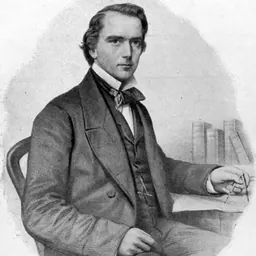
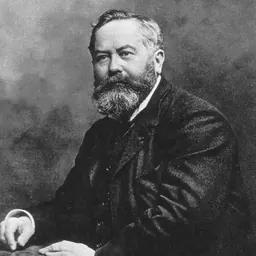



Contemporaries
People whose lives overlapped Alexandru B. Știrbei's



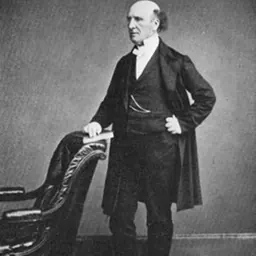
Frequently asked questions
Who was Alexandru B. Știrbei?
Romanian politician
When was Alexandru B. Știrbei born?
Alexandru B. Știrbei was born in 1837 in Bucharest.
When did Alexandru B. Știrbei die?
Alexandru B. Știrbei died on 1 March 1895 in Bucharest.
What was Alexandru B. Știrbei's occupation?
Alexandru B. Știrbei was a politician.
What nationality was Alexandru B. Știrbei?
Alexandru B. Știrbei was Romanian.
Sources & further reading
· Wikipedia: Alexandru B. Știrbei
· DBpedia: Alexandru B. Știrbei
Cite this page
APA: Biography.guide. (2026). Alexandru B. Știrbei. https://biography.guide/alexandru-b-stirbei/
MLA: "Alexandru B. Știrbei." Biography.guide, https://biography.guide/alexandru-b-stirbei/.
Chicago: "Alexandru B. Știrbei." Biography.guide. https://biography.guide/alexandru-b-stirbei/.
Data last updated: 2026-09-20 · Spot an error? Report a correction.
Page generated 2026-09-27 05:23 UTC