
About Alexandre Vallaury
Lived 1850 – 1921 (aged 71). Alexandre Vallaury was a Turkish and French architect.
Alexandre Vallaury (1850–1921 ) was a Franco-Ottoman architect who established architectural education in the Ottoman Empire at the School of Fine Arts in Constantinople. Nicknamed "architect of the city" by Osman Hamdi Bey, Vallaury, alongside his collaborator and palace architect Raimondo D'Aronco, was a leading practitioner of Orientalist eclecticism.
Biography
Vallaury (also spelled Vallauri) was born in 1850 into a Levantine family in Istanbul. His father, Francesco Vallauri, was a renowned pastry chef from Nice, highly respected in court circles. Vallaury's nationality is not definitively known; he was born in modern day Istanbul and, as his family emigrated from Nice at a time when the city was still under piedmontese rule, he is assumed to have been of both Franco-Levantine or Italian-Levantine extraction due to his affinity to both cultures.
Between 1869 and 1878, Vallaury lived in Paris, France, where he studied architecture at the École nationale supérieure des Beaux-Arts. Returning to Istanbul in 1880, he met Osman Hamdi Bey, who was at that time curator of the newly established Imperial Museum ( - now the Istanbul Archaeology Museum), during an exhibition of his relief drawings of various architectural monuments. The two artists worked closely together in the fields of archaeology, museum work and education in fine arts.
Following the foundation of the first School of Fine Arts (, now the Mimar Sinan Fine Arts University) in Turkey on January 1, 1882, Alexandre Vallaury started working in the architecture department. He lectured at the school for 25 years until his retirement in 1908.
Following the 1894 Istanbul earthquake, he was appointed to work on various commissions for city planning. Remembered by Osman Bey as the "City Architect" (Mimar-ı Şehir), Vallaury was almost invariably the architect chosen by the upper echelons of Ottoman high officials and French business circles while he worked at the School of Fine Arts. On some of these projects, he worked with the Italian architect Raimondo D'Aronco, the chief architect at the sultan's palace.
In 1896, he was awarded France's Legion of Honour to go with many other medals and awards from the French and Ottoman governments.
Vallaury combined traditional Ottoman architecture with elements of Beaux-Arts architecture in the buildings he designed for members of the palace and for high officials in Istanbul. His architecture showed great variety, drawing on a broad spectrum of styles from Islamic-Ottoman synthesis to Neoclassical architecture. He used motifs from international Orientalism for some Neo-Renaissance and Neo-Ottoman structures which often incorporated Neo-Baroque and Art Nouveau details. His workshop was located at Saint Pierre Han in Galata.
Imperial College of Medicine (Ottoman Turkish: Mekteb-i Tıbbiye-i Şâhâne), currently the Haydarpaşa Hamidiye Campus of the University of Health Sciences (until 2015 the Haydarpaşa Campus of Marmara University) in the Kadıköy district of Istanbul. The building was designed by architects Alexandre Vallaury and Raimondo D'Aronco.
Notable works
Yalı of Ahmet Afif Pasha in Yeniköy on the European coast of the Bosphorus strait, designed by Alexandre Vallaury.
Afif Pasha waterfront mansion (Muhayyeş Yalısı), (circa 1910) - Yeniköy, Istanbul Café Lebon (from 1940 on Café Marquise - Markiz Pastanesi) (1880) - Beyoğlu, Istanbul Décugis house (today Galata Antique Hotel) (1881) - Beyoğlu, Istanbul Grand Pera (Cercle de l'Orient building and Emek cinema) (1883) - İstiklal Avenue, Beyoğlu, Istanbul Haydarpaşa Breakwater (1902) - Kadıköy, Istanbul Hezaren Han (1902) - Karaköy, Istanbul Hidayet Mosque (1887) - Eminönü, Istanbul Hotel Pera Palace (1881-1891) -Beyoğlu, Istanbul Imperial Military School of Medicine (with Raimondo D'Aronco; later Haydarpaşa High School, today Marmara University Faculty of Law) (1893-1902) - Haydarpaşa, Istanbul Imperial Ottoman Bank and Ottoman Tobacco Company headquarters (1892) - Karaköy, Istanbul Istanbul Archaeology Museum main building (1891-1907) - Sultanahmet, Istanbul Ömer Abed Han (1902) - Karaköy, Istanbul Osman Reis Mosque (1903-1904) - Sarıyer, Istanbul Ottoman Public Debt Administration building (later Istanbul High School) (1897) - Cağaloğlu, Istanbul Prinkipo Greek Orthodox Orphanage (1898-1899) - Büyükada, Istanbul Union Francaise building (in 2018, temporary home of İstanbul Modern) (1896) - Beyoğlu, Istanbul
Don’t just read it —
keep it.
Full-length biographies made to live with: read them, listen on the way to work, watch them tonight.
- E-book
- Audio
- Video
Instant download · yours to keep · every purchase keeps this site free
Important facts
People in Alexandre Vallaury's life
Named in this biography and alive at the same time
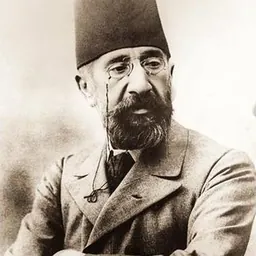


Related people
Same field, nearest in time


Contemporaries
People whose lives overlapped Alexandre Vallaury's


Frequently asked questions
Who was Alexandre Vallaury?
French-Ottoman architect
When was Alexandre Vallaury born?
Alexandre Vallaury was born on 2 April 1850 in Istanbul.
When did Alexandre Vallaury die?
Alexandre Vallaury died on 2 May 1921 in Istanbul.
What was Alexandre Vallaury's occupation?
Alexandre Vallaury was an architect.
What nationality was Alexandre Vallaury?
Alexandre Vallaury was Turkish and French.
Sources & further reading
· Wikipedia: Alexandre Vallaury
Cite this page
APA: Biography.guide. (2026). Alexandre Vallaury. https://biography.guide/alexandre-vallaury/
MLA: "Alexandre Vallaury." Biography.guide, https://biography.guide/alexandre-vallaury/.
Chicago: "Alexandre Vallaury." Biography.guide. https://biography.guide/alexandre-vallaury/.
Data last updated: 2026-09-20 · Spot an error? Report a correction.
Page generated 2026-09-27 05:20 UTC