
About Alexandre François Liautard
Lived 1835 – 1918 (aged 83). Alexandre François Liautard was a French veterinarian and physician, known for American Veterinary Medical Association.
Alexandre François Augustin Liautard (February 15, 1835, Paris – April 20, 1918, Bois-Jérôme-Saint-Ouen, Eure, France) was a French veterinarian. After graduating from the École nationale vétérinaire de Toulouse in 1856, he emigrated to the United States in 1859 to exercise his profession of veterinary practitioner in New York until 1900, when he retired and returned to France. The name of Alexandre Liautard is associated with the beginning of private veterinary education in America. Liautard was the founder and dean of the New York American Veterinary College. He participated in organizing the American Veterinary profession and founded the United States Veterinary Medical Association, now the American Veterinary Medical Association, of which he was for many years a driving force. His name is still cited in the American veterinary press as a dominant figure in the history of the profession for having defined its professional standards and missions, and been a uniting force, and as founder of the American Veterinary Review, now the Journal of the American Veterinary Medical Association (JAVMA).
Alexandre Liautard is honored today, as he was during his lifetime, as the "father of the American veterinary profession".
Biography Alexandre François Augustin Liautard was born on 15 February 1835 at 33 rue Neuve-Saint- Augustin, now rue Saint-Augustin, in the 2nd arrondissement of Paris. He was the son of Jean-François Liautard, a locksmith contractor, and Charlotte Gabrielle Héloïse Vives, born in Paris, and who died in 1841 when Alexandre Liautard was only five years old. He had two sisters. His maternal uncle Étienne Gabriel Vives was a veterinarian in the military profession.
Veterinary studies In 1851, Alexandre Liautard was accepted as pupil at the École nationale vétérinaire d'Alfort. In 1855, his father died and, five days later, Alexandre was expelled from Alfort « for a very serious breach of discipline » the subject of which is unknown. In addition, he had been unable to take the exams at the end of the first semester, due to illness. After halting his studies for several months he was admitted to the École nationale vétérinaire de Toulouse where he finished his fourth year and obtained his diploma in 1856.
Veterinary practitioner in New-York
His activities between 1856 and 1859 remain unknown. His award certificate for the Legion of Honor mentions three years of military service, and although this was initially quoted by Lester Crawford an investigation carried out at the Service historique de l'armée de terre (Army history department) in France did not find any mention of his name. In addition, the military service period was six years at that time, and in accordance with the Gouvion-Saint-Cyr law, admission was by recruitment or by random draw. It is therefore most likely that Liautard drew a "good number" and was not recruited. In 1900, horses lived and worked in Manhattan, in Chicago, and in Philadelphia. In 1879, The New York Times wrote: "New York must move on wheels, the whole population must drive... This is obviously a stable city".
Family life and return to France Mare aux Cerfs chateau at Bois-Jérôme-Saint-Ouen, in the Eure. Taken from the Am. Vet. Rev. (oct. 1914) : Summer home of Professor Liautard
In New York, Alexandre Lieutard married Emily Joséphine Stouvenel the daughter of French immigrants to New-York. Their only daughter, Marie-Louise was born in 1864 in New York where she was brought up. In 1890, she married Octave Boyer who had come to New York to set up a branch of the Grande Maison de Blanc, a luxury Brussels store in Opéra district of Paris. The New York store on Fifth avenue was closed down in the 1960s. In 1900, when Octave Boyer was made director of the Grande Maison de Blanc, boulevard des Capucines, in Paris, Alexandre Liautard retired and returned to France with his wife, then reliant on a wheelchair due to cerebral infarction, and with his daughter and son-in-law. It seems that Liautard was too attached to his daughter to let her leave without him. They lived in a vast apartment on the fourth floor of a luxury building at 14, avenue de l'Opéra.
"Entrepreneur" of veterinary education, founder and dean of the veterinary school Graphic Outline of past New York City's five Veterinary Colleges (1857–1921) and of New York State Veterinary College of Cornell University (1894–), from Donald F. Smith, modified
In the United States (as in Great Britain but unlike France), the first veterinary schools were private enterprises. Like the universities to which they are attached, many still are today. The first American Veterinary colleges, recognized legally as such, were created between 1850 and 1860 at Philadelphia, Boston and New York City. Today, the Iowa State University College of Veterinary Medicine, founded in 1879, the University of Pennsylvania School of Veterinary Medicine (PennVet) founded in 1884, the Ohio State University College of Veterinary Medicine founded in 1885, and the Cornell University College of Veterinary Medicine, founded in 1894, are the four oldest American veterinary establishments still functioning. For the record, the French veterinary schools of Lyon and Alfort were founded in 1761 and 1765, respectively, the École nationale vétérinaire de Toulouse was created in 1825 and inaugurated in 1835 and the Royal Veterinary College of London in 1791. The first principal of this latter was a French veterinarian, Charles Vial de Saint Bel, who trained at the Veterinary School of Lyon.
The New York College of Veterinary Surgeons The first three American veterinary colleges at Philadelphia, Boston and New York were not successful and did not last long. The New York College of Veterinary Surgeons, founded in 1857 by Dr John Busteed (1815–1876), a doctor of Irish origin, is considered as the veritable precursor of veterinary teaching in the United States, but the establishment had to close down in 1859, due to lack of pupils. Dr Busteed did not abandon his project and reorganized his school in 1862. Liautard had been in New York since 1860 and had already set up premises at 205 Lexington Avenue. His notoriety must have already been well-established and his position sufficiently secure for him to be able to house this college in his own building, by private arrangement, where it opened in 1864. He was a member of the teaching staff and continued his activity as practitioner on the premises, which remained his property. Doctors formed part of the teaching staff. In 1870, Busteed retired and Liautard succeeded him as president of the teaching body. The establishment was directed by a board of trustees. In 1875, dissension arose within the board of trustees. All the teaching staff resigned and followed Liautard who founded his own school: the American Veterinary College.
The New York College of Veterinary Surgeons continued to function as best it could and finished by merging in 1899 with the American Veterinary College directed by Liautard. He trained a total of 292 graduate veterinary surgeons. In the meantime, some teachers left to create the Columbia Veterinary College which lasted from 1878 to 1884 and trained a total of 82 graduates.
The American Veterinary College
In April 1875, two months after the closure of the New York College of Veterinary Surgeons, the American Veterinary College opened as a private establishment under the direction of Liautard, in a new building that he had purchased at 141 West 54th Street. Both the college and veterinary clinic were owned by Liautard who taught and had a practice there until his retirement and return to France in 1900. The college rapidly became very famous, mainly due to the personal genius of Liautard on all fronts, not only as a teacher and reputed clinician, but also as manager and remarkable organizer of a professional network of former pupils he had trained, and with whom he corresponded and supported through his journal, the American Veterinary Review. In April 1887, Liautard wrote:
The clinical activities of the Hospital Department of the American Veterinary College were published annually; in 1887 he summarized the 12 previous years as follows : and encouraged all of them provided that the professional standard, which he never ceased to promote, was respected.
His relationship with James Law, another great name in the history of American veterinary medicine, is highly instructive in this respect. James Law, a veterinarian of Scottish origin, was recruited by Ezra Cornell to provide veterinary teaching in the specialized University of Agronomy that he had founded at Ithaca, now Cornell University, in New York State. In 1894, James Law was responsible for creating the college of veterinary medicine within this private university, even though the American Veterinary College existed in the same State, in New York City, in Manhattan. Liautard opened the columns of his Journal to Law and supported his teaching and university projects, provided that they ultimately resulted in a college of veterinary medicine which applied the same statutes and professional standards to train veterinarians as those laid down for the American Veterinary College, and that in no case would it be a question of training empirics ː Nevertheless, despite his remarkable success and perfect integration into American society, Liautard retained his French nationality. In a letter dated September 28, 1902, written from Paris to Henry MacCracken, chancellor of New York University, who had begged Liautard to return to New York to take up the post of dean of New York University New York American Veterinary College, Liautard replied: "the fact that I kept my nationality could raise objections, as was the case when I lived in New York". he was the veterinary consultant. The greatest tribute rendered to Alexandre Liautard is to be honored today, as he was when still alive, and as written on the marker at the Père Lachaise cemetery, as the "Father of the American Veterinary Profession".
Reviews and works
American Veterinary Review, from January 1877 until September 1915, volumes 1 to 47. Journal of the American Medical Association, from October 1915 until April 1918, volumes 1 to 4.. Animal castration, W.R. Jenkins ed., New York; Baillière, Tyndall & Cox, ed., London, 1884 2nd édition in 1885, 11th édition in 1905. Lameness of horses and diseases of the lococomotive apparatus W.R. Jenkins ed., New York, 1888. Re-editions in 1890 and 1897. The diseases of livestock and their most efficient remedies in collaboration with William B. Miller, Willis P. Hazard & Lloyd Tellor, Mc Kay ed., Philadelphia, 1890. Manual of operative veterinary surgery, Sabiston & Murray ed., New York, 1892. Vademecum of veterinary anatomy ː for use of advanced veterinary students and veterinary surgeons, American veterinary college ed., New York, 1877 2nd and 3rd éditions by W.R.Jenkins, in 1879 and 1890. How to tell the age of domestic animals ? W.R. Jenkins ed., New York, 1885 Translation into English of several French works in veterinary medicine.
Notes and references
Don’t just read it —
keep it.
Full-length biographies made to live with: read them, listen on the way to work, watch them tonight.
- E-book
- Audio
- Video
Instant download · yours to keep · every purchase keeps this site free
Important facts
People in Alexandre François Liautard's life
Named in this biography and alive at the same time
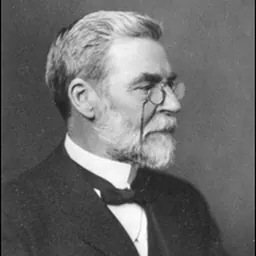

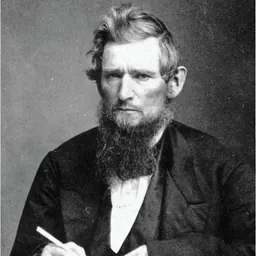
Related people
Same field, nearest in time

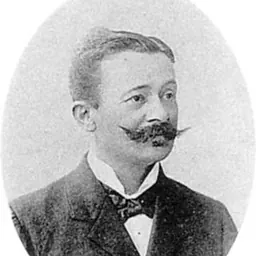
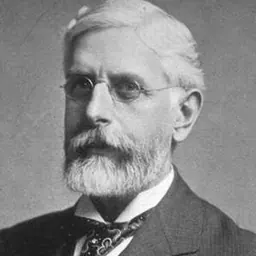


Contemporaries
People whose lives overlapped Alexandre François Liautard's



Frequently asked questions
Who was Alexandre François Liautard?
French veterinarian
When was Alexandre François Liautard born?
Alexandre François Liautard was born on 15 February 1835 in 2nd arrondissement of Paris.
When did Alexandre François Liautard die?
Alexandre François Liautard died on 18 April 1918 in Bois-Jérôme-Saint-Ouen.
What was Alexandre François Liautard's occupation?
Alexandre François Liautard was a veterinarian and physician.
What was Alexandre François Liautard known for?
Alexandre François Liautard was known for American Veterinary Medical Association.
What nationality was Alexandre François Liautard?
Alexandre François Liautard was French.
Sources & further reading
· Wikipedia: Alexandre François Liautard
Cite this page
APA: Biography.guide. (2026). Alexandre François Liautard. https://biography.guide/alexandre-francois-liautard/
MLA: "Alexandre François Liautard." Biography.guide, https://biography.guide/alexandre-francois-liautard/.
Chicago: "Alexandre François Liautard." Biography.guide. https://biography.guide/alexandre-francois-liautard/.
Data last updated: 2026-09-20 · Spot an error? Report a correction.
Page generated 2026-09-27 05:20 UTC