
About Alexander Ypsilantis
Lived 1792 – 1828 (aged 35). Alexander Ypsilantis was a Greek military personnel, major general and freedom fighter.
Alexandros Ypsilantis (12 December 1792 – 31 January 1828) was a Greek nationalist politician who was member of a prominent Phanariot Greek family, a prince of the Danubian Principalities, a senior officer of the Imperial Russian cavalry during the Napoleonic Wars, and a leader of the Filiki Etaireia, a secret organization that coordinated the beginning of the Greek War of Independence against the Ottoman Empire.
Early life The Ypsilantis family hailed from the Pontic Greek population of Trabzon. He was born on 12 December 1792 in Constantinople, the capital of the Ottoman Empire, as the eldest of five brothers (the others being Demetrios, Nicholas, Georgios and Grigorios). His father Constantine Ypsilantis and grandfather Alexander were active in the Ottoman administration and highly educated, each with their own share of service as a dragoman in the Sultan's court and as hospodars of the Danubian Principalities. His mother, Elisabeta Văcărescu was member of the Văcărescu family of Wallachia.
Russian military service Ypsilantis in the uniform of a senior officer of the Russian Hussars, 1810s. With the outbreak of the Russo-Turkish War in 1805, his father fled with family to Imperial Russia. The young Alexander had received a thorough education, becoming fluent in Russian, French, German and Romanian. At the age of 15, he was presented to the Russian Court, where he came under the patronage of Empress Maria Feodorovna.
Death
After his release, he retired to Vienna, where he died in extreme poverty and misery on 29 January 1828.
His body was originally buried in St. Marx cemetery. Much later, on 18 February 1903, his remains were transferred by members of his family to the Ypsilanti-Sina estate, Schloss Rappoltenkirchen, Sieghartskirchen, Austria. His last transfer occurred in August 1964, when he was relocated to the [Holy Church of the All-Great Taxiarchs] in Pedion tou Areos, a city park in Athens, Greece, 136 years after his death.
Cultural references Alexander Ypsilantis is mentioned in Russian literature by Alexander Pushkin in his short story "The Shot". The hero of Pushkin's story, Silvio, dies in a campaign under command of Ypsilantis. He, and his failed campaign, is also mentioned by Pushkin in the short story Kirdjali.
Don’t just read it —
keep it.
Full-length biographies made to live with: read them, listen on the way to work, watch them tonight.
- E-book
- Audio
- Video
Instant download · yours to keep · every purchase keeps this site free
Important facts
People in Alexander Ypsilantis's life
Named in this biography and alive at the same time

Related people
Same field, nearest in time

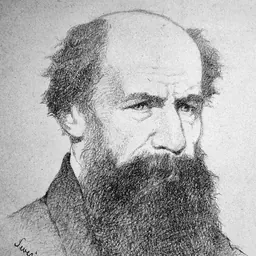
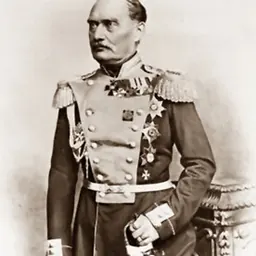
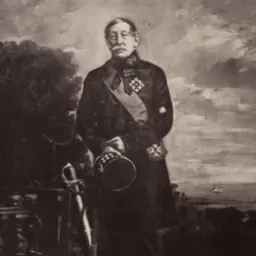

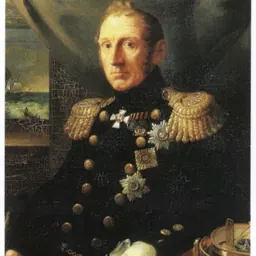
Contemporaries
People whose lives overlapped Alexander Ypsilantis's



Frequently asked questions
Who was Alexander Ypsilantis?
Greek general (1792-1828)
When was Alexander Ypsilantis born?
Alexander Ypsilantis was born on 12 December 1792 in Constantinople.
When did Alexander Ypsilantis die?
Alexander Ypsilantis died on 31 January 1828 in Vienna.
What was Alexander Ypsilantis's occupation?
Alexander Ypsilantis was a military personnel, major general and freedom fighter.
What nationality was Alexander Ypsilantis?
Alexander Ypsilantis was Greek.
Sources & further reading
· Wikipedia: Alexander Ypsilantis
· DBpedia: Alexander Ypsilantis
Cite this page
APA: Biography.guide. (2026). Alexander Ypsilantis. https://biography.guide/alexander-ypsilantis/
MLA: "Alexander Ypsilantis." Biography.guide, https://biography.guide/alexander-ypsilantis/.
Chicago: "Alexander Ypsilantis." Biography.guide. https://biography.guide/alexander-ypsilantis/.
Data last updated: 2026-09-20 · Spot an error? Report a correction.
Page generated 2026-09-27 05:25 UTC