
Alexander Teixeira de Mattos
Dutch-English journalist, literary critic and publisher
About Alexander Teixeira de Mattos
Lived 1865 – 1921 (aged 56). Alexander Teixeira de Mattos was a Dutch translator, journalist and writer.
Alexander Louis Teixeira de Mattos (9 April 1865 – 5 December 1921), known as Alexander Teixeira de Mattos, was a Dutch-English journalist, literary critic and publisher, who gained his greatest fame as a translator.
Early life The Teixeira de Mattos Sampaio e Mendes family was of Portuguese Jewish origin, having been driven out of Portugal to the Netherlands by Holy Office persecution. Alexander Teixeira de Mattos was born as a Dutch Protestant to an English mother and a Dutch father. In 1874, when he was nine years old, he and his family moved from Amsterdam to England. There, he studied under Monsignor Thomas John Capel and converted to Roman Catholicism. He then studied at the Kensington Catholic Public School and at the Jesuit school Beaumont College. In addition to the later works of Maeterlinck, his translations include works by Émile Zola, Alexis de Tocqueville, Maurice Leblanc, Gaston Leroux, François-René de Chateaubriand, Paul Kruger, Carl Ewald, Georgette Leblanc, Stijn Streuvels, and Louis Couperus. He considered his greatest achievement to be his complete translation of Jean-Henri Fabre's natural history.
In the 1890s, Teixeira was the leading translator for the Lutetian Society, a group whose mission was "to issue, to its members, translations of such representative master-pieces of fiction by Continental authors as are unprocurable in English in an unmutilated rendering". He oversaw the Society's publication of unexpurgated translations of six banned novels by Émile Zola in 1894–5, contributing his own translation of the third volume in the series, La curée.
During World War I, Teixeira was head of the Intelligence Section, as well as a member of the Advisory Board, of the War Trade Intelligence Department. Midway through the war, Teixeira became a British subject.
Personal life On 20 October 1900, he married Lily Wilde (née Sophie Lily Lees, 1859–1922), the widow of Oscar Wilde's older brother Willie Wilde, and thus became the stepfather of Dolly Wilde, then age 5.
Teixeira was known to his acquaintances as a dandy and a fastidious worker, keeping strictly to set hours, and was linked to the Symbolist movement thanks to his friendship and travels with Arthur Symons. He was politically liberal and a devout Catholic.
Due to ill health, Teixeira traveled on a rest cure in 1920 at Crowborough and the Isle of Wight, returning to his home in Chelsea, London in spring 1921. He worked as usual through the autumn and traveled to Cornwall for the winter. On 5 December 1921, in St Ives, Cornwall The high quality and readability of Teixera's work was such that many of his translations are still in print today. For example, though his translation of La curée is over a century old, its accuracy and style have given it a status still unrivaled by more modern versions. 1910 Maurice Maeterlinck Death 1911 Maurice Maeterlinck Hours of Gladness 1912 Maurice Maeterlinck Our Eternity 1913 Maurice Maeterlinck Our Friend the Dog 1913 Maurice Maeterlinck The Unknown Guest 1914 Maurice Maeterlinck Life and letters 1914 Maurice Maeterlinck The Wrack of the Storm 1916 Maurice Maeterlinck The Light Beyond 1917 Maurice Maeterlinck The Burgomaster of Stilemonde 1918 Maurice Maeterlinck The Betrothal or the Blue Bird Chooses 1918 Maurice Maeterlinck The Miracle of Saint Anthony 1918 Maurice Maeterlinck Mountain Paths 1919 G. Hermine Marius Dutch painting in the nineteenth century 1908 Eugénie de Coucy Oudinot Memoirs of Marshal Oudinot, duc de Reggio 1896 Xavier Paoli My royal clients 1911 Peter Rosegger The forest farm: tales of the Austrian Tyrol 1912 Stijn Streuvels The Path of Life 1915 Alexis de Tocqueville The Recollections of Alexis de Tocqueville 1896 August Weissl The Mystery of the Green Car 1913 Émile Zola The heirs of Rabourdin 1894 Émile Zola La curée 1895
Don’t just read it —
keep it.
Full-length biographies made to live with: read them, listen on the way to work, watch them tonight.
- E-book
- Audio
- Video
Instant download · yours to keep · every purchase keeps this site free
Important facts
People in Alexander Teixeira de Mattos's life
Named in this biography and alive at the same time
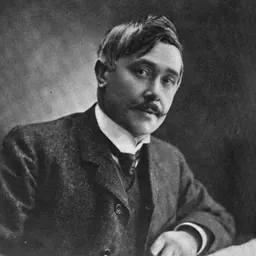
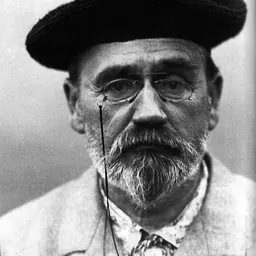


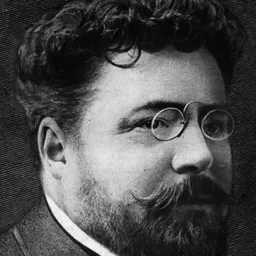

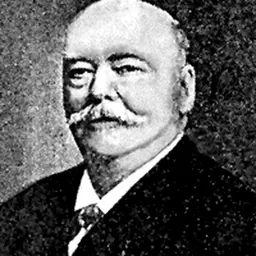
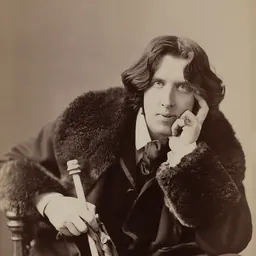
Related people
Same field, nearest in time

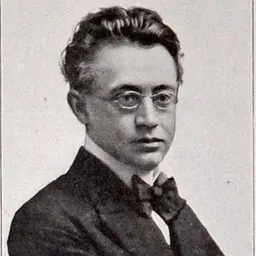

Contemporaries
People whose lives overlapped Alexander Teixeira de Mattos's


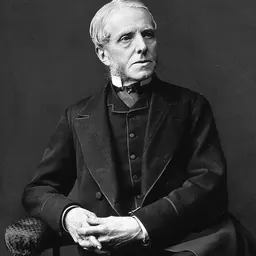
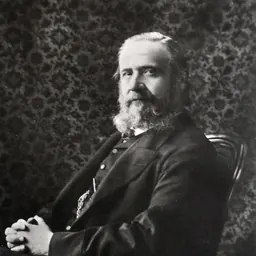


Frequently asked questions
Who was Alexander Teixeira de Mattos?
Dutch-English journalist, literary critic and publisher
When was Alexander Teixeira de Mattos born?
Alexander Teixeira de Mattos was born on 9 April 1865 in Amsterdam.
When did Alexander Teixeira de Mattos die?
Alexander Teixeira de Mattos died on 5 December 1921 in St Ives.
What was Alexander Teixeira de Mattos's occupation?
Alexander Teixeira de Mattos was a translator, journalist and writer.
What nationality was Alexander Teixeira de Mattos?
Alexander Teixeira de Mattos was Dutch.
Sources & further reading
· Wikipedia: Alexander Teixeira de Mattos
· DBpedia: Alexander Teixeira de Mattos
Cite this page
APA: Biography.guide. (2026). Alexander Teixeira de Mattos. https://biography.guide/alexander-teixeira-de-mattos/
MLA: "Alexander Teixeira de Mattos." Biography.guide, https://biography.guide/alexander-teixeira-de-mattos/.
Chicago: "Alexander Teixeira de Mattos." Biography.guide. https://biography.guide/alexander-teixeira-de-mattos/.
Data last updated: 2026-09-22 · Spot an error? Report a correction.
Page generated 2026-09-27 05:21 UTC