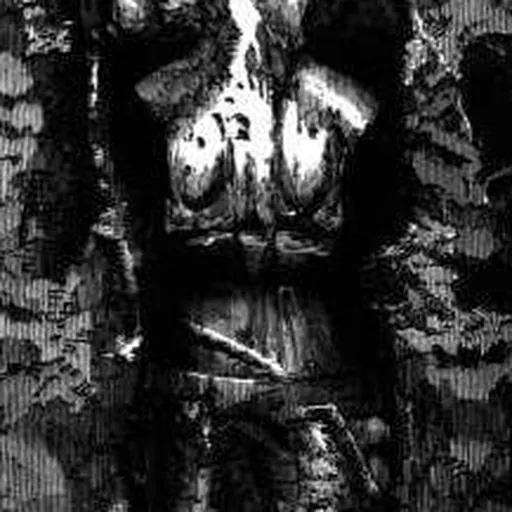
About Alexander Stewart, Earl of Mar
Lived 1400 – 1435. Alexander Stewart, Earl of Mar was an aristocrat.
Origins and early life Alexander was born in . He was an illegitimate son of Alexander Stewart, Lord of Badenoch, and his longtime mistress, Mairead inghean Eachainn. Alexander's father, who later gained the title of Earl of Buchan, was the fourth son of Robert II of Scotland. The earl married Euphemia, Countess of Ross, in 1382, in a political match supported by Alexander's grandfather, the king.
Alexander's early years remain obscure. Some of his younger brothers participated in the infamous Raid of Angus early in 1392, for which they were condemned by a general council of the kingdom. Alexander was linked with the death of Malcolm Drummond, Lord of Mar, a relative and ally of his cousin, David, Duke of Rothesay, in 1402.
Career The events of 1402, including Drummond's death, left a power vacuum in the earldom of Mar. Alexander moved quickly for the hand of Drummond's widow, Isabel Douglas, Countess of Mar. Alexander's uncle, Robert, Duke of Albany, opposed his planned marriage to Isabella. Despite this challenge, Alexander was able to gain the support of another of his paternal uncles, King Robert III, who negotiated a settlement between Alexander's supporters and the Erskine affinity. Alexander married Isabella at Kildrummy Castle on 9 December 1404, and thereby became Earl of Mar jure uxoris.
Alexander traveled to England in 1406, where he jousted with Edmund Holland, 4th Earl of Kent, at a tournament in London.
Burgundy, remarriage, and reputation Alexander journeyed to the Duchy of Burgundy in 1408, probably seeking the income which could be gained from mercenary service, and joined the army of John the Fearless, Duke of Burgundy. He fought at the Battle of Othée on 23 September 1408. Alexander and his Scottish contingent were praised for their performance in the battle, which saw the Burgundian ruler defeat the rebellious citizens of Liège. Despite the death of his wife, Alexander continued to hold the title of Earl of Mar in liferent under the original terms of his marriage. Within a decade, Alexander's service in Burgundy had given him a significant European reputation as a military commander. Charles, Dauphin of France, recognized Alexander's martial reputation in 1419, when he addressed requests for military aid to Alexander and other Scottish noblemen. A monument to the Battle of Harlaw, fought between Alexander and Donald of Islay in 1411.
Battle of Harlaw Alexander's military reputation was secured at the Battle of Harlaw on 24 July 1411, where he led the army of his uncle, Robert, Duke of Albany, who had now become Governor of Scotland, against Donald, Lord of the Isles. The battle was the culmination of a feud between the governor and the Lord of the Isles over the earldom of Ross. After gathering a large army, Donald attacked and burned Inverness early in 1411. Despite his failure to gain a decisive victory, Alexander succeeded in forcing Donald to retreat back to the Outer Hebrides. Alexander was appointed as "lieutenant" of the northeast, a quasi-viceregal position, by both Robert, Duke of Albany, and Murdoch, his son and successor. During this tense period, Alexander allied himself with the governor, Murdoch, Duke of Albany, who was wary of the king's potential return. Alexander feared that James I would cancel his pension and special jurisdiction over the northeast. Although he attempted to befriend his cousin, Alexander was unable to prevent James I from cancelling his pension and regality powers. Alexander was likely outraged when the king recognized the claim of Alexander, Lord of the Isles, the son of his enemy at Harlaw, to the earldom of Ross towards the end of 1424.
Alexander was able to restore his relationship with James I during the Christmas holiday of 1424, when he came to a political agreement with the king. Alexander offered his support to James I against Murdoch, Duke of Albany, whom the king was planning to arrest for treason. In exchange, the king promised to support the succession of Thomas Stewart, Alexander's illegitimate son, to the earldom of Mar. The king fulfilled his promise when he formally regranted the earldom of Mar to Alexander, under an entail to Thomas, in May 1426. Alexander received another reward for his loyalty in January 1427, with the king's grant of the lordship of Badenoch.
Apotheosis of career In the years after James I's return to Scotland, the king's relationship with Alexander of Islay, Lord of the Isles, began to decline. Alexander offered his support to the king when the latter arrested the Lord of the Isles and his mother, Mariota, Countess of Ross, in 1428. Open warfare erupted between James I and the lord's Clan Donald kinsmen the following year. Alexander and his affinity participated in the king's campaign against the Lord of the Isles and his family, which culminated in the Battle of Lochaber on 23 June 1429. Alexander's support of James I in 1429 allowed him to recover the preeminent position he had held under the Dukes of Albany. The king returned practical control of northeastern Scotland to Alexander, under the customary title of "lieutenant". Alexander's defeat at the Battle of Inverlochy, fought near Inverlochy Castle in 1431, marked the end of his martial career. With his authority in northeastern Scotland strengthened, Alexander took a leading role in royal campaigns against Clan Donald and Clan Mackay. Alexander worked actively to weaken the Lordship of the Isles by arranging the marriage of his daughter, Janet, to Lachlan MacLean, a prominent figure in the lordship. Alexander raised a large army to expel Alasdair Carrach and his supporters from Lochaber. Alexander, whom the king had appointed to command the campaign, likely chose to target Carrach in order to secure his own control of Lochaber, which he now claimed as its lord. The army of the Islesmen caught Alexander's forces by surprise and routed them from the field, killing the Earl of Caithness and several knights. Alexander reportedly composed a Gaelic couplet to commemorate his escape from the battle.
Dynastic failure and death Alexander failed to produce legitimate children by either of his two wives. By 1424, he was proposing the succession of his illegitimate son, Thomas Stewart, to his lands in lieu of a legitimate heir. The terms of the 1426 regrant of the earldom of Mar now worked against Alexander, as the king replaced Thomas as heir to the earldom through reversion. Alexander's second wife, Marie van Hoorn, died in , removing any remaining chance for a legitimate heir.
Alexander died on his demesne land in July 1435. His body was taken to Inverness, where it was buried at the Dominican monastery of the Blackfriars on 26 July. The king ultimately gained control of the earldom, while some of Alexander's lands were given to his former daughter-in-law, Elizabeth Douglas, through her right of terce.
Issue Despite his lack of legitimate heirs, Alexander produced at least two illegitimate children by unknown mothers.
Thomas (d. 1430). He held the title of Lord of Badenoch before his death. He married Elizabeth Douglas, daughter of Archibald Douglas, 4th Earl of Douglas, with whom he had no issue. Janet (d. ), who married Lachlan MacLean in . She had at least one son, Lachlan MacLean, called "the younger" to distinguish him from his father.
Don’t just read it —
keep it.
Full-length biographies made to live with: read them, listen on the way to work, watch them tonight.
- E-book
- Audio
- Video
Instant download · yours to keep · every purchase keeps this site free
Important facts
Family & relationships
People in Alexander Stewart, Earl of Mar's life
Named in this biography and alive at the same time


Related people
Same field, nearest in time
Contemporaries
People whose lives overlapped Alexander Stewart, Earl of Mar's

Frequently asked questions
Who was Alexander Stewart, Earl of Mar?
Scottish nobleman
When was Alexander Stewart, Earl of Mar born?
Alexander Stewart, Earl of Mar was born in 1400.
When did Alexander Stewart, Earl of Mar die?
Alexander Stewart, Earl of Mar died on 6 July 1435 in Marr.
What was Alexander Stewart, Earl of Mar's occupation?
Alexander Stewart, Earl of Mar was an aristocrat.
Sources & further reading
· Wikipedia: Alexander Stewart, Earl of Mar
· DBpedia: Alexander Stewart, Earl of Mar
Cite this page
APA: Biography.guide. (2026). Alexander Stewart, Earl of Mar. https://biography.guide/alexander-stewart-earl-of-mar/
MLA: "Alexander Stewart, Earl of Mar." Biography.guide, https://biography.guide/alexander-stewart-earl-of-mar/.
Chicago: "Alexander Stewart, Earl of Mar." Biography.guide. https://biography.guide/alexander-stewart-earl-of-mar/.
Data last updated: 2026-09-25 · Spot an error? Report a correction.
Portrait: Wikimedia Commons · author & licence
Page generated 2026-10-05 02:08 UTC