
About Alexander Scott
Lived 1853 – 1947 (aged 93). Alexander Scott was a British chemist.
Alexander Scott (28 December 1853–10 March 1947) was a Scottish chemist who served as Director of Scientific Research at the British Museum. He was President of the Chemical Society from 1915 to 1917. He determined the atomic weights of several elements: potassium, sodium (1879), manganese (1881), carbon -re-evaluation (1897), tellurium (1902), nitrogen (1905).
Life He was born in Selkirk in southern Scotland on 28 December 1853 the eldest of eight children of Alexander Scott, Rector of Selkirk Academy.
From 1868 he studied science at the University of Edinburgh under Fleeming Jenkin, James Dewar and Alexander Crum Brown. He assisted James Dewar in lectures at the Dick Vet College from 1872 to 1875, and graduated with a BSc in 1876. He then took further degrees at the University of Cambridge gaining a BA in 1879 and an MA in 1882. He ended his studies in 1884 with a doctorate (DSc) back at the University of Edinburgh. He then immediately obtained a post as Science Master at Durham Secondary School.
In 1891 he left Durham to become a Demonstrator in Chemistry at the University of Cambridge. In 1896 he joined the Royal Institution in London as a Researcher. From 1911 to 1919 he undertook private research. In 1919 he became Director of Scientific Research at the British Museum, one of the most prestigious jobs in his field in the world. His initial task involved studying the deterioration of multiple objects stored in "safe" but damp conditions through the war. He founded the Research Laboratory within the Museum, and in 1924 brought in Dr Harold Plenderleith as his assistant.
He retired in 1938 and died in Ringwood, Hampshire on 10 March 1947. On his death, Harold Plenderleith acted as his executor.
Publications
An Introduction to Chemical Theory (1891)
Artistic recognition
His portrait by H. A. Olivier is held at the British museum.
Family He was married to Agnes Mary Russell in 1906. She was the daughter of Dr Dr William James Russell FRS. They had no children.
Don’t just read it —
keep it.
Full-length biographies made to live with: read them, listen on the way to work, watch them tonight.
- E-book
- Audio
- Video
Instant download · yours to keep · every purchase keeps this site free
Important facts
People in Alexander Scott's life
Named in this biography and alive at the same time
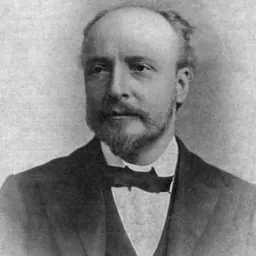


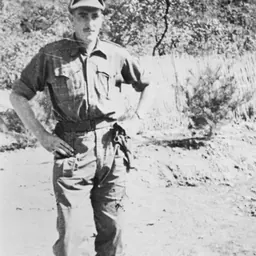
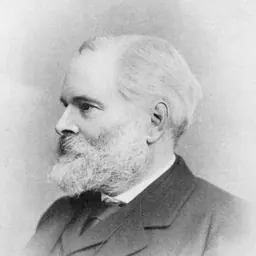
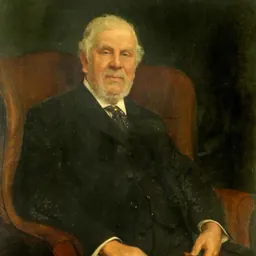


Related people
Same field, nearest in time


Contemporaries
People whose lives overlapped Alexander Scott's




Frequently asked questions
Who was Alexander Scott?
British chemist (1853-1947)
When was Alexander Scott born?
Alexander Scott was born on 28 December 1853.
When did Alexander Scott die?
Alexander Scott died on 10 March 1947 in Ringwood.
What was Alexander Scott's occupation?
Alexander Scott was a chemist.
What nationality was Alexander Scott?
Alexander Scott was British.
Sources & further reading
· DBpedia: Alexander Scott (chemist)
Cite this page
APA: Biography.guide. (2026). Alexander Scott. https://biography.guide/alexander-scott-chemist/
MLA: "Alexander Scott." Biography.guide, https://biography.guide/alexander-scott-chemist/.
Chicago: "Alexander Scott." Biography.guide. https://biography.guide/alexander-scott-chemist/.
Data last updated: 2026-09-20 · Spot an error? Report a correction.
Page generated 2026-09-27 05:04 UTC