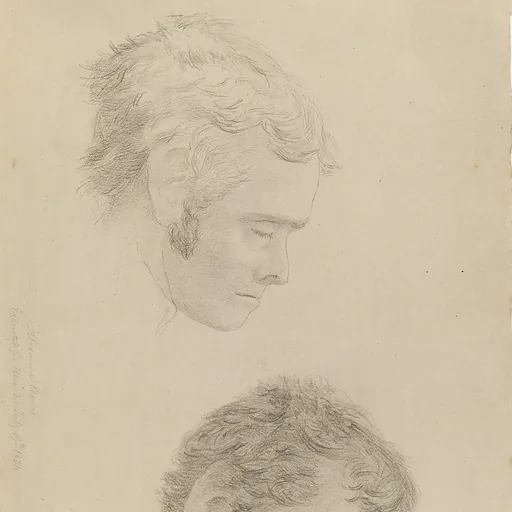
Alexander Pearce
Irish convict transported and imprisoned in Tasmania and escapee cannibal
About Alexander Pearce
Lived 1790 – 1824 (aged 33–34). Alexander Pearce was an Irish criminal and serial killer.
Drawings, by Thomas Bock, of the face of Alexander Pearce after his execution.
Alexander Pearce (1790 – 19 July 1824) was an Irish convict who was transported to the penal colony in Van Diemen's Land (now Tasmania), Australia for seven years for theft. He escaped from prison several times, allegedly becoming a cannibal during two of the escapes. He was eventually captured and was hanged in Hobart for murder, before being dissected.
Early life Pearce was born in County Monaghan, Ireland. A Roman Catholic farm labourer, he was sentenced at Armagh in 1819 to penal transportation to Van Diemen's Land for "the theft of six pairs of shoes". He continued to commit various petty offences whilst in the penal colony in Van Diemen's Land, from which he soon escaped. The 18 May 1822 edition of the Hobart Town Gazette reported this escape and advertised a £10 reward for his recapture. When caught, he was charged with absconding and forging an order, a serious crime. For this, he received a second sentence of transportation, this time to the new secondary penal establishment at Sarah Island in Macquarie Harbour.
Escape and cannibalism
On 20 September 1822, Pearce along with seven other convicts of Macquarie Harbour Penal Station – Alexander Dalton, Thomas Bodenham, William Kennerly, Matthew Travers, Edward Brown, Robert Greenhill and John Mather – escaped while working on the eastern side of the harbour. Greenhill, who had an axe, appointed himself leader, supported by his friend Travers, with whom he had been sent to Macquarie Harbour for stealing businessman Anthony Fenn Kemp's schooner in an attempt to escape. About 15 days into the journey, the men were starving and drew lots to see who would be killed for food.
Allegedly, Pearce grabbed the axe, killed Greenhill and ate him. He later raided an Aboriginal campsite and stole more food. He reached the settled districts, and the shepherd who came upon him eating a lamb was an old friend. Pearce was inducted into a sheep-stealing ring, and was eventually picked up with William Davis and Ralph Churton, who were both hanged on 14 April 1823 for sheep stealing .
In total, Pearce had been on the run for 113 days, a little less than half of which was spent in the wilderness. Locked up in Hobart, Pearce made a confession to the Rev. Robert Knopwood, the magistrate and chaplain. However, Knopwood did not believe the cannibalism story and was convinced the others were still living as bushrangers. He sent Pearce back to Macquarie Harbour.
Legacy
Pearce's skull is believed to have been sold by the surgeon who dissected him to American naturalist and skull collector Samuel George Morton and is housed along with the rest of his collection at Penn Museum in Philadelphia. Pearce is the subject of the Australian band Weddings Parties Anything's song "A Tale They Won't Believe". The narrative in the song follows the account given in The Fatal Shore by Robert Hughes. Australian band The Drones recorded "Words from the Executioner to Alexander Pearce". His adventures were fictionalised as the character Gabbett in Marcus Clarke's 1874 novel For the Term of His Natural Life. A biographical film, The Last Confession of Alexander Pearce, was shot on location in 2008 in Tasmania and Sydney and starred Adrian Dunbar, Ciaran McMenamin, Dan Wyllie, Don Hany and Chris Haywood. It was shown on RTÉ in Ireland on 29 December 2008 and ABC1 in Australia on 25 January 2009. Also in 2008, Dying Breed, a horror film about Pearce was released. It featured fictional "descendants" of Pearce. Shot in Tasmania and Melbourne (including at the Pieman River on the West Coast of Tasmania), Dying Breed stars writer/actor Leigh Whannell and Nathan Phillips.
Don’t just read it —
keep it.
Full-length biographies made to live with: read them, listen on the way to work, watch them tonight.
- E-book
- Audio
- Video
Instant download · yours to keep · every purchase keeps this site free
Important facts
People in Alexander Pearce's life
Named in this biography and alive at the same time

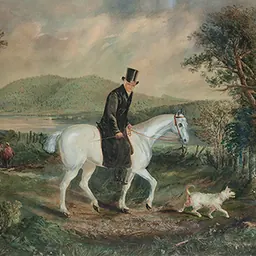
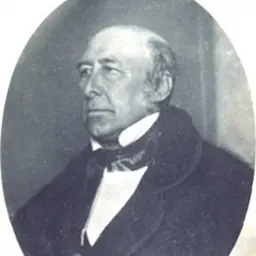




Related people
Same field, nearest in time

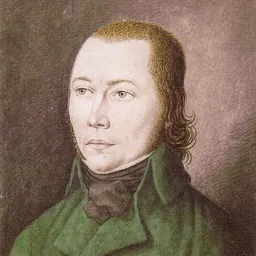


Contemporaries
People whose lives overlapped Alexander Pearce's


Frequently asked questions
Who was Alexander Pearce?
Irish convict transported and imprisoned in Tasmania and escapee cannibal
When was Alexander Pearce born?
Alexander Pearce was born in 1790 in County Monaghan.
When did Alexander Pearce die?
Alexander Pearce died on 19 July 1824 in Hobart.
What was Alexander Pearce's occupation?
Alexander Pearce was a criminal and serial killer.
What nationality was Alexander Pearce?
Alexander Pearce was Irish.
Sources & further reading
Cite this page
APA: Biography.guide. (2026). Alexander Pearce. https://biography.guide/alexander-pearce/
MLA: "Alexander Pearce." Biography.guide, https://biography.guide/alexander-pearce/.
Chicago: "Alexander Pearce." Biography.guide. https://biography.guide/alexander-pearce/.
Data last updated: 2026-09-22 · Spot an error? Report a correction.
Portrait: Wikimedia Commons · author & licence
Page generated 2026-09-27 05:01 UTC