
About Alexander Munro
Lived 1825 – 1871 (aged 45). Alexander Munro was a British sculptor.
Alexander Munro (26 October 1825 – 1 January 1871) was a British sculptor of the Pre-Raphaelite movement. He concentrated on portraiture and statues, but is best known for his Rossetti-influenced figure-group Paolo and Francesca, which has often been identified as the epitome of Pre-Raphaelite sculpture.
Lionel Cust described his work as "sketchy and wanting in strength, but full of refinement and true feeling." He was the son of a stonemason, and his talents were supported by financial assistance from his father's employer, the Duchess of Sutherland. He exhibited at the Royal Academy from 1849 to 1870, and in the Great Exhibition of 1851. Between 1853 and 1865 Munro created a number of portrait busts of children for society families.
Chronological list of principal works
Bust of Mrs Banks exhibited at Royal Academy (1849) Chimney-pieces for Dunrobin Castle for the Duke of Sutherland (1849) Bust of John Loch at Stoke College, Suffolk (1850) Statue of Francesca da Rimini for William Gladstone (1852) Medallion of Lady Constance Grosvenor, exhibited at Royal Academy (1853) Sculpture group of The Ingram Children for Herbert Ingram (1853) Bust of Sir Robert Peel at Oldham (1854) Medallion of Lady Alwyne Compton exhibited at Royal Academy (1854) Medallion of John Everett Millais for the Ashmolean Museum, Oxford (1854) Bust of William Gladstone exhibited at Royal Academy (1855) Medallion of Henry Wellesley for the Ashmolean Museum, Oxford (1856) Sculpture group of The Gladstone Children at Hawarden, home of William Ewart Gladstone (1856) Bust of Henry Acland at Bodleian Library, Oxford (1857) Statue of Undine exhibited at Art Treasures Exhibition, Manchester (1857) Bust of Adelaide Ristori exhibited at Royal Academy (1858) Sculpture group of The Gathorne Hardy Children (1859) Medallion of Mrs Tom Hughes exhibited at the Royal Academy (1859) Bust of Louis Huth exhibited at the Royal Academy (1860) Bust of Helen Huth exhibited at the Royal Academy (1860) Medallion of Benjamin Woodward for Oxford University's University Museum (1860) Bust of Lord Ashburton exhibited at Royal Academy (1860) Bust of William Armstrong, 1st Baron Armstrong for Literary and Philosophical Society of Newcastle upon Tyne (1860) Bust of Frederick Robb for Major Eustace Robb (1861) Sculpture group of The Matheson Children (1861) Statue entitled Mother's Joy exhibited at the Royal Academy (1861) Statue of Herbert Ingram at Boston, Lincolnshire (1862) Statue of Mary II for the Houses of Parliament now the Central Criminal Court (1863) Statues of James Watt, Gottfried Wilhelm Leibniz, Hippocrates, Sir Isaac Newton, Galileo and Sir Humphry Davy for the Oxford Museum, (1863) Sculpture group of The Crompton Roberts Children for Charles Henry Crompton-Roberts (1865) Fountain in Berkeley Square London (1865)
Statue of Boy and Dolphin for Grosvenor Gate, Hyde Park (1865) Statue of James Watt in Birmingham (1866) Bust of Sir James Fitzjames Stephen exhibited at Royal Academy (1866) Bust of Monsieur Victor Cousin for Napoleon III (1867) Statue of Ronald Munro Ferguson exhibited at the Royal Academy (1868) Medallion of the Duchess of Valembrossa exhibited at the Royal Academy (1869) Bust of Richard Quain for the Town Hall in Gravesend, Kent (date unknown) Medallion of George MacDonald at the Scottish National Portrait Gallery (date unknown) Statuary group of The Hardy Children at Chilham Church, Kent (date unknown)
Don’t just read it —
keep it.
Full-length biographies made to live with: read them, listen on the way to work, watch them tonight.
- E-book
- Audio
- Video
Instant download · yours to keep · every purchase keeps this site free
Important facts
People in Alexander Munro's life
Named in this biography and alive at the same time
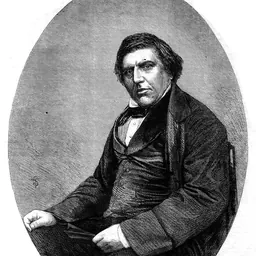

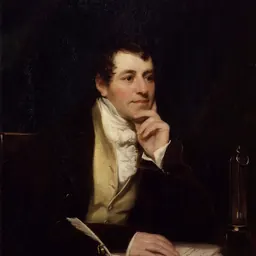
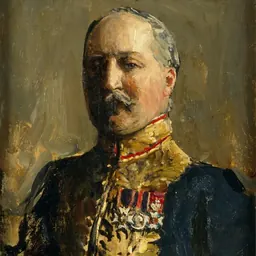
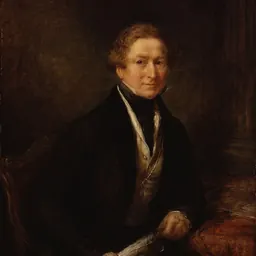


Related people
Same field, nearest in time



Contemporaries
People whose lives overlapped Alexander Munro's




Frequently asked questions
Who was Alexander Munro?
sculptor (1825–1871)
When was Alexander Munro born?
Alexander Munro was born on 26 October 1825 in Inverness.
When did Alexander Munro die?
Alexander Munro died on 1 January 1871 in Cannes.
What was Alexander Munro's occupation?
Alexander Munro was a sculptor.
What nationality was Alexander Munro?
Alexander Munro was British.
Sources & further reading
· DBpedia: Alexander Munro (sculptor)
Cite this page
APA: Biography.guide. (2026). Alexander Munro. https://biography.guide/alexander-munro-sculptor/
MLA: "Alexander Munro." Biography.guide, https://biography.guide/alexander-munro-sculptor/.
Chicago: "Alexander Munro." Biography.guide. https://biography.guide/alexander-munro-sculptor/.
Data last updated: 2026-09-22 · Spot an error? Report a correction.
Page generated 2026-09-27 05:20 UTC