
About Alexander Melville Bell
Lived 1819 – 1905 (aged 86). Alexander Melville Bell was a British linguist and university teacher.
Alexander Melville Bell (1 March 18197 August 1905) was a teacher and researcher of physiological phonetics and was the author of numerous works on orthoepy and elocution.
Additionally he was also the creator of Visible Speech which was used to help the deaf learn to talk, and was the father of Alexander Graham Bell. an authority on phonetics and speech disorders. From 1843 to 1865 he lectured on speech elocution at the University of Edinburgh, and from 1865 to 1870 at the University of London. Melville married Eliza Grace Symonds (b. 21 September 1809, Alverstock, Hampshire d. Georgetown, Washington, D.C., US 5 January 1897), the only daughter of a British naval surgeon.
In 1868, and again in 1870 and 1871, Melville lectured at the Lowell Institute in Boston, Massachusetts, US after having moved to Canada. In 1870 he became a lecturer on philology at Queen's College, Kingston, Ontario; and in 1881 he moved to Washington, D.C. at the suggestion of his son Graham, where he devoted himself to the education of the deaf by the use of Visible Speech in which the alphabetical characters of his linguistic invention were representative graphic diagrams for the various positions and motions of the lips, tongue, mouth, etc., as well as other methods of orthoepy. When the Duke and Duchess of Cornwall (later King George V and Queen Mary) called on Brantford for a visit, Melville was asked to greet the dignitaries at the public event. He became a Fellow of the Educational Institute of Scotland, the Royal Scottish Society of Arts, and the American Association for the Advancement of Science, as well as obtaining memberships in other societies. To promote the language, Bell created two written short forms using his system of 29 modifiers and tones, 52 consonants, 36 vowels and a dozen diphthongs: World English, which was similar to the International Phonetic Alphabet, and also Line Writing, used as a shorthand form for stenographers.
Melville's works on Visible Speech became highly notable, and were described by Édouard Séguin as being "...a greater invention than the telephone of his son, Alexander Graham Bell". and eventually faded from use.
Other contributions to the education of the deaf
In 1887, his son, Alexander Graham Bell, sold off the intellectual assets owned by the Volta Laboratory Association. Graham used the considerable profits from the sale of his shares to found the Volta Bureau as an instrument "for the increase and diffusion of knowledge relating to the deaf". Graham's scientific and statistical research work on deafness became so large that within the period of a few years his documentation engulfed an entire room of the Volta Laboratory in Melville's backyard carriage house. Due to the limited space available at the carriage house, and with the assistance of Melville who contributed US$15,000 (approximately $ in today's dollars), Graham had his new Volta Bureau building constructed close by in 1893.
Death and tributes
Melville Bell died at age 86 in 1905 due to pneumonia after an operation for diabetes, and was interred in Washington, D.C.'s Rock Creek Cemetery adjacent to the Hubbard • Bell • Grossman • Pillot Memorial, alongside his wife and other members of the Bell and Grosvenor families.
The Bell House at Colonial Beach, Virginia was listed on the National Register of Historic Places in 1987.
The voice of Bell, reciting a sentence from Hamlet, can be heard at the Smithsonian Institution, as extracted from an 1881 graphophone recording.
Publications
The following are some of the more prominent of the 93 publications authored or co-authored by Melville Bell: Steno-Phonography (1852) Letters and Sounds (1858) The Standard Elocutionist (1860, and nearly 200 other editions), including a viewable 1878 edition (below) published by William Mullan & Son, properly cited as: David Charles Bell, Alexander Melville Bell. Bell's Standard Elocutionist: Principles And Exercises, W. Mullan, London, 1878. Principles of Speech and Dictionary of Sounds (1863) Visible Speech: The Science of Universal Alphabetics (1867) Sounds and their Relations (1881) Lectures on Phonetics (1885) A Popular Manual of Visible Speech and Vocal Physiology (1889) World English: the Universal Language (1888) The Science of Speech (1897) The Fundamentals of Elocution (1899)
Don’t just read it —
keep it.
Full-length biographies made to live with: read them, listen on the way to work, watch them tonight.
- E-book
- Audio
- Video
Instant download · yours to keep · every purchase keeps this site free
Important facts
Family & relationships
People in Alexander Melville Bell's life
Named in this biography and alive at the same time


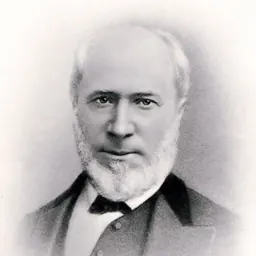

Related people
Same field, nearest in time

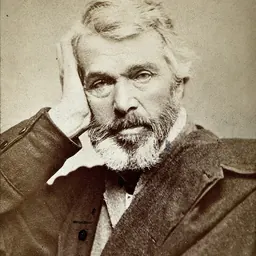
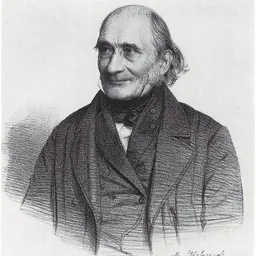

Contemporaries
People whose lives overlapped Alexander Melville Bell's



Frequently asked questions
Who was Alexander Melville Bell?
British linguist (1819–1905)
When was Alexander Melville Bell born?
Alexander Melville Bell was born on 1 March 1819 in Edinburgh.
When did Alexander Melville Bell die?
Alexander Melville Bell died on 7 August 1905 in Washington, D.C..
What was Alexander Melville Bell's occupation?
Alexander Melville Bell was a linguist and university teacher.
What nationality was Alexander Melville Bell?
Alexander Melville Bell was British.
Sources & further reading
· Wikipedia: Alexander Melville Bell
· DBpedia: Alexander Melville Bell
Cite this page
APA: Biography.guide. (2026). Alexander Melville Bell. https://biography.guide/alexander-melville-bell/
MLA: "Alexander Melville Bell." Biography.guide, https://biography.guide/alexander-melville-bell/.
Chicago: "Alexander Melville Bell." Biography.guide. https://biography.guide/alexander-melville-bell/.
Data last updated: 2026-09-22 · Spot an error? Report a correction.
Page generated 2026-09-27 05:31 UTC