
About Alexander Macbain
Lived 1855 – 1907 (aged 51). Alexander Macbain was a British linguist, teacher, philologist and celticist.
Alexander MacBain (or Alexander Macbain; 22 July 1855 – 4 April 1907) was a Scottish philologist, best known today for An Etymological Dictionary of the Gaelic Language.
Early life and education MacBain was born 22 July 1855 at Balguish, Glenfeshie (modern-day Badenoch, Inverness-shire) and grew up in poverty. His parents, John MacBain and Margaret McIntyre were not recorded as married when his birth was registered 9 August 1855. A native Gaelic speaker, he learned English at Insh General Assembly school, five miles from Kingussie, in Badenoch (1863–1870), whose teacher was Alexander Mackenzie. As a teenager, he taught for half a year at the Dunmullie School in Boat of Garten (1870–71), attended Baldow School in Badenoch, was employed by the Ordnance Survey in Scotland and Wales (1871–74) and returned to Baldow School for another term. Having obtained a bursary, MacBain was accepted at Old Aberdeen Grammar School (1874) and subsequently studied at King's College, Aberdeen (1876), where he graduated with an MA in philosophy. He also published an annotated edition of W. F. Skene's The Highlanders of Scotland (1902) and of the History of the Mathesons by his former teacher Alexander Mackenzie; contributed to an edition of Ewan MacEachen's Gaelic Dictionary; and was editor for Celtic Magazine (1886-1888) and Highland Monthly (1889–1902). How to Learn Gaelic. It has been suggested that the degree of animosity evident in MacBain's treatment of Skene may have been for personal reasons and that he was biased against him.
Selected publications 1883–84. Celtic Mythology and Religion. in Celtic Magazine; published in book form in Inverness, 1885. Available through the Internet Archive here and here. 1885. The "Druid" Circles in Transactions of the Gaelic Society of Inverness, vol. XI; published in book form by Eneas Mackay, Inverness, 1914. 1885. Ed. and tr. "The Book of Deer." in Transactions of the Gaelic Society of Inverness; vol. XI, pp. 137–66. Available from the Internet Archive 1893. Celtic Burial, in Transactions of the Inverness Scientific Society and Field Club, vol. III, Inverness. 1895. Personal Names and Surnames of Inverness. Inverness. 1896, 1911. Etymological Dictionary of the Gaelic Language. Inverness, 1911 (revised edition, originally published in 1896; reprinted in 1982 by Gairm, Glasgow). Transcribed online at Ceantar.org. 1917. Celtic Mythology and Religion, a collection of Celtic Mythology and Religion, The "Druid" Circles, and Celtic Burial. Published in book form by Eneas Mackay, Inverness, 1917. Reprinted by The Lost Library, Glastonbury, no date.
Don’t just read it —
keep it.
Full-length biographies made to live with: read them, listen on the way to work, watch them tonight.
- E-book
- Audio
- Video
Instant download · yours to keep · every purchase keeps this site free
Important facts
People in Alexander Macbain's life
Named in this biography and alive at the same time


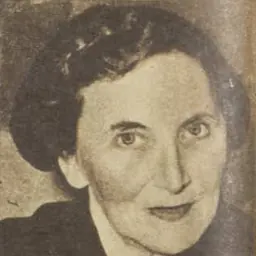
Related people
Same field, nearest in time
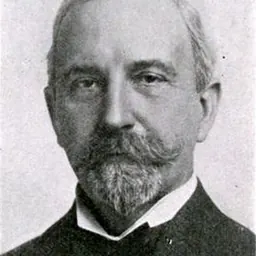
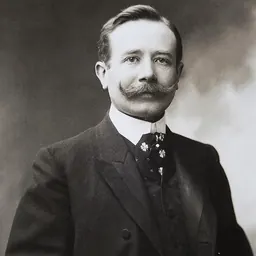
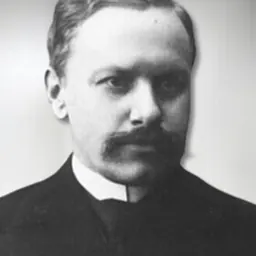
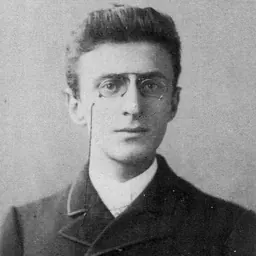
Contemporaries
People whose lives overlapped Alexander Macbain's
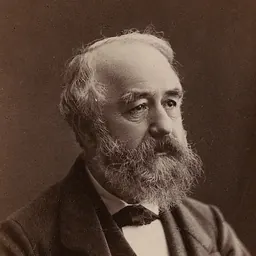





Frequently asked questions
Who was Alexander Macbain?
Scottish philologist (1855–1907)
When was Alexander Macbain born?
Alexander Macbain was born on 22 July 1855 in Baileguish.
When did Alexander Macbain die?
Alexander Macbain died on 4 April 1907 in Stirling.
What was Alexander Macbain's occupation?
Alexander Macbain was a linguist, teacher, philologist and celticist.
What nationality was Alexander Macbain?
Alexander Macbain was British.
Sources & further reading
· Wikipedia: Alexander Macbain
Cite this page
APA: Biography.guide. (2026). Alexander Macbain. https://biography.guide/alexander-macbain/
MLA: "Alexander Macbain." Biography.guide, https://biography.guide/alexander-macbain/.
Chicago: "Alexander Macbain." Biography.guide. https://biography.guide/alexander-macbain/.
Data last updated: 2026-09-20 · Spot an error? Report a correction.
Page generated 2026-09-27 05:24 UTC