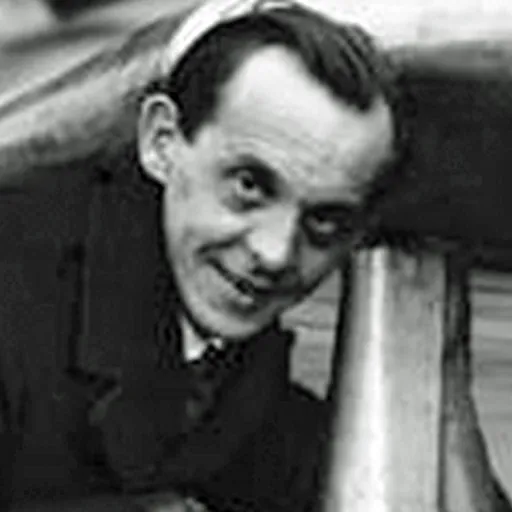
Alexander Lippisch
German pioneer of aerodynamics
About Alexander Lippisch
Lived 1894 – 1976 (aged 81). Alexander Lippisch was a German military flight engineer, physicist and aerospace engineer.
Alexander Martin Lippisch (2 November 1894 – 11 February 1976) was a German-American aeronautical engineer, a pioneer of aerodynamics who made important contributions to the understanding of tailless aircraft, delta wings and the ground effect, and also worked in the U.S. Within the Opel-RAK program, he was the designer of the world's first rocket-powered glider.
He developed and conceptualized delta wing designs which functioned practically in supersonic delta wing fighter aircraft as well as in hang gliders. People he worked with continued the development of the delta wing and supersonic flight concepts over the 20th century. His most famous designs are the Messerschmitt Me 163 rocket-powered interceptor and the Dornier Aerodyne.
Early life Lippisch was born in Munich, Kingdom of Bavaria. He later recalled that his interest in aviation began with a demonstration conducted by Orville Wright over Tempelhof Field in Berlin in September 1909. Nonetheless, he planned to follow his father's footsteps into art school, until the outbreak of World War I intervened. During his service with the German Army, between 1915 and 1918, Lippisch had the chance to fly being an aerial photographer and mapper.
Early aircraft designs Following the war, Lippisch worked with the Zeppelin Company, and it was at this time that he first became interested in tailless aircraft. In 1921, his first design to be built, by his friend Gottlob Espenlaub, was the Espenlaub E-2 glider. This was the beginning of a research programme that would result in some fifty designs throughout the 1920s and 1930s. Lippisch's growing reputation saw him appointed in 1925 to director of the Rhön-Rossitten Gesellschaft (RRG), a glider organisation including research groups and construction facilities.
Lippisch also designed conventional gliders at this time, including the Wien of 1927 and its successor the Fafnir of 1930. In 1928, partaking in the Opel-RAK program by Fritz von Opel and Max Valier, Lippisch's tail-first Ente (Duck) was equipped with powder rockets by Friedrich Wilhelm Sander's company and became the first aircraft to fly under rocket power. From 1927, he resumed his tailless work, leading to a series of designs named Storch I – Storch IX (Stork I-IX), mostly gliders. These designs attracted little interest from the government and private industry.
Delta wing designs Experience with the Storch series led Lippisch to develop what he called his Delta designs. Like the Storch series, these were mostly tailless aircraft. They included the earliest successful delta wing designs. In 1931 the Delta I glider became the first to fly. It was followed by the Delta II and III.
The Delta IV design was powered, and built in two variants as the Fieseler F3 Wespe. Lippisch subsequently designated these the Delta IVa and b, with the c being built as the DFS 39. The development of this led directly to the Messerschmitt Me 163 Komet (see next section), which Lippisch has also referred to as the Delta IVd.
In 1933, the RGG was reorganised into the Deutsche Forschungsanstalt für Segelflug (German Institute for Sailplane Flight, DFS) and the Delta IVd and Delta V were designated as the DFS 39 and DFS 40 respectively. Lippisch thus saw five designs built, numbered Delta I to V, between 1931 and 1939.
Although technically novel, the Komet did not prove to be a successful weapon and friction between Lippisch and Messerschmitt was frequent. In 1943, Lippisch transferred to Vienna's Aeronautical Research Institute (Luftfahrtforschungsanstalt Wien, LFW) in Wiener Neustadt, in an own design bureau to concentrate on the problems of high-speed flight.
Some Lippisch designs Lippisch SG-38 Zögling, 1926 RRG Storch V, powered tailless glider, 1929 DFS 39, tailless research aircraft DFS 40, tailless research aircraft DFS 193, experimental aircraft DFS 194, rocket-powered research aircraft, forerunner of Me 163 Lippisch P.01-111, designed during 'Projekt X', which would eventually culminate in the Messerschmitt Me 163 Komet. Lippisch Li P.04, a tailless airplane designed as a competitor to the Messerschmitt Me 329 Lippisch Li P.10, 1942 tailless bomber design Lippisch P.11, designed to compete with the Horten Ho 229 Messerschmitt Me 163 Komet Lippisch P.13, 1943 push-pull bomber design Lippisch P.13a, a unique delta-winged, ramjet-powered interceptor. Lippisch P.13b, a unique airplane powered by a rotating fuel-table of lignite, owing to the fuel shortages late in World War 2 in Germany. Lippisch P.15, a development of the Messerschmitt Me 163 Komet. Lippisch P.20, a development of the P.15. Dornier Aerodyne, a 1972 wingless VTOL unmanned aircraft (UAV)
Don’t just read it —
keep it.
Full-length biographies made to live with: read them, listen on the way to work, watch them tonight.
- E-book
- Audio
- Video
Instant download · yours to keep · every purchase keeps this site free
Important facts
People in Alexander Lippisch's life
Named in this biography and alive at the same time




Related people
Same field, nearest in time




Contemporaries
People whose lives overlapped Alexander Lippisch's


Frequently asked questions
Who was Alexander Lippisch?
German pioneer of aerodynamics (1894-1976)
When was Alexander Lippisch born?
Alexander Lippisch was born on 2 November 1894 in Munich.
When did Alexander Lippisch die?
Alexander Lippisch died on 11 February 1976 in Cedar Rapids.
What was Alexander Lippisch's occupation?
Alexander Lippisch was a military flight engineer, physicist and aerospace engineer.
What nationality was Alexander Lippisch?
Alexander Lippisch was German.
Sources & further reading
· Wikipedia: Alexander Lippisch
Cite this page
APA: Biography.guide. (2026). Alexander Lippisch. https://biography.guide/alexander-lippisch/
MLA: "Alexander Lippisch." Biography.guide, https://biography.guide/alexander-lippisch/.
Chicago: "Alexander Lippisch." Biography.guide. https://biography.guide/alexander-lippisch/.
Data last updated: 2026-09-21 · Spot an error? Report a correction.
Portrait: Wikimedia Commons · author & licence
Page generated 2026-09-27 05:00 UTC