
About Alexander Howat
Lived 1876 – 1945 (aged 68–69). Alexander Howat was a trade unionist.
Alexander McWhirter Howat (1876–1945) was a Scottish-born American coal miner and trade union leader. Howat is best remembered as the chief opponent of the Kansas Court of Industrial Relations in the early 1920s and as the leader of a radical rank-and-file revolt against the officialdom of the United Mine Workers of America (UMWA) in 1923. Howat's activity ultimately led to his expulsion from the UMWA in 1930, forcing him into new occupations outside the organized labor movement.
Biography
Early years
Alexander Howat was born in Glasgow, Scotland on September 10, 1876. He emigrated to the United States as a small child, arriving with his parents in 1879. The family lived first in Troy, New York and Braidwood, Illinois, before moving to Crawford County, Kansas, located in the Southeastern corner of the state. There Alex went to work in the coal mines for the first time as a boy of 10. These work stoppages moved the Kansas Legislature to pass the Kansas Industrial Relations Act in 1920, which banned strikes, picketing, and the use of boycott in favor of a binding Court of Industrial Relations for the resolution of labor disputes. The charters of 83 Kansas locals were also revoked by the executive board. Despite Howat's defeat on the main question concerning him, he was elected by the 1921 convention as a delegate of the UMWA to the 1922 International Miners Conference, scheduled to be held in Europe.
The battle within the UMWA continued in the months after the September 1921 convention, with Kansas miners, backed by the Illinois district organization, continuing their fight against the International union and the Kansas Industrial Court. In reply, on October 12, 1921, Lewis revoked the charter of District 14 altogether, ousting Howat and his associates in favor of a new slate of "provisional" officers who were to reorganize the district. Howat's local had its charter revoked and union officials maintained that by this action Howat was himself excluded from the union.
More heated debate followed, after which supporters of Howat were narrowly defeated in a roll call vote, amidst a turmoil described by one historian as "stormy scenes verging on rioting."
Later union activity The English-born John Brophy, whom Howat supported in 1926 in the last serious effort to unseat John Lewis as head of the UMWA.
No United Mine Workers convention was held in 1923, the annual gathering being held over until January 1924, when it was convened in Indianapolis. It was there that once again Alexander Howat attempted to unite delegates in opposition to the well-entrenched president of the union, John L. Lewis. Howat combined with left wing union organizer Powers Hapgood in attempting to organize left wing delegates associated with the Communist Party's trade union mass organization, the Trade Union Educational League (TUEL) as well as anti-Lewis conservatives in an effort to depose Lewis.
The 1924 effort was a wild affair, marked by delegate demonstrations, swarming in the aisles, fist fights, and the copious use of its sergeants-at-arms by the Lewis administration. Decisions were made by a deeply divided convention, amidst accusations of falsification of roll call counts by the so-called "Lewis machine."
An attempt by Howat to gain a hearing of his case by the convention was once again ruled out of order by virtue of Howat being neither a delegate nor a union member, although he was allowed the right of making an appeal to the Lewis-controlled Committee on Appeals and Grievances. Howat mounted the platform and delivered a lengthy speech in opposition to Lewis and the standing leadership of the UMWA. Howat was elected chairman of the governing National Committee by the gathering. A preliminary conference to establish this group was called in January 1928, attended by 125 delegates, of whom about 20% were Communist Party members. By the end of the summer the Save the Union Committee strike had come to a conclusion and a new miners' union was indeed formed, the National Miners' Union, the first of a number of dual unions promoted by the Communist Party and its trade union auxiliary group headed by Foster.
Despite his wariness towards the new radical union, Howat was never readmitted to the UMWA, however, and his trade union career effectively came to an end.
Later years
With his more than two decades in the American trade union movement abruptly terminated by expulsion, Howat began a series of other jobs, working in the 1930s and 1940s as a Kansas state border guard, editor of a labor newspaper, and gaining employment as a city employee of Pittsburg, Kansas.
Death and legacy
Alexander Howat died in Pittsburg, Kansas on December 10, 1945.
Don’t just read it —
keep it.
Full-length biographies made to live with: read them, listen on the way to work, watch them tonight.
- E-book
- Audio
- Video
Instant download · yours to keep · every purchase keeps this site free
Important facts
People in Alexander Howat's life
Named in this biography and alive at the same time



Related people
Same field, nearest in time
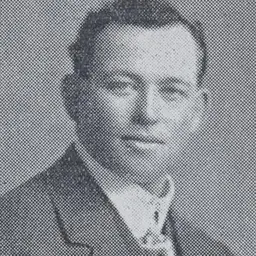


Contemporaries
People whose lives overlapped Alexander Howat's

Frequently asked questions
Who was Alexander Howat?
American labor leader (1876–1945)
When was Alexander Howat born?
Alexander Howat was born in 1876.
When did Alexander Howat die?
Alexander Howat died in 1945.
What was Alexander Howat's occupation?
Alexander Howat was a trade unionist.
Sources & further reading
Cite this page
APA: Biography.guide. (2026). Alexander Howat. https://biography.guide/alexander-howat/
MLA: "Alexander Howat." Biography.guide, https://biography.guide/alexander-howat/.
Chicago: "Alexander Howat." Biography.guide. https://biography.guide/alexander-howat/.
Data last updated: 2026-09-20 · Spot an error? Report a correction.
Page generated 2026-09-27 05:24 UTC