
About Alexander H. Rice
Lived 1818 – 1895 (aged 76). Alexander H. Rice was an American politician.
Alexander Hamilton Rice (August 30, 1818 – July 22, 1895) was an American politician and businessman from Massachusetts. He served as Mayor of Boston from 1856 to 1857, a U.S. congressman during the American Civil War, and as the 30th governor of Massachusetts from 1876 to 1879. He was part owner and president of Rice-Kendall, one of the nation's largest paper products distributors.
Educated at Union College, Rice was for many years involved in the paper business, and entered Boston politics in 1853. As mayor, he helped broker an agreement that began development of its Back Bay area. His Congressional service included the introduction of the failed Crittenden Compromise, oversight of naval affairs during the Civil War, and resistance to Radical Republican actions. As governor, he promoted social reform legislation and reductions in working hours.
Early years
Alexander Hamilton Rice was born in Newton Lower Falls, Massachusetts, to Thomas and Lydia (Smith) Rice, on August 30, 1818. His father, a Brighton native, owned a paper manufacturing business in Newton, and both parents had deep colonial roots. His uncle Charles was a brigadier general in the Massachusetts state militia and also served as a state legislator.
Rice was first educated in the Newton public schools, and then at private schools in Needham and Newton. He first clerked at a Boston dry goods store, and then apprenticed in the Boston paper distributor Wilkins, Carter, and Company in Boston. This prompted him to give up thoughts of pursuing a career in law, and he instead focused on business. He was eventually able to overcome his speech problems, and later became well known as a commanding speaker.
Business interests After his graduation, Rice entered into partnership with the proprietors of Wilkins, Carter, forming what eventually became known as the Rice-Kendall Company. The company owned several paper mills in New England and distributed paper products to newspaper and book publishers nationwide. Rice also invested in paper manufacturing operations, serving as president of both the Keith Paper Company in Turners Falls, Massachusetts and the American Sulphite Pulp Company. In 1854, he also served as president of the Boston School Committee. He later sat on the committees responsible for the commissioning and installation of the statues of George Washington and Charles Sumner in the Public Garden. and repurposed the city's almshouse on Deer Island for use as an insane asylum and workhouse, the state having taken over care of the indigent.
Rice participated in the founding of the Republican Party in Massachusetts. and was considered by labor interests to favor positions of the "moneyed class". After the war, he was elected as a Third Class Companion of the Military Order of the Loyal Legion of the United States in recognition of his support for the Union.
Governor of Massachusetts
Rice refused to stand for reelection, and then left politics for a time, devoting himself to his business interests. In 1872, after the Boston fire, he served on a relief committee that assisted in dealing with its aftermath. In 1871, Rice was one of a number of contenders for the Republican nomination for Governor of Massachusetts, a contest which was dominated by Benjamin Butler and won by William B. Washburn. In 1875, he won the nomination, and defeated incumbent Democrat William Gaston in the general election. He served three one-year terms before retiring from politics for good. He generally supported legislation improving social conditions, but was unsuccessful in enacting a proposed reorganization of the state's major charities.
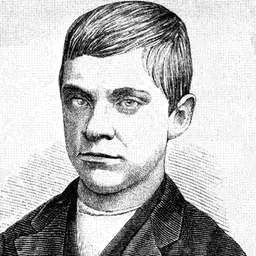
One issue that had dominated Rice's race against Gaston in 1875 concerned the juvenile murderer Jesse Pomeroy. Pomeroy, then fourteen years old, had been convicted in December 1874 of first degree murder for killing a girl earlier that year, and had been sentenced to death. There was public clamor favoring his execution, especially after he attempted to escape from prison. Gaston, despite two rulings by the Governor's Council that clemency be denied, refused to sign the execution order, an unpopular move that probably cost him votes. Rice also refused to sign the execution order, but his Council eventually recommended commutation of Pomeroy's sentence to life in solitary confinement.
Rice died at the Langwood Hotel in Melrose, Massachusetts, on July 22, 1895, after a lengthy illness. He was buried at Newton Cemetery.
Family relations and legacy Rice was married twice. In 1845, he married Augusta McKim, with whom he had three children before her death in 1868. He had one son by his second wife, Angie Erickson Powell of Rochester, New York. His grandson Alexander Hamilton Rice was a physician and explorer in South America.
The city of Boston named a school in Rice's honor in 1868. Later renamed the Rice-Bancroft School, the building, located at Dartmouth and Appleton Streets in Boston's South End, now houses residential condominiums.
Don’t just read it —
keep it.
Full-length biographies made to live with: read them, listen on the way to work, watch them tonight.
- E-book
- Audio
- Video
Instant download · yours to keep · every purchase keeps this site free
Important facts
People in Alexander H. Rice's life
Named in this biography and alive at the same time



Related people
Same field, nearest in time






Contemporaries
People whose lives overlapped Alexander H. Rice's



Frequently asked questions
Who was Alexander H. Rice?
American politician (1818–1895)
When was Alexander H. Rice born?
Alexander H. Rice was born on 30 August 1818 in Newton.
When did Alexander H. Rice die?
Alexander H. Rice died on 22 July 1895 in Melrose.
What was Alexander H. Rice's occupation?
Alexander H. Rice was a politician.
What nationality was Alexander H. Rice?
Alexander H. Rice was American.
Sources & further reading
· Wikipedia: Alexander H. Rice
Cite this page
APA: Biography.guide. (2026). Alexander H. Rice. https://biography.guide/alexander-h-rice/
MLA: "Alexander H. Rice." Biography.guide, https://biography.guide/alexander-h-rice/.
Chicago: "Alexander H. Rice." Biography.guide. https://biography.guide/alexander-h-rice/.
Data last updated: 2026-09-20 · Spot an error? Report a correction.
Page generated 2026-09-27 05:26 UTC