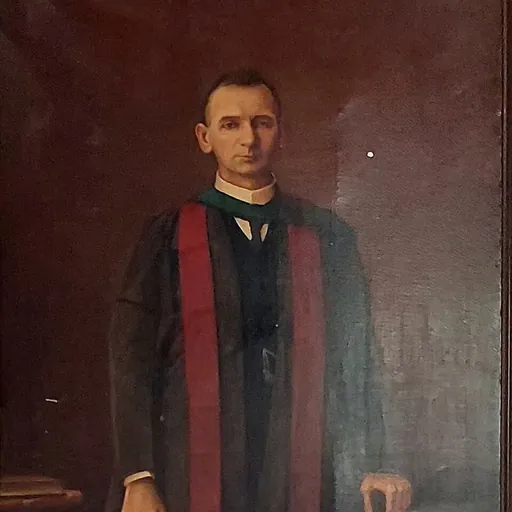
About Alexander Crichton Mitchell
Lived 1864 – 1952 (aged 87). Alexander Crichton Mitchell was a British geophysicist, historian and physicist, known for Anti-submarine indicator loop.
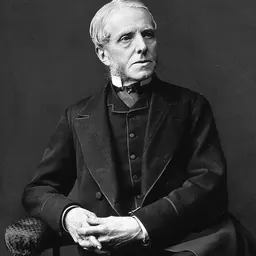
Alexander Crichton Mitchell FRSE (1 July 1864 – 15 April 1952), named in some sources as Arthur Crichton Mitchell, was a Scottish physicist with a special interest in geomagnetics who worked for many years in India as a professor and head of a meteorological observatory before returning to Scotland. He then worked with the Royal Navy to devise a system, known as an anti-submarine indicator loop, for detecting submarines by detecting currents induced in a loop of wire on the sea floor.
Early life Mitchell was born in Leith on 1 July 1864 to James Mitchell and Isabella Mitchell née Crichton. He studied physics at Edinburgh University and graduated with a Bachelor of Science. He was elected Fellow of the Royal Society of Edinburgh in 1889. His proposers were Peter Guthrie Tait, Alexander Crum Brown, George Chrystal, and Sir Thomas Clark. He was elected a Fellow of the Scottish Meteorological Society in 1891.
India In 1890, he went to Trivandrum, in India, where he taught physics at the Maharaja's College. He also took up the position of director of the Trivandrum Observatory which had been established by John Caldecott and later headed by John Allan Broun before it fell into disuse. He married Agnes Farquharson Robertson (d. 1948) on 2 May 1892 and the couple had three children, all of whom were born in Trivandrum.
By 1893 he became a Principal of the college and also served as Director of Public instruction in the State of Travancore. The work involved inspecting schools across the region which he did on motorcycle. He once had an accident in Mavelikkara at a place later known as Mitchell Junction. Resigning from the college in 1912, he returned to Scotland and became an Honorary Research Fellow at Edinburgh University.
Later work During the First World War, German U-Boats were operational and a strategy was proposed to destroy the British Empire by blocking key ports such as the Firth of Forth. The Royal Society of Edinburgh set up a War Committee that discussed how science could be applied to defence. Mitchell visited the West Pier at Leith in June 1915 and on 1 August he tried a loop of wire at the end of Leith Pier and found that it could detect a passing trawler through the induced current. He later placed the loop horizontally on the harbour floor and found that it was too sensitive but could detect all passing ships. He solved the sensitivity problem by placing the loop in a figure of eight pattern.
In 1916, he became the superintendent of the Eskdalemuir Observatory.
He made important studies in terrestrial magnetism at Eskdalemuir Observatory in 1927. A major publication of Mitchell's was a review and history of the study of terrestrial magnetism published in three parts. His work on the diurnal incidence of disturbance in the geomagnetic field earned him the Keith Prize for 1931–33.
He died in Edinburgh on 15 April 1952.
Don’t just read it —
keep it.
Full-length biographies made to live with: read them, listen on the way to work, watch them tonight.
- E-book
- Audio
- Video
Instant download · yours to keep · every purchase keeps this site free
Important facts
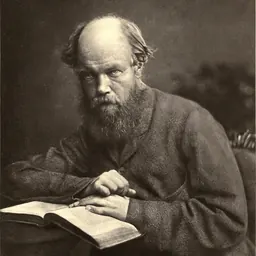
People in Alexander Crichton Mitchell's life
Named in this biography and alive at the same time



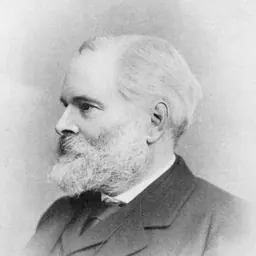
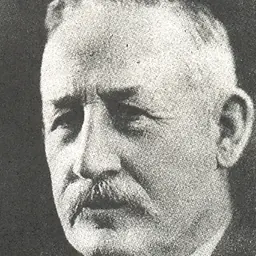
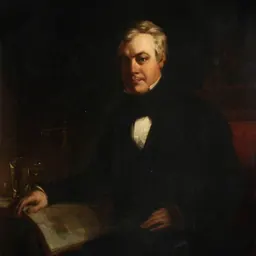
Related people
Same field, nearest in time




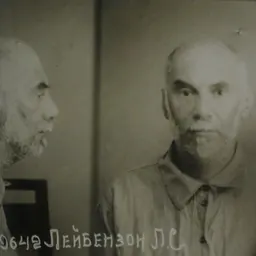
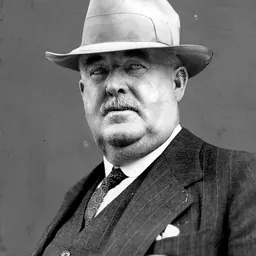
Contemporaries
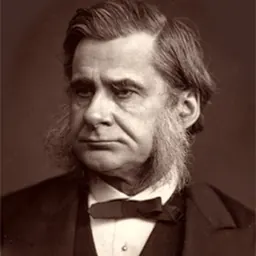
People whose lives overlapped Alexander Crichton Mitchell's



Frequently asked questions
Who was Alexander Crichton Mitchell?
Scottish geophysicist
When was Alexander Crichton Mitchell born?
Alexander Crichton Mitchell was born on 1 July 1864 in Edinburgh.
When did Alexander Crichton Mitchell die?
Alexander Crichton Mitchell died on 15 April 1952.
What was Alexander Crichton Mitchell's occupation?
Alexander Crichton Mitchell was a geophysicist, historian and physicist.
What was Alexander Crichton Mitchell known for?
Alexander Crichton Mitchell was known for Anti-submarine indicator loop.
What nationality was Alexander Crichton Mitchell?
Alexander Crichton Mitchell was British.
Sources & further reading
· Wikipedia: Alexander Crichton Mitchell
· DBpedia: Alexander Crichton Mitchell
Cite this page
APA: Biography.guide. (2026). Alexander Crichton Mitchell. https://biography.guide/alexander-crichton-mitchell/
MLA: "Alexander Crichton Mitchell." Biography.guide, https://biography.guide/alexander-crichton-mitchell/.
Chicago: "Alexander Crichton Mitchell." Biography.guide. https://biography.guide/alexander-crichton-mitchell/.
Data last updated: 2026-09-20 · Spot an error? Report a correction.
Page generated 2026-09-27 05:10 UTC