
About Alexander Comstock Kirk
Lived 1888 – 1979 (aged 90). Alexander Comstock Kirk was an American lawyer and diplomat.
Alexander Comstock Kirk (November 26, 1888 – March 23, 1979) was an American lawyer and diplomat.
Early years
Alexander Comstock Kirk was born in Chicago, Illinois, on November 26, 1888, the son of James Alexander Kirk (1840–1907) and Clara Comstock (1851–1936). His family lived in Hartland, Wisconsin. Its two national brands were "American Family" for laundry and "Juvenile" for the bath. He appeared with the Yale University Dramatic Association in 1908 and 1909. Kirk's father died of a heart attack in 1907. He was admitted to the Illinois bar. He joined the board of the family business at a salary of $10,000 a year. In 1954 Ruddock became chairman of the board of trustees of California Institute of Technology, where an undergraduate residence hall was named for him in 1960.
Diplomatic career Kirk joined the American Diplomatic Service on March 6, 1915. In 1916, he was transferred from his post as secretary of the embassy in Berlin to a position in Constantinople. Kirk served as private secretary to the Secretary of State during World War I and accompanied him in that position to the 1919 Paris Peace Conference. He then lived in "a commodious old house in Georgetown with his mother to act as hostess on the occasion of his entertainments", until posted to Peking as secretary of the embassy.
He managed the State Department budget for a time in the 1920s, and later said he thought it "an obligation" to spend the entire amount in order to support the argument for additional appropriations. She lived in Rome during his service there, and Kirk entertained important guests at her home, the Villa Spada on the Janiculum. Even in 1930, long before rising to ambassadorial rank, he entertained lavishly. He hosted an opera party for Mrs. William Randolph Hearst on her 1930 tour of Europe.
Kirk was assigned to Moscow as embassy counselor and consul general effective March 18, 1938, where he was the senior official in the nine-month interim between the service of Ambassadors Davies and Steinhardt.
He served as chargé d'affaires in Berlin beginning in May 1939 and became the senior officer when the American ambassador, Hugh R. Wilson, was recalled to protest the anti-Jewish attacks of . Though his status was too low to allow access to important officials in the German government, he communicated with them by staging conversations close to a device the Germans used to eavesdrop on his conversations. The recall of Wilson as a way of protesting greatly offended the Nazi regime, and senior German officials generally snubbed Kirk to show their disapproval. The American historian Abraham Asher described Kirk's dispatches from Berlin as generally accurate, though his lack of high-level contacts limited his sources of information. During the Danzig crisis, Kirk found playing himself a bit role. On August 24, 1939, President Franklin D. Roosevelt sent telegrams to both Adolf Hitler and President Ignacy Mościcki appealing to them to find a compromise to end the crisis. Hitler chose not to reply, but Mościcki wrote back that his nation was not the one "formulating demands and demanding concessions", but stated he willing to open negotiations with the on the status of the Free City of Danzig (modern Gdańsk, Poland). As Hitler continued to refuse to answer Roosevelt's telegrams, Kirk was sent to see der Fűhrer in the Reich Chancellery with a copy of Mościcki's reply. As Hitler refused to see him, he instead met on the evening of August 26 with the state secretary of the , Baron Ernst von Weizsäcker. Kirk argued to Weizsäcker that since for the first time, the Poles were willing to open talks on changing the status of Danzig, which might allow Danzig to "go home to the ", that this represented a potential breakthrough on finding a peaceful solution to the crisis. Weizsäcker replied he would pass on Kirk's note for "the consideration of the Foreign Minister", and was otherwise evasive about what his government was planning to do in response.
He developed contacts with Germans who opposed the Nazi regime and became convinced, in spite of Germany's early victories, that the war would end badly for Germany. Discussing with noted dissident Helmuth James von Moltke the need for Germany to suffer complete defeat with no one to blame but its Nazi leaders, he said: "Do you want to know my solution? It's a flood without an ark." During the war, in 1943, Moltke twice tried without success to contact Kirk, whom he trusted as an intermediary between the German opposition and the Allies.
Kirk served briefly as embassy counselor in Rome before becoming minister to Egypt in 1941, when Time magazine described him as "smooth, spare". From March 29, 1941, to March 29, 1944, Kirk served as Ambassador to Egypt, first as head of the U.S. Legation and then of the embassy. King Farouk of Egypt had a strong dislike of homosexuals, and Kirk's relations with the king were distant. By contrast, Kirk was close to Farouk's archenemy, the British ambassador, Sir Miles Lampson, which made for further difficulties as Kirk tended to back Lampson in his dealings with the king. Drawing on his experience with Nazi propaganda and antisemitism in Germany, Kirk expanded the embassy's coverage of Radio Berlin's Arabic-language broadcasts, providing complete translations of what came to be known as the "Axis Broadcasts in Arabic" along with his weekly analysis from 1941 to 1944, which Hull circulated widely. He dissected the Nazis' manipulation of anti-colonial, anti-Jewish, and anti-Bolshevik sentiment and their charges that Roosevelt and Churchill were being manipulated by their Jewish supporters. At the beginning of his Cairo tenure, Kirk focused on the strategic necessity of Allied victory in the Middle East because it would be impossible to counter the Nazi's exploitation of an Axis victory in its propaganda. Once the Allies won control of the region, he stressed political analysis and repeatedly underscored the critical role of the Egyptian capital in Arab nationalism. As Kirk looked to the end of the war, he anticipated a post-colonial world in which nations operated freely in a free enterprise environment, unlike Secretary of State Cordell Hull who expected the persistence of traditional spheres of influence, notably that of Great Britain in Egypt.
While posted to Cairo, Kirk kept one house in the city for lunch, another near the pyramids for dinner and sleeping, and a houseboat on the Nile. As ambassador, Kirk was noted for his eccentricities such as wearing lavender silk tuxedos; maintaining a houseboat on the Nile flamboyantly decorated with white ostrich feathers and a framed picture of his mother with candles burning around it; and his insistence on only drinking milk from an Egyptian water buffalo he adopted and named after his mother.
Along with several military men Kirk devised the successful plan to attack Rommel's communications instead of his ground forces. While resident in Cairo, Kirk was also accredited to the government-in-exile of Greece until November 13, 1941, and to Saudi Arabia until July 18, 1943.
Kirk was appointed U.S. representative on the Allied Advisory Council for Italy, with the rank of ambassador, on April 4, 1944. He was appointed Ambassador to Italy on November 30, 1944, and in January 1945 became the first ambassador of any country to present his credentials to the new Italian government. Upon his appointment, Time gave him the title "suave Career Man". He resigned in 1946. When the American Office of War Information produced an Italian-language publication, Kirk insisted it be labeled propaganda to maintain a clear distinction between what Italians were accomplishing for themselves or not.
Kirk was long famous for entertaining and continued even when forced to operate in Rome "under a wartime minimum". Six or eight guests joined him for lunch or dinner, often many more. One Friday lunch he hosted about 20 enlisted men. Though some involved in recruiting the guests worried that a Negro corporal might not be well received, Kirk gave him the place of honor on his right.
Kirk predicted in 1945 that future diplomats should be technical experts "chosen for the ability not only to diagnose economic, industrial and political trends, but also to adjust their dislocations before they can start wars." He lamented the willingness of governments to spend on wars far more than on the diplomacy that might prevent them.
Personal life In the 1920s, when he was counselor to the American Embassy in Rome, Kirk remodeled a significant building in Georgetown, the Robinson house, at the corner of Wisconsin Avenue and R Street and "filled it with furniture, rugs, hangings and objects of art brought from the Orient." In 1942 he sold this estate, including its "elaborate formal gardens, outsize ballroom, marble-floored billiard room, and swimming pool", to Evalyn Walsh McLean, mining heiress and owner of the Hope Diamond.
While posted to Berlin, he lived in an "enormous mansion" in the "swank" Grunewald neighborhood. One German who visited described it as "one vast hall after another, and he quiet alone in the midst of it. Very funny; a little like the theatre." His staff of servants spoke only Italian. He held "a large buffet luncheon every Sunday noon, as a means of revenging himself for such hospitality as his position required him to accept."
While ambassador in Rome, Kirk lived in the Barberini palace, which he redecorated. He filled a large enclosure the size of a tennis court with "Renaissance tables and settees covered in ivory silk", according to Life magazine, to create what he termed "a sort of cozy sitting room". When Life profiled him in 1945, it reported that he had always established fine residences wherever he was posted: "The Ambassador is fond of houses, and especially big ones. Equipped with ample private funds and the courage of his complexes, Kirk sees no reason why he should not capitalize the chance his profession gives him to indulge this fondness, all the more since such indulgence usually works out to the benefit of the State Department in one way or another."
In 1945 he attributed "his excellent health to the fact that he has never worn himself down by any form of exercise more violent than scratching, which he only does when suffering from insomnia at 6 a.m."
Kirk died in Tucson, Arizona, on March 23, 1979. He is buried with his mother in Rome's Protestant Cemetery (Cimitero Acattolico).
In his 1967 memoirs, George F. Kennan sketched an affectionate portrait of Kirk, as he knew him in Berlin before America entered World War II: "a confirmed bachelor, profoundly saddened by the recent death of an adored mother who, while she was alive, had preempted much of both his companionship and his emotional life, Kirk drowned the inner emptiness in the performance of his arduous official duties", sleeping in an office alcove while working 16 to 18 hours daily. He continued:
Kirk claimed he escaped from diplomatic functions by whatever ruse the situation required. At one embassy in Rome he found it necessary to leave by a door he could only reach by going under a grand piano. "In a case of this sort, Kirk recommends slow motion, which, he says, often prevents witnesses from even noticing a maneuver which, if executed fast, might horrify them."
He insisted his favorite color was gray. He never had fresh flowers, rather he collected artificial ones in his favorite color. His wardrobe and household were maintained by a servant named Mario, who joined the Kirk household in Mexico early in Kirk's career and continued through his stint as ambassador in Rome.
Don’t just read it —
keep it.
Full-length biographies made to live with: read them, listen on the way to work, watch them tonight.
- E-book
- Audio
- Video
Instant download · yours to keep · every purchase keeps this site free
Important facts
People in Alexander Comstock Kirk's life
Named in this biography and alive at the same time

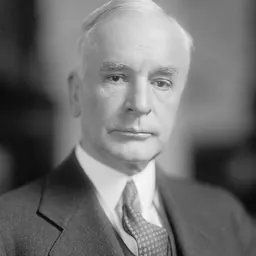

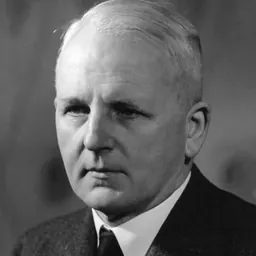
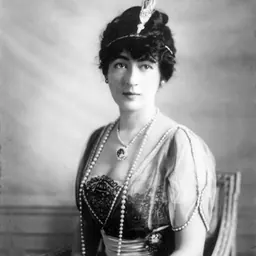


Related people
Same field, nearest in time
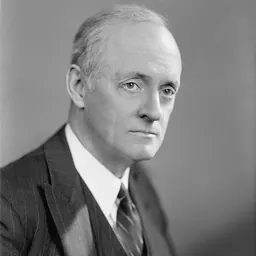

Contemporaries
People whose lives overlapped Alexander Comstock Kirk's


Frequently asked questions
Who was Alexander Comstock Kirk?
American diplomat (1888–1979)
When was Alexander Comstock Kirk born?
Alexander Comstock Kirk was born on 26 November 1888 in Chicago.
When did Alexander Comstock Kirk die?
Alexander Comstock Kirk died on 23 March 1979 in Tucson.
What was Alexander Comstock Kirk's occupation?
Alexander Comstock Kirk was a lawyer and diplomat.
What nationality was Alexander Comstock Kirk?
Alexander Comstock Kirk was American.
Sources & further reading
· Wikipedia: Alexander Comstock Kirk
· DBpedia: Alexander Comstock Kirk
Cite this page
APA: Biography.guide. (2026). Alexander Comstock Kirk. https://biography.guide/alexander-comstock-kirk/
MLA: "Alexander Comstock Kirk." Biography.guide, https://biography.guide/alexander-comstock-kirk/.
Chicago: "Alexander Comstock Kirk." Biography.guide. https://biography.guide/alexander-comstock-kirk/.
Data last updated: 2026-09-20 · Spot an error? Report a correction.
Page generated 2026-09-27 05:34 UTC