
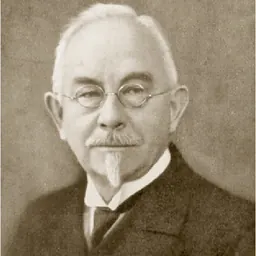
Alexander Chizhevsky
Interdisciplinary scientist and cosmist
About Alexander Chizhevsky
Lived 1897 – 1964 (aged 67). Alexander Chizhevsky was a Russian inventor, physicist, philosopher, chemist, meteorologist and biophysicist.
Alexander Leonidovich Chizhevsky (; 7 February 1897 – 20 December 1964) was a Soviet-era interdisciplinary scientist, a biophysicist who founded "heliobiology" (study of the Sun's effect on biology) and "aero-ionization" (study of effect of ionization of air on biological entities). He was also noted for his work in "cosmo-biology", biological rhythms and hematology."
Chizhevsky used historical research (historiometry) techniques to link the 11-year solar cycle, Earth’s climate, and the mass activity of peoples. in Grodno Governorate of the Russian Empire (now Poland). His father Leonid Vasilievich Chizhevsky was a Russian military general. He spent his early years, and later his teenage years, in Kaluga. As a youth he met Konstantin Tsiolkovsky, a noted space scientist, who also lived in Kaluga. Chizhevsky was educated at the private modern school of F. Shakhmagonov. In 1915 he spent his summer observing the Sun and first hypothesized the effect of periodic changes in solar activity on the organic world. In 1916 he entered World War I as a Russian, fighting on the Galician front and earning a Cross of Saint George. There, he observed directly that battles tended to wax and wane with the strength of solar flares and geomagnetic storms during the concurrent height of solar cycle 15.
In 1918, Chizhevsky graduated from the Moscow Commercial Institute with a degree in archeology. His Moscow State University Doctorate of Philosophy thesis was "On the periodicity of the world-historical process". (He would later call his view point heliotaraxy or heliotaraxia.) He lectured at Moscow University and Moscow Archaeological Institute on the History of Science in the Ancient World and the History of Archaeological Discovery. He attended lectures in physics and mathematics and studied at the Medical Department of Moscow University while working at the Lazarev Biophysical Research Institute. Nobel Prize in Chemistry winner Svante Arrhenius invited Chizhevsky to work for him. At a home laboratory Chizhevsky performed research on the influence of ionized air on animals, establishing the physiological action of negative and positive ions in the air on living organisms. (Negative ions making them more excitable and positive making them more lethargic.) He went on to work in the Duorv Zoo-Psychology Laboratory as a senior scientist and professor. During this time he compiled statistics on biospheric processes and their connection with cycles of solar activity.
In 1926, Chizhevsky worked with Konstantin Tsiolkovsky in the world's first experimental research in the field of space biology. In 1929 he was elected to the Tulan Academy of Sciences and He lectured on biophysics at Columbia University in New York City. In 1931 he set up the Central Research Laboratory for Ionisation in USSR. His work in aero-ionification was supported by the Soviet government and was recognized by a Resolution of the Council of People's Commissars of USSR. In 1935 he discovered the metachromasy of bacteria – the so-called "Chizhevskii-Velkhover effect" – enabling solar emissions that were hazardous to man both on Earth and in space, to be forecast. He was head of two aero-ionisation laboratories. In 1939 he was the Honorary President of the International Congress of Bio-physics held in New York City. He is buried in Pyatnitskoye cemetery in Moscow with a headstone featuring an engraved carving representing the Sun.
Air ioniser
In 1918, Chizhevsky created the first air ioniser for ion therapy. It was originally used for animal health in agriculture.
Sunspots and mass excitability
Chizhevsky proposed that not only did geomagnetic storms resulting from sunspot-related solar flares affect electrical usage, plane crashes, epidemics and grasshopper infestations, but human mental life and activity. Increased negative ionization in the atmosphere increased human mass excitability. Chizhevsky proposed that human history is influenced by the eleven-year peaks in sunspot activity, triggering humans en masse to act upon existing grievances and complaints through revolts, revolutions, civil wars and wars between nations.
He analyzed sunspot records (and approximated records), comparing them to riots, revolutions, battles and war in Russia and seventy-one other countries for the period 500 BCE to 1922 CE. (A process known as historiometry.) He found that a significant percent of what he classified as the most important historical events involving large numbers of people occurred around sunspot maximum. Edward R. Dewey, founder of the Foundation for the Study of Cycles, analyzed and published his data in 1951 in the Foundation's publications. In a 1971 book Dewey described the "four components" of Chizhevsky's eleven-year cycle and their approximate lengths: 1) a three-year period of minimum activity characterized by passivity and autocratic rule; 2) a two-year period during which masses begin to organize under new leaders and one theme; 3) a three-year period of maximum excitability, revolution and war; 4) a three-year period of gradual decrease in excitability until the masses are apathetic. Dewey questioned Chizhevsky's theory because in Chizhevsky's data, the sunspot cycle height lagged about a year ahead his "mass excitability index."
In 1992 Arcady A. Putilov, a researcher in Animal and Human Physiology, published a paper empirically testing Chizhevsky hypothesis analyzing events described in Soviet historical handbooks. Putilov found that the frequency and "polarity" of events, including revolution, is the highest in the years of the solar cycle maximum and the lowest in the year before the minimum. In 1996 professor of psychology Suitbert Ertel (University of Göttingen) corroborated a "substantial" relationship between solar activity and revolutionary behavior through statistical analysis of a "Master Index of Violence from Below" (MIVE) for the period 1700–1985 CE.
Legacy
A main-belt asteroid (or minor planet) discovered by Soviet astronomer Nikolai Stepanovich Chernykh in 1978 is named 3113 Chizhevskij after Chizhevsky.
The Chizhevsky Science Center opened in Kaluga, Russia, in 2000, in the home where Chizhevsky lived and worked for a number of years. It is part of the Tsiolkovsky Museum. There Chizhevsky researched sun-earth relations and conducted experimental research on the effects of ionized air on a living organism, laying down basics of air-ionization. The center features exhibits, photographs and films, lectures and tours.
Don’t just read it —
keep it.
Full-length biographies made to live with: read them, listen on the way to work, watch them tonight.
- E-book
- Audio
- Video
Instant download · yours to keep · every purchase keeps this site free
Important facts
People in Alexander Chizhevsky's life
Named in this biography and alive at the same time
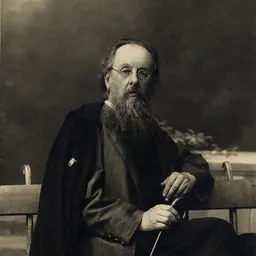
Related people
Same field, nearest in time

Contemporaries
People whose lives overlapped Alexander Chizhevsky's



Frequently asked questions
Who was Alexander Chizhevsky?
interdisciplinary scientist and cosmist (1897-1964)
When was Alexander Chizhevsky born?
Alexander Chizhevsky was born on 26 January 1897 in Ciechanowiec.
When did Alexander Chizhevsky die?
Alexander Chizhevsky died on 20 December 1964 in Moscow.
What was Alexander Chizhevsky's occupation?
Alexander Chizhevsky was an inventor, physicist, philosopher, chemist, meteorologist and biophysicist.
What nationality was Alexander Chizhevsky?
Alexander Chizhevsky was Russian.
Sources & further reading
· Wikipedia: Alexander Chizhevsky
· DBpedia: Alexander Chizhevsky
Cite this page
APA: Biography.guide. (2026). Alexander Chizhevsky. https://biography.guide/alexander-chizhevsky/
MLA: "Alexander Chizhevsky." Biography.guide, https://biography.guide/alexander-chizhevsky/.
Chicago: "Alexander Chizhevsky." Biography.guide. https://biography.guide/alexander-chizhevsky/.
Data last updated: 2026-09-20 · Spot an error? Report a correction.
Page generated 2026-09-27 05:18 UTC