
Alexander Archipenko
American sculptor and artist of Ukrainian origin
About Alexander Archipenko
Lived 1887 – 1964 (aged 76). Alexander Archipenko was a Russian and American sculptor, painter, graphic designer, illustrator, photographer and collagist.
Alexander Porfyrovych Archipenko (February 25, 1964) was a Ukrainian-American avant-garde artist, sculptor, and graphic artist, active in France and the United States. He was one of the first to apply the principles of Cubism to architecture, analyzing human figures into geometrical forms.
Early life and education La Vie Familiale (Family Life), 1912, height approx. . Exhibited at the 1912 Salon d'Automne, Paris and the 1913 Armory Show in New York City, Chicago and Boston. Photograph from Comœdia Illustré (1912) of the original sculpture, later accidentally destroyed
Alexander Archipenko was born in Kyiv (Russian Empire, now Ukraine) on 30 May 1887, to Porfiry Antonowych Archipenko and Poroskowia Vassylivna Machowa Archipenko; he was the younger brother of Eugene Archipenko. His father, Porfiry, was an engineer and inventor who worked as a professor at Kyiv University, but also drew icons as a hobby on the side. Porfiry himself likely learned this from his father, who also painted icons. However, the family encouraged Oleksandr to pursue a scientific profession, instead of art. On 12 January 1902, Oleksandr requested permission to transfer to the sculpture department of the Kyiv Art School, which was then granted. The protests had been aimed towards reforms regarding the educational process and the dismissal of certain teachers at the school.
Early career In 1906 he continued his education in the arts by joining a "free studio" (otherwise known as a "Comradely Workshop") organized by students on Velyka Zhytomyrska Street in Kyiv, which was headed by the landscape artist Serhiy Svetoslavsky. Later that year, the studio had an exhibition, in which he showcased some of his early work (most of which have subsequently been lost), including his sculptures "Zaporozhian Cossack", which was described as a madly swift pose, "Horror", which conveyed helplessness and malice, and "Judas" which showcased Judas climbing a scorched rock. After finding that the environment did not fit him, he decided to move again, this time permanently away from the Russian Empire.
Archipenko moved to Paris in 1908 He then decided to work independently, self-studying at museums such as the Louvre, which he attended daily. At the Louvre, he was inspired by Egyptian and early Greek art, which he preferred over contemporary art such as Rodin, whom he described as making sculptures that were broken and tortured. He then started making sculptures, including "Adam and Eve" in terracotta upon his arrival and then a year later "Head on Knees". During this time, his art style was characterized by "heavy generalized masses", which drew inspiration from archaic arts, such as the idols that he had seen near the University of Kyiv when he was growing up.
Archipenko moved to Nice in 1914. In 1920 he participated in Twelfth Biennale Internazionale dell'Arte di Venezia in Italy and started his own Art school in Berlin the following year. In 1922 Archipenko participated in the First Russian Art Exhibition in the Gallery van Diemen in Berlin together with Aleksandra Ekster, Kazimir Malevich, Solomon Nikritin, El Lissitzky, and others.
In 1923, he emigrated to the United States.
In 1936 Archipenko participated in an exhibition Cubism and Abstract Art in New York as well as numerous exhibitions across Europe and other places in the U.S. He was elected to the American Academy of Arts and Letters in 1962.
Alexander Archipenko died on February 25, 1964, in New York City. to employ the Cubist style in three dimensions. Archipenko departed from the neo-classical sculpture of his time, using faceted planes and negative space to create a new way of looking at the human figure, showing a number of views of the subject simultaneously. He is known for having introducied sculptural voids, and for his inventive mixing of genres throughout his career: devising 'sculpto-paintings', and later experimenting with materials such as clear acrylic and terra cotta. Inspired by the works of Pablo Picasso and Georges Braque, he is also credited for introducing the collage to wider audiences with his Medrano series.
The sculptor Ann Weaver Norton apprenticed with Archipenko for a number of years.
Public collections Among the public collections holding works by Alexander Archipenko are: The Addison Gallery of American Art (Andover, Massachusetts) The Art Institute of Chicago The Mary and Leigh Block Museum of Art (Northwestern University, Illinois) Brigham Young University Museum of Art (Utah) Chi-Mei Museum (Taiwan) The Delaware Art Museum (Wilmington, Delaware) The Denver Art Museum (Colorado) The Fine Arts Museums of San Francisco The Guggenheim Museum (New York City) The Hermitage Museum (Saint Petersburg) The Hirshhorn Museum and Sculpture Garden (Washington D.C.) The Honolulu Museum of Art Indiana University Art Museum (Bloomington) The Los Angeles County Museum of Art The Maier Museum of Art (Randolph-Macon Woman's College, Virginia) The Milwaukee Art Museum The Minneapolis Institute of Art (Minneapolis) The Montgomery Museum of Fine Arts (Alabama) The Museum of Fine Arts, Boston The Museum of Fine Arts, Houston The Museum of Modern Art (New York City) The National Museum of Serbia (Belgrade, Serbia) The Nasher Sculpture Center (Dallas, Texas) The National Gallery of Art (Washington D.C.) National Museum Cardiff The North Carolina Museum of Art The Norton Simon Museum (Pasadena, California) The Peggy Guggenheim Collection (Venice) The Philadelphia Museum of Art (Pennsylvania) The Phillips Collection (Washington D.C.) The Portland Art Museum (Portland, Oregon) The Portland Museum of Art (Maine) Salisbury House (Des Moines, Iowa) The San Antonio Art League Museum (Texas) The San Diego Museum of Art (California) The Sheldon Memorial Art Gallery (Lincoln, Nebraska) The Smithsonian American Art Museum (Washington D.C.) Städel Museum (Frankfurt) Tate Modern (London) The Tel Aviv Museum of Art (Israel) The Ukrainian Museum (New York City) Von der Heydt-Museum (Wuppertal, Germany) Walker Art Center (Minnesota) The Cleveland Cultural Gardens (Ukrainian Garden) in Rockefeller Park (Ohio) Fundación D.O.P. (Caracas) Museum de Fundatie (Zwolle, Netherlands)
Archipenko's tall cubist statue of King Solomon is installed at the University of Pennsylvania campus. Archipenko began work on a smaller prototype of the statue in 1964, but died before the work was finished, leaving his wife to oversee its completion. The full-sized statue was completed in 1968 and was donated to the university in 1985.
Commemoration and Legacy
During his lifetime Arkhipenko maintained close ties with the Ukrainian community in the USA, participating in the creation of monuments to Shevchenko, Franko and Prince Volodymyr on American soil.
A street in the Obolonskyi District of Kyiv and a street in the Sofiivka area of Lviv are named in his honour.
On May 30, 2017, Ukraine celebrated 130 years since the birth of Oleksandr Arkhipenko. On November 9, 2017, the National Bank of Ukraine circulated a 2-hryvnia commemorative coin dedicated to the artist. His portrait is depicted on the reverse of the coin.
Gallery
Don’t just read it —
keep it.
Full-length biographies made to live with: read them, listen on the way to work, watch them tonight.
- E-book
- Audio
- Video
Instant download · yours to keep · every purchase keeps this site free
Important facts
more
Archipenko, Alexander Porfirjowitsch Archipenko, Olexandr Archipenko, Alexander Porfiryevich Archipenko, Oleksander Arkhypenko, Alexander Porfyrovych ArchipenkoPeople in Alexander Archipenko's life
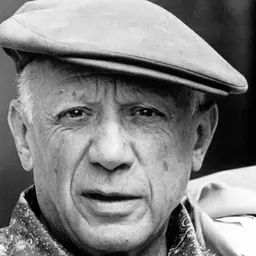
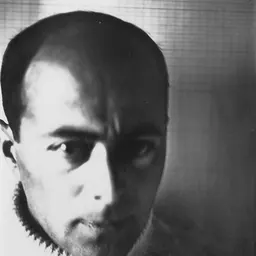
Named in this biography and alive at the same time




Related people
Same field, nearest in time


Contemporaries
People whose lives overlapped Alexander Archipenko's


Frequently asked questions
Who was Alexander Archipenko?
American sculptor and artist of Ukrainian origin (1887–1964)
When was Alexander Archipenko born?
Alexander Archipenko was born on 30 May 1887 in Kyiv.
When did Alexander Archipenko die?
Alexander Archipenko died on 25 February 1964 in New York City.
What was Alexander Archipenko's occupation?
Alexander Archipenko was a sculptor, painter, graphic designer, illustrator, photographer and collagist.
What nationality was Alexander Archipenko?
Alexander Archipenko was Russian and American.
Sources & further reading
· Wikipedia: Alexander Archipenko
· DBpedia: Alexander Archipenko
Cite this page
APA: Biography.guide. (2026). Alexander Archipenko. https://biography.guide/alexander-archipenko/
MLA: "Alexander Archipenko." Biography.guide, https://biography.guide/alexander-archipenko/.
Chicago: "Alexander Archipenko." Biography.guide. https://biography.guide/alexander-archipenko/.
Data last updated: 2026-09-20 · Spot an error? Report a correction.
Page generated 2026-09-27 05:24 UTC