
About Alexander Ales
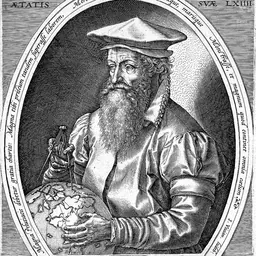
Lived 1500 – 1565 (aged 64). Alexander Ales was a Scottish theologian, university teacher, protestant reformer and protestant theologian.
Alexander Ales or Alexander Alesius (; born Alexander Alane; 23 April 150017 March 1565) was a Scottish theologian who emigrated to Germany and became a Lutheran supporter of the Augsburg Confession.
Life Originally Alexander Alane, he was born at Edinburgh. He studied at St Andrews in the newly founded college of St Leonard's, where he graduated in 1515. Some time afterwards he was appointed a priest at the University's church, where he preached vigorously in favor of scholastic theology, Renaissance humanism, and anti-Protestantism. His views entirely changed, however, upon witnessing the 1528 execution by burning of Rev. Patrick Hamilton, a Lutheran Pastor and former abbot of Fern. Fr. Ales was chosen to meet Hamilton in a theological debate, with a view to convincing him of the errors of Lutheranism, but the theological arguments of the Scottish minister and, above all, his fortitude at the stake impressed Alesius so powerfully that he immediately embraced Lutheran theology.
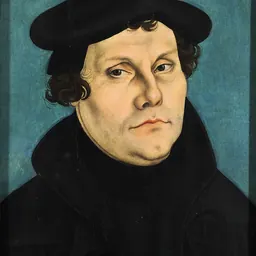
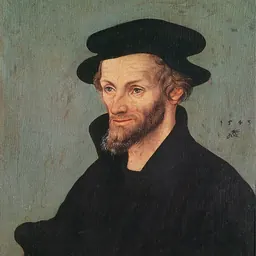
A sermon he preached before the Synod at St Andrews against the dissoluteness of the clergy offended the provost, who placed him in prison, and might have carried his resentment further if Alesius had not escaped to Germany in 1532. After travelling through northern Europe, he settled down at Wittenberg, where he befriended Martin Luther and Philipp Melanchthon and signed the Augsburg confession. Meanwhile, he was tried by the Bishops of the Catholic Church in Scotland for heresy and condemned to death in absentia. In 1533 a decree by the Scottish Bishops, prohibiting the reading of the New Testament by the laity, drew from Alesius a defence of the right of the people, in the form of an open letter to King James V of Scotland. but when he had delivered a few expositions of the Hebrew psalms, he was prevented from continuing by the anti-Protestant party.
Returning to London he supported himself for some time by practising as a physician. In 1537 he attended a convocation of the clergy, and at the request of Cromwell Alesius debated with John Stokesley, Bishop of London, on the nature of the sacraments. His argument was published in 1544 under the title
In 1539 Alesius was compelled to flee for a second time to Germany, as a result of Thomas Cromwell's fall from the King's favour and the enactment of the statute of the Six Articles. He was appointed to a theological chair at the university of Frankfurt an der Oder, where he was the first professor to teach Lutheran theology. He was in England again for a short time during Edward VI's reign, and was commissioned by Cranmer to make a Latin translation of the First Prayer-Book (1549) for the use of Martin Bucer, whose opinion was desired.
Returning to Leipzig he passed the remainder of his days in peace and honour, and was twice elected Rector of the University.
Works His writings were both exegetical and controversial, but chiefly the latter. They include Expositio Libri Psalmorum Davidis (1550). His controversial works refer to such subjects as the translation of the Bible into the vernacular, against Servetus, etc.
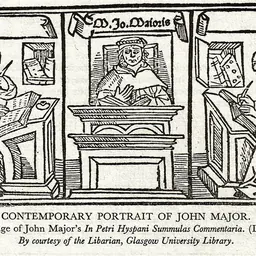
Alesius published a large number of exegetical, dogmatic and polemical works, of which over twenty are mentioned by Bale in his List of English Writers. In his controversial works he upholds the synergistic views of the Scottish theologian John Major. He displayed his interest in his native land by the publication of a Cohortatio ad Concordiam Pietatis, missa in Patriam suam (1544), which had the express approval of Luther, and a Cohortatio ad Pietatis Concordiam ineundam (1559).
Don’t just read it —
keep it.
Full-length biographies made to live with: read them, listen on the way to work, watch them tonight.
- E-book
- Audio
- Video
Instant download · yours to keep · every purchase keeps this site free
Important facts
People in Alexander Ales's life
Named in this biography and alive at the same time



Related people
Same field, nearest in time



Contemporaries
People whose lives overlapped Alexander Ales's

Frequently asked questions
Who was Alexander Ales?
Scottish theologian
When was Alexander Ales born?
Alexander Ales was born on 23 April 1500 in Edinburgh.
When did Alexander Ales die?
Alexander Ales died on 17 March 1565 in Leipzig.
What was Alexander Ales's occupation?
Alexander Ales was a theologian, university teacher, protestant reformer and protestant theologian.
What nationality was Alexander Ales?
Alexander Ales was Scottish.
Sources & further reading
Cite this page
APA: Biography.guide. (2026). Alexander Ales. https://biography.guide/alexander-ales/
MLA: "Alexander Ales." Biography.guide, https://biography.guide/alexander-ales/.
Chicago: "Alexander Ales." Biography.guide. https://biography.guide/alexander-ales/.
Data last updated: 2026-09-20 · Spot an error? Report a correction.
Page generated 2026-09-27 04:59 UTC