
About Alessandro Mazzucotelli
Lived 1865 – 1938 (aged 72). Alessandro Mazzucotelli was an Italian artisan, politician and university teacher.
Alessandro Mazzucotelli (Lodi, December 30, 1865 - Milan, January 29, 1938) was an Italian craftsman, particularly known as a master ironworker and decorator. A specialist in wrought iron, Mazzucotelli linked his fame to the decorations of the works of the major exponents of Art Nouveau in Italy and abroad.
Biography A. MazzucotelliWrought iron lamppostvilla Ottolini-Tosi, Busto Arsizio Mazzucotelli was born in Lodi to Giovanni Valente, an iron merchant originally from Locatello di valle Imagna, and Rosa Caprara. At the age of 18 he moved to Milan as an apprentice with his brother Carlo in the blacksmith store of Defendente Oriani, which he later took over in 1891. From 1902 to 1908 the company running the shop was called Mazzucotelli-Engelmann; later he worked alone, first in via Ponchielli and then in 1909 at Bicocca.
Mazzucotelli collaborated with architects such as Enrico Zanoni, Giuseppe Sommaruga, Gaetano Moretti, Ernesto Pirovano, Franco Oliva, Ulisse Stacchini and Silvio Gambini.
In his early years he was influenced by the painter Giovanni Beltrami who founded the largest Milanese glassworks dedicated to Art Nouveau.
The City of Milan has named the street Alessandro Mazzucotelli near Viale Forlanini, in the eastern suburbs of the city, after the artist.
Museum Museum Wolfsonian-FIU, Florida United States Musée d'Orsay, Paris Villa Bernasconi Museum, Cernobbio Lake Como Carlo Rizzarda Modern Art Gallery Civic Collection of Prints Achille Bertarelli, Sforza Castle, Milan National Museum of Science and Technology "Leonardo da Vinci"
Honors
Works
Milan Piazza del Duomo street lamps with Giannino Castiglioni Savini cafe - Pensilina di Mazzucotelli, via Ugo Foscolo, 5, 20121 Palazzo Zanoni (1886) in Viale Bligny 60; architect: Enrico Zanoni House of black cat (1889) in Corso Monforte 43; architect : Enrico Zanoni Bar Camparino, Galleria Vittorio Emanuele II (1925), the chandeliers Palazzo Castiglioni (1903) in Corso Venezia 47; architect: Giuseppe Sommaruga The gate of the Milan Fair in Largo Domodossola (1923) Casa Ferrario (1902) in via Spadari 3–5; architect: Ernesto Pirovano Casa Apostolo (1907) in via Tasso 10; architect Stacchini, internal gate and wrought iron balustrades of the balconies Casa (1909) in Corso Magenta 31 Casa de Moneta, Cancello delle farfalle (1904) in via Ausonio 3 Casa Campanini (1904) in via Bellini 11 Casa Guazzoni (1906) in Malpighi street 12; architect: Giovanni Battista Bossi Palazzo della Posta (1907) (ex-Borsa) in Piazza Cordusio 2; architect Luigi Broggi Villa Romeo Faccanoni (1908) today Clinica Columbus, architect: Giuseppe Sommaruga Palazzo Berri-Meregalli (1913) via Cappuccini 8, Cinema Corso in via Torino, Palazzo della Banca Commerciale Italiana (1923), the railings Maria Luisa Villa (1925) in via Tamburini 8; the gates and the small trees Pathé Palace in via Luigi Settembrini 11 Cambiaghi's house (1903-1904) by Ulisse Stacchini with wrought iron by Mazzucotelli in via Carlo Pisacane, 22, 20129 Casa Tensi, (1907-1909) by Ernesto Pirovano, wrought irons by Alessandro Mazzucotelli, cements by Pirovano in via Vivaio, 4, 20122
Sarnico Villa Pietro Faccanoni (1907) now Villa Passeri in Sarnico (BG) Villa Giuseppe Faccanoni (1907) Sarnico in 1907 Villa Luigi Faccanoni (1912) now Villa Surre in Sarnico
Elsewhere in Italy Villa Bernasconi (1905) (Liberty Arch. Campanini) in Cernobbio Expiatory Chapel gate (1910) in Monza Villa Mariani in Bordighera (1910), for which he created gates, street lamps, grilles but especially the parapet of the balcony particularly original. The Grand Hotel Regina in Salsomaggiore Terme (1911; architect Giuseppe Boni) decorations on the facade Gabbia del pozzo Scotti in Salsomaggiore Terme (1912; architect Giuseppe Boni) The railings, the lamps and the gate of Villa Marmori (1923, architect Franco Oliva) (today Conservatory G.Puccini) in La Spezia The railings, the lamps, the gutters of the hotels Campo dei Fiori, Palace, Ristorante Belvedere in Varese, (1908 - 1913, architect Giuseppe Sommaruga) The wrought iron of Villa Marmori, La Spezia (1923) Door and candelabra of the staircase of Palazzo della Loggia in Brescia The gate of Villa Facheris in Inzago (MI) Appliques of the restaurant Napoli in Palermo by Carmelo Ingrao (1912) Dosso Pisani (1905-1907) Cardina, Como "Cancello dei gladioli" (1905) now at the Carlo Rizzarda Gallery of Modern Art in Feltre Railings and gates of Casa Maffei, corso Montevecchio 50, Turin (1905) Grand Hôtel des Thèrmes in Salsomaggiore Terme (1901; architect Luigi Broggi) entrance canopy, grilles and balustrades The wrought iron of Villa Ottolini-Tosi and Villa Ottolini-Tovaglieri in Busto Arsizio The chandeliers of the Palazzo Gallavresi in Caravaggio The Kursaal Diana at the thermal baths of San Pellegrino The Palace of Luigi Cernuschi in Via Bergamo 18 in Monza
Abroad
The 10 wrought iron gates of the Palacio de Bellas Artes in Mexico City (architect Adamo Boari) Villa X in Buenos Aires (the balconies). Buildings constructed in Bangkok, Thailand, by Annibale Rigotti between 1907 and 1926. The wrought iron gate of the Museo de Arte Italiano in Lima, about 1921
Gallery
Don’t just read it —
keep it.
Full-length biographies made to live with: read them, listen on the way to work, watch them tonight.
- E-book
- Audio
- Video
Instant download · yours to keep · every purchase keeps this site free
Important facts
People in Alessandro Mazzucotelli's life
Named in this biography and alive at the same time

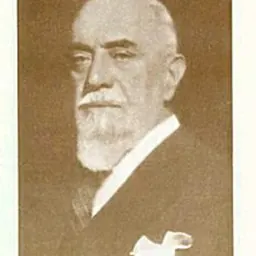


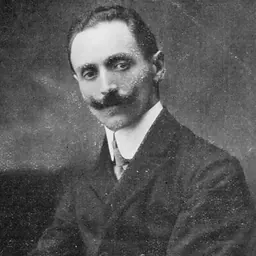
Related people
Same field, nearest in time

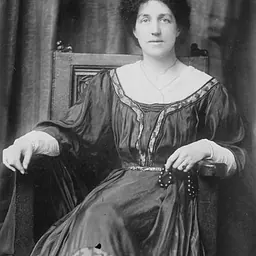

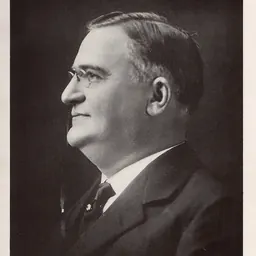

Contemporaries
People whose lives overlapped Alessandro Mazzucotelli's



Frequently asked questions
Who was Alessandro Mazzucotelli?
Italian artisan (1865–1938)
When was Alessandro Mazzucotelli born?
Alessandro Mazzucotelli was born on 30 December 1865 in Milan.
When did Alessandro Mazzucotelli die?
Alessandro Mazzucotelli died on 29 January 1938 in Milan.
What was Alessandro Mazzucotelli's occupation?
Alessandro Mazzucotelli was an artisan, politician and university teacher.
What nationality was Alessandro Mazzucotelli?
Alessandro Mazzucotelli was Italian.
Sources & further reading
· Wikipedia: Alessandro Mazzucotelli
· DBpedia: Alessandro Mazzucotelli
Cite this page
APA: Biography.guide. (2026). Alessandro Mazzucotelli. https://biography.guide/alessandro-mazzucotelli/
MLA: "Alessandro Mazzucotelli." Biography.guide, https://biography.guide/alessandro-mazzucotelli/.
Chicago: "Alessandro Mazzucotelli." Biography.guide. https://biography.guide/alessandro-mazzucotelli/.
Data last updated: 2026-09-20 · Spot an error? Report a correction.
Page generated 2026-09-27 05:29 UTC