
About Aleksandr Kuprin
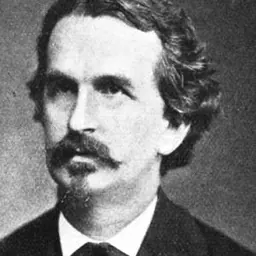
Lived 1870 – 1938 (aged 67). Aleksandr Kuprin was a Russian writer, aircraft pilot, novelist, screenwriter, poet and children's writer.
Early life Aleksandr Kuprin was born 1870 in Narovchat, Penza, to Ivan Ivanovich Kuprin, a government official in Penza Governorate. and Liubov Alekseyevna Kuprina, Kulunchakova. His father was Russian, his mother belonged to a noble Volga Tatar family who had lost most of their wealth during the 19th century.
In 1871 his father, aged 37, died of cholera. Three years later Aleksandr's mother moved, with young Aleksandr, into the Widows' Home in Kudrino, Moscow, a period reflected in his tale "A White Lie" (1914). In 1876 he entered the Razumovsky boarding school, the source of what he later referred to as 'childhood grievances', but also an environment which nourished his riotous nature and in which he found himself popular among peers as storyteller.
Cadet Corps: 1883–1887 In 1880, inspired by Russia's victory in the Russo-Turkish War, Several of Kuprin's autobiographical stories, like "At the Turning Point" (1900), "The River of Life" (1906) and "Lenochka" (1910), refer to this period. "The memory of the birching at the Cadet Corps stayed with me for the rest of my life," he wrote not long before his death. Yet it was there that he develop an interest in literature and started to write poetry.
Most of Kuprun's thirty youthful poems date from 1883 to 1887, the four years when he was in the Cadet Corps. Kuprin also made several translations of foreign verse (including Béranger's "Les Hirondelles" and Heine's "Lorelei").
After retiring from the service, without any definite plans for the future, or "any knowledge, academic or practical" (according to "Autobiography"), Kuprin embarked upon a five-year-long trip through the South-West of the Russian Empire. While on frequent journeys to Russia's Southwest he contributed to newspapers in Novocherkassk, Rostov-on-Don, Tsaritsyn, Taganrog, and Odessa.
In 1896 Russkoye Bogatstvo published Moloch, Kuprin's first major work, a critique of the rapidly growing Russian capitalism and a reflection of the growing industrial unrest in the country. In October 1897 his second collection, Miniatures, came out, with one of his best known circus stories, "Allez!", earning high praise from Leo Tolstoy. In 1905 Kuprin described Miniatures as his "first childish steps along the road of literature". Miniatures, as well as his "Industrial Sketches", made in 1896–1899 after his visit to the Donbass region, definitely marked a further stage in his maturing as a writer.
In 1897 Kuprin traveled to Volhynia to work as an estate manager, then went to the Polesye area in Southern Belorussia, where he helped to grow makhorka.
Saint Petersburg: 1901–1904 In Petersburg Kuprin found himself in the center of Russian cultural life. He became friends with Anton Chekhov, whom he regularly corresponded with up until the latter's death in 1904, often seeking his advice. Kuprin's friendship with Ivan Bunin would last almost forty years, continuing in emigration. Another important figure for Kuprin was the scholar and critic Fyodor Batyushkov of Mir Bozhiy. The 150 letters that are extant represent a minor part of their vast correspondence. Later Kuprin expressed much gratitude to Viktor Mirolyubov, who, as well as Maxim Gorky, exerted strong influence upon his career.
In 1901 Kuprin joined the Moscow Sreda (Wednesday) literary society, which was founded in 1899 by Nikolay Teleshov, and united mostly the young realist writers, among whom were Gorky, Bunin, and Leonid Andreyev. Gorky himself, writing to Teleshov in March 1903, ranked Kuprin a third Russian author, next to Chekhov and Andreyev.
Despite his literary success, Kuprin's first years in Petersburg were stressful. His employment with the magazine left him little time for his own writing; and when his work did appear in Mir Bozhy, rumor had it that he owed his success to his family connections.
Kuprin wrote less between 1902 and 1905 than he had in the provinces; but, according to Luker, "if the quantity of his writing was reduced – some twenty tales in all – its quality was incomparably higher... More conscious now of the blatant contrasts prevalent in Russian society, he turned his attention to the plight of the 'little man' - thus following the best traditions of Russian literature." The creation of this novel was a cathartic experience for Kuprin. "I must free myself from the heavy burden of impressions accumulated by my years of military service. I will call this novel The Duel, because it will be my duel ... with the tsarist army. The army cripples the soul, destroys all a man's finest impulses, and debases human dignity... I have to write about all I have known and seen. And with my novel I shall challenge the tsarist army to a duel," he informed his wife in a letter.
The Duel became the literary sensation of the year in Russia. In 1905 some 45.5 thousand copies were sold, a vast number for the early 1900s. The controversy this novel caused continued until 1917. Critics on the left welcomed The Duel as "another nail in the coffin of autocracy," while their conservative counterparts condemned it as a "perfidious assault on the ruling order." One officer even challenged Kuprin to a duel through a Petersburg paper, The Black Sea Fleet commander, Admiral Grigory Chukhnin, generally seen as responsible for the tragedy, ordered Kuprin to leave Sevastopol within 48 hours, and instituted legal proceedings for defamation. In June 1906 Chukhnin was assassinated; but the case was not closed; and two years later in Zhitomir Kuprin was sentenced to a fine and ten days' house arrest.
Among his better known stories of the mid-1900s were "Dreams", "The Toast", "Art", and "The Murderer", the latter taking up the issue of violence that swept over Russia at the time. "Junior Captain Rybnikov" (1906), which told the tale of a Japanese spy posing as a Russian officer, was praised by Gorky. thumb leftIn 1908 Kuprin's relationship with Gorky deteriorated, and he quit Znanye. The same year saw the publication of "Seasickness", a short story telling of the rape of a Social Democrat heroine - and showing her revolutionary husband in an unfavorable light, which Gorky regarded as a deliberate slur on the Russian Socialists. Part I, as it came out, provoked widespread controversy; parts II and III were met with almost universal indifference. Kuprin, who could not decide, apparently, whether his novel should be a documentary or fiction, either oscillated between the two or attempted to combine them in an artificial way. "He is more successful when in documentary vein, and so Part I, with its details of life in the brothel, is by far the best," argues Luker.
The Pit was Kuprin's last major work, and to many it signaled the decline of his creativity. In 1911 he moved his family to Gatchina, near Saint Petersburg. Still, while working for a brief time with Maxim Gorky at the World Literature publishing company, he criticized prodrazverstka and the policy of War Communism,
Years in emigration
On 16 October 1919 Gatchina was taken by the White Army, led by General Nikolai Yudenich. For a fortnight Kuprin was editing Prinevsky Krai (Neva Country), a paper published by Yudenich's army headquarters. In October, as the Whites retreated westward, Kuprin traveled with them to Yamburg, where he joined his wife and daughter. Via Narva the family reached Revel in Estonia, and in December left for Finland. After half a year in Helsinki, they sailed for France, arriving in Paris in early July 1920. The family's poverty made the situation worse. "I am left naked ... and destitute as a homeless old dog," Kuprin wrote to Ivan Zaikin, an old friend. All this combined to hinder his writing. "The more talented a man is, the harder is for him life without Russia," Kuprin told a reporter in 1925.
Kuprin's nostalgia explains the retrospective quality of his work after he had emigrated. He returned to familiar themes from his earlier writing - and dwelled on personal experiences, linking him with the homeland he had lost. Later Bunin insisted that Kuprin's role was purely passive: "He did not go to Russia – he was taken there, very ill, already in his second childhood," he wrote.
In January 1938 Kuprin's health deteriorated. By July his condition was grave. Already suffering from a kidney disorder and sclerosis, he had now developed cancer of the oesophagus. Surgery did little to help. Alexander Kuprin died on 25 August 1938, and was interred in Volkovo Cemetery's Literaturskiye Mostki (Literary Bridge) in Leningrad two days later. Maria Davydova later married the Soviet diplomat Nikolai Iordansky; in 1966 her book of memoirs Years of Youth (Годы молодости, 1966) came out.
Kurpin's second wife was Yelizaveta Geinrikh (1882–1942), a daughter of the Hungarian revolutionary Morits Rotoni-Geinrich, brought up by the family of Dmitry Mamin-Sibiryak, her sister Maria's husband. In the early 1900s she was a sister of mercy, later Lidia's governess and Alexandra Davydova's good friend. In 1907 the couple married and settled in Gatchina. In 1908 their daughter Ksenia was born.
Legacy According to Nicholas Luker: Kuprin's position in the history of Russian literature is highly significant, if not unique. Born into an age overshadowed by the great Russian novel, which had reached its zenith in the 1860s. He turned to the short story as the genre suited both to his own restless temperament and to the manifold preoccupations of his generation... With his contemporaries Chekhov, Gorky, and Bunin. he brought the genre of the short story to an efflorescence without parallel in Russian letters. What he conceded in restraint to Chekhov, conviction to Gorky, and subtlety to Bunin, Kuprin made up for in narrative pace, construction of plot, and richness of theme. These latter qualities, coupled with his abiding interest in the human soul, make him still very readable today. Kuprin was highly praised by fellow writers including Anton Chekhov, Maxim Gorky, Leonid Andreyev, Nobel Prize-winning Ivan Bunin
A minor planet 3618 Kuprin, discovered by Soviet astronomer Nikolai Stepanovich Chernykh in 1979, is named after him.
Selected works Novels The Duel (Поединок, 1905; translated as The Duel in 1916) The Pit (Яма, 1909–1915) The Wheel of Time (Колесо времени, 1929) Junkers (Юнкера, written 1928–1932, published 1933), autobiographical novel
Novellas In the Dark (Впотьмах, 1893) Moloch (Молох, 1896) Olesya (Олеся, 1898) Sulamith: A Romance of Antiquity (Суламифь, 1908) The Garnet Bracelet (Гранатовый браслет, 1911)
Short stories and sketches "The Last Debut" (Последний дебют, 1889) "Psyche" (Психея, 1892; translated as "Psyche" in 1929) "On a Moonlit Night" (Лунной ночью, 1893) "The Inquiry" (Дознание, 1894) The Kiev Types (Киевские типы, 1896, a collection of sketches) Miniatures (Миниатюры, 1897, short story collection) "At the Circus" (В цирке, 1902) "The Horse Thieves" (Конокрады, 1903) "Captain Ribnikov" (Штабс-капитан Рыбников, 1906) "The River of Life" (Река жизни, 1906) "The Outrage - A True Story" (unknown)
Don’t just read it —
keep it.
Full-length biographies made to live with: read them, listen on the way to work, watch them tonight.
- E-book
- Audio
- Video
Instant download · yours to keep · every purchase keeps this site free
Important facts
Family & relationships
People in Aleksandr Kuprin's life
Named in this biography and alive at the same time


Related people
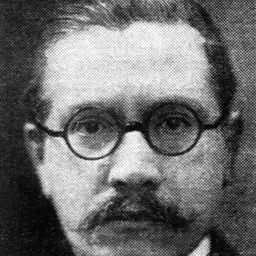
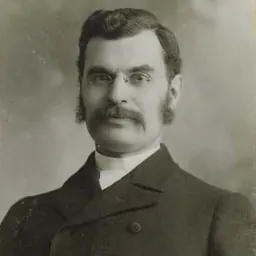
Same field, nearest in time

Contemporaries
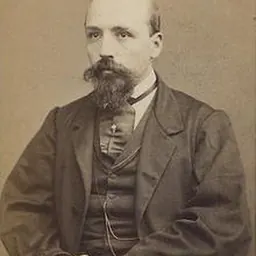
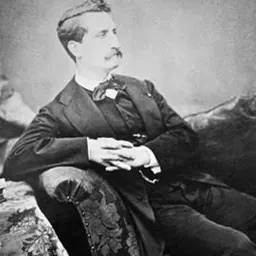
People whose lives overlapped Aleksandr Kuprin's



Frequently asked questions
Who was Aleksandr Kuprin?
Russian writer (1870–1938)
When was Aleksandr Kuprin born?
Aleksandr Kuprin was born on 26 August 1870 in Narovchat.
When did Aleksandr Kuprin die?
Aleksandr Kuprin died on 25 August 1938 in Saint Petersburg.
What was Aleksandr Kuprin's occupation?
Aleksandr Kuprin was a writer, aircraft pilot, novelist, screenwriter, poet and children's writer.
What nationality was Aleksandr Kuprin?
Aleksandr Kuprin was Russian.
Sources & further reading
· DBpedia: Aleksandr I. Kuprin
Cite this page
APA: Biography.guide. (2026). Aleksandr Kuprin. https://biography.guide/aleksandr-kuprin/
MLA: "Aleksandr Kuprin." Biography.guide, https://biography.guide/aleksandr-kuprin/.
Chicago: "Aleksandr Kuprin." Biography.guide. https://biography.guide/aleksandr-kuprin/.
Data last updated: 2026-09-20 · Spot an error? Report a correction.
Page generated 2026-09-27 05:19 UTC