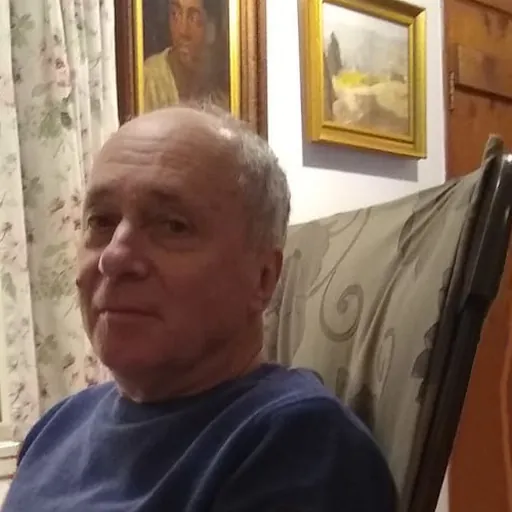
About Aleksandr Kamensky
Born 1954. Aleksandr Kamensky is a Russian historian and university teacher.
Alexander Borisovich Kamensky (; born 26 April 1954, Moscow, Soviet Union) is a Soviet and Russian historian, Doctor of Historical Sciences, and professor, specializing in the history of 18th-century Russia.
He was born in Moscow into a family of engineers and graduated from the Faculty of History of the Moscow Regional Pedagogical Institute. → His early career included work in archival and research institutions. Since 1988, he has taught at the , which in 1991 became part of the Russian State University for the Humanities (RSUH). He headed a department at RSUH, and in 2000 received the title of professor. In 2010, he moved to the Higher School of Economics (HSE), where he contributed to the creation of the School of Historical Sciences; since 2023 he has been its academic supervisor. →
Kamensky defended his candidate dissertation in 1984 and his doctoral dissertation in 1998. He is active in the professional community and has appeared as a public historian in the media, as well as taking part in documentary films as an expert and consultant. → Reviewers have noted Kamensky’s revision of several established concepts and categories in the study of 18th-century Russian history. →
In his public statements, Kamensky has opposed the imposition of a single version of the past and teaching history as a set of facts. He has advocated methods that develop critical thinking and the presentation of different viewpoints in textbooks. → He has received a number of state and university awards. His students and graduate students have repeatedly recognized him as the best teacher of the year. →
Biography
Early life He was born in 1954 in Moscow. His parents were chemical engineers, worked in branch research institutes, held candidate degrees, and at the same time took an active interest in culture and art. In the family, obtaining higher education was considered the norm. Kamensky studied at one of Moscow’s leading schools, showing a particular interest in the humanities, especially history.
Career In 1978, while still a fourth-year student, Kamensky began working at the (TSGADA). After graduating from the institute, he entered postgraduate studies, where he researched the history of Russia of the 18th century under the supervision of Viktor Buganov and Alexander Stanislavsky. In 1985 Kamensky moved from the RSAAA to the (VNIIDAD). After three years at VNIIDAD, in 1988 he transferred to the , which in 1991 became part of the Russian State University for the Humanities (RSUH).
From 1996 to 2009, Kamensky headed the Department of National History of the Ancient World and the Middle Ages at RSUH (since 2007 — the Department of History of Medieval and Early Modern Russia). In 2000 he received the academic title of professor. After the Faculty of History was reorganized into the School of Historical Sciences, from 2015 to 2023 he was the head of the School, and since 2023 he has been its academic supervisor.
From 2018 to 2024, he was also a member of the editorial board of the academic journal .
Reception
American historian George Munro described Kamensky’s monograph on the Russian Empire of the 18th century as an example of a new post-Soviet scholarly approach, emphasizing the author’s effort to view the period as a whole rather than focusing on events that generated Russia’s contemporary problems. The reviewer noted Kamensky’s excellent command of both Russian sources and research and Western historiography. Munro highlighted Kamensky’s systematic examination of laws and institutions, rather than only rulers’ biographies, and his departure from the “reform–stagnation” paradigm toward seeing modernization as a continuous process.
British historian Maureen Perrie saw in Kamensky’s interest in monarchs’ biographies when covering the 18th century an echo of the Russian pre-revolutionary historical school. She acknowledged Kamensky’s contribution to the study of the biography of Catherine II, describing it as a "clear and well-organized historical narrative," as well as the soundness of his assessments of the personalities and events of the era. At the same time, Perrie criticized what she considered the insufficient attention in his work to the lives of the peoples of the expanding Russian Empire and its cultural life.
Critic and culturologist Vasily Kostyrko emphasized the innovative character of Kamensky’s approach in his works on 18th-century Russian history: the revision of familiar categories such as "feudalism," "estates," and "class struggle," and the turn to concepts of modernization. In his view, Kamensky’s method is simple and perfect: first, a comprehensive examination of legislative acts from the time of Peter I to Paul I; and second, an analysis of the mentality and social structure of Russian society at each stage of its reform. Kostyrko notes Kamensky’s demonstration of the paradoxical fact that Peter the Great’s reforms strengthened serfdom and weakened the development of a Russian analogue of the "third estate."
According to historian Tatyana Belova, in his monograph From Peter I to Paul I: Reforms in Russia of the 18th Century, Kamensky questions the common notion that Russian history consists of alternating brief periods of reformist activity and long periods of counter-reforms. She notes that Kamensky presented a fundamentally new view of the pivotal 18th century in Russian history, focusing on the modernization of Russian society and the state, for the first time considered as a single integral process, in an effort to address the questions of what reform is and whether progressive political development is possible for Russia.
Views Kamensky considers it meaningless to impose on schoolchildren a single, non-alternative version of the past; in his view, a history textbook should be electronic and interactive, teaching students to search for and comprehend information and to form their own opinions. He believes it is important that different points of view be presented in school textbooks. He pointed out the absence of the word "knowledge" in the concept developed in Russia for a single history textbook.
He criticizes the traditional model of history education for reducing history to a set of facts and names, as well as for the separate teaching of Russian and world history, which leads to their division in the minds of students. According to Kamensky, people who have received a traditional historical education often become narrow specialists, unable to see the problems they deal with in a broad historical context.
Alongside the prevailing view in world scholarship that a historian should primarily try to assess an event from the value system of the era in question, Kamensky believes that some events and phenomena of history, despite all possible caveats regarding specific historical conditions, nevertheless cannot avoid a moral evaluation if one acknowledges the "distinction in the world between good and evil."
According to Kamensky, a person who mechanically repeats official slogans is hardly capable of being a good patriot.
In February 2022, Kamensky signed an open letter by Russian scholars and science journalists condemning the invasion of Ukraine and calling for the withdrawal of Russian troops from Ukrainian territory.
Honours and recognition
In connection with his professional activity, Alexander Kamensky has received a number of awards:
Scholarly monographs In Russian
2nd ed.: Moscow: RSUH, 2001. — 576 pp. 3rd ed.: St Petersburg: Nauka, 2019. — 670 pp. — (World History Library). — ISBN 978-5-02-037130-9
In English
Selected scholarly articles
In English
In French
Chapters in books
Textbooks
Compilations and edited volumes
Don’t just read it —
keep it.
Full-length biographies made to live with: read them, listen on the way to work, watch them tonight.
- E-book
- Audio
- Video
Instant download · yours to keep · every purchase keeps this site free
Important facts
People in Aleksandr Kamensky's life
Named in this biography and alive at the same time

Related people
Same field, nearest in time

Contemporaries
People whose lives overlapped Aleksandr Kamensky's


Frequently asked questions
Who is Aleksandr Kamensky?
Russian historian
When was Aleksandr Kamensky born?
Aleksandr Kamensky was born on 26 April 1954 in Moscow.
What is Aleksandr Kamensky's occupation?
Aleksandr Kamensky is a historian and university teacher.
What nationality is Aleksandr Kamensky?
Aleksandr Kamensky is Russian.
Sources & further reading
· Wikipedia: Aleksandr Kamensky
· DBpedia: Alexander Kamensky (historian)
Cite this page
APA: Biography.guide. (2026). Aleksandr Kamensky. https://biography.guide/aleksandr-kamensky-historian/
MLA: "Aleksandr Kamensky." Biography.guide, https://biography.guide/aleksandr-kamensky-historian/.
Chicago: "Aleksandr Kamensky." Biography.guide. https://biography.guide/aleksandr-kamensky-historian/.
Data last updated: 2026-09-23 · Spot an error? Report a correction.
Portrait: Wikimedia Commons · author & licence
Page generated 2026-09-27 05:06 UTC