
About Aleksandar Tišma
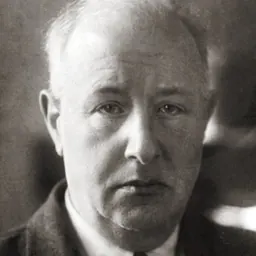
Lived 1924 – 2003 (aged 79). Aleksandar Tišma was a Yugoslav and Serbian writer, screenwriter, translator, literary editor, journalist and poet.
Aleksandar Tišma (; 16 January 1924 – 16 February 2003) was a Serbian writer, best known for his "Novi Sad" trilogy of novels: The Book of Blam, The Use of Man (1976), and Kapo (1987).
Biography Tišma was born in Horgoš, Kanjiža on the present-day border of Serbia and Hungary, to a Serbian father and a Hungarian-speaking Jewish mother.
He completed his elementary and middle school education in Novi Sad before going on to study economy and French language and literature in Budapest during World War II, finally graduating in Germanistics from the University of Belgrade Faculty of Philology.
From 1945 to 1949 he worked as a journalist for Slobodna Vojvodina and Borba newspapers, and then as editor and redactor at Matica srpska until his retirement in 1982.
Aleksandar Tišma also translated works of other authors from German and Hungarian into Serbian, notably Imre Kertész's novel Fatelessness.
He became a corresponding member of the Vojvodina Academy of Sciences and Arts (VANU) in 1979 and was promoted into a regular member in 1984, and subsequently became a regular member of the Serbian Academy of Sciences and Arts (SANU) upon their fusion 1992. From 2002, he was also a member of the Academy of Arts, Berlin.
Tišma's works were concerned with themes of humanity's search for freedom, and suffering, violence, horror and guilt people encounter along the way. Along with Czesław Miłosz, Danilo Kiš and György Konrád, his works are sometimes classified as part of "Mitteleuropa" literature—dark and contemplative, yet humanistic and thought-provoking.
In political affairs, Tišma often publicly supported and acted in favor of pro-democratic movements in Serbia, although he was reluctant to openly join any political organization. In 1993, as a sign of disagreement with Slobodan Milošević's regime and increasing nationalist hysteria in the country, he left Serbia and lived in self-imposed exile in France until 1996. He died in 2003, aged 79, in Novi Sad.
His works have been translated into about 20 languages. Among other awards, he received the Novi Sad October Award (1966), the NIN Award for best novel of the year (for The Use of Man, 1976), the Andrić Prize (1979), the Austrian State Prize for European Literature (1995), and the French National Order of Merit (1997).
Don’t just read it —
keep it.
Full-length biographies made to live with: read them, listen on the way to work, watch them tonight.
- E-book
- Audio
- Video
Instant download · yours to keep · every purchase keeps this site free
Important facts
People in Aleksandar Tišma's life
Named in this biography and alive at the same time
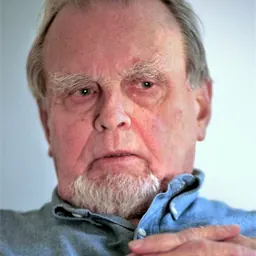
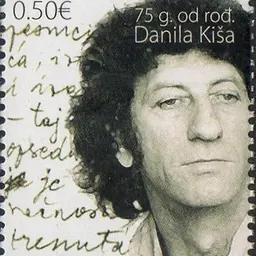

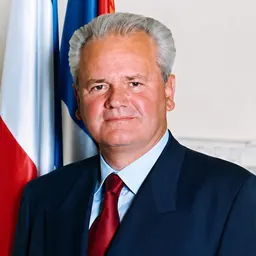
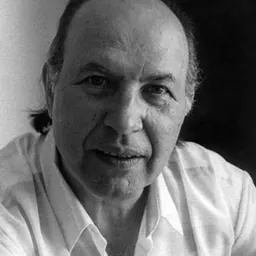

Related people
Same field, nearest in time

Contemporaries
People whose lives overlapped Aleksandar Tišma's


Frequently asked questions
Who was Aleksandar Tišma?
Serbian writer (1924-2003)
When was Aleksandar Tišma born?
Aleksandar Tišma was born on 16 January 1924 in Horgoš.
When did Aleksandar Tišma die?
Aleksandar Tišma died on 16 February 2003 in Novi Sad.
What was Aleksandar Tišma's occupation?
Aleksandar Tišma was a writer, screenwriter, translator, literary editor, journalist and poet.
What nationality was Aleksandar Tišma?
Aleksandar Tišma was Yugoslav and Serbian.
Sources & further reading
Cite this page
APA: Biography.guide. (2026). Aleksandar Tišma. https://biography.guide/aleksandar-tisma/
MLA: "Aleksandar Tišma." Biography.guide, https://biography.guide/aleksandar-tisma/.
Chicago: "Aleksandar Tišma." Biography.guide. https://biography.guide/aleksandar-tisma/.
Data last updated: 2026-09-26 · Spot an error? Report a correction.
Page generated 2026-09-27 05:15 UTC