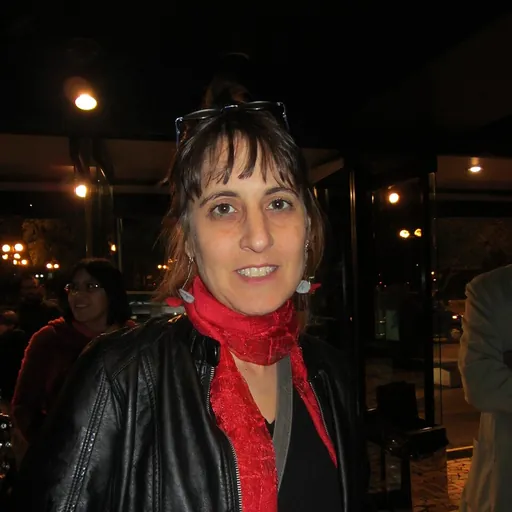
About Alejandra Costamagna
Born 1970. Alejandra Costamagna is a Chilean writer, journalist and university teacher.
Alejandra Costamagna Crivelli (born 23 March 1970) is a Chilean writer and journalist.
Early life Costamagna's parents arrived in Chile from Argentina in 1967. She recalls that her first approach to writing was through journal entries that she began to make irregularly from age 10.
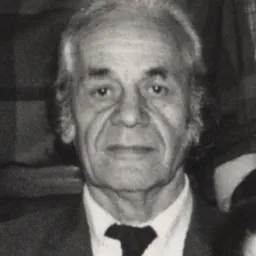
It was in her adolescence when she began to take writing more seriously, after entering Francisco Miranda school when she moved to La Reina. There, Professor Guillermo Peréz "recommended her to read Neruda, Mistral, Shakespeare, Chekhov, and Crime and Punishment by Dostoyevsky, a book which still marks her writing today." In addition, an interview was arranged and she went to the house of her neighbor Nicanor Parra, with whom she spoke about poetry and insomnia, which both shared.
She was editor of the Culture and Entertainment section of the newspaper La Nación. She worked on Rock & Pop radio station, on Gente de mente and Parque Forestal programs, in which she was the radio speaker.
She published her first novel, En voz baja, in 1996, and followed it two years later with Ciudadano en retiro. Both works received positive reviews from the writer Roberto Bolaño:
In 2000 her first book of short stories appeared, Malas noches. Although she has continued to write novels, Costamagna has specially developed the , so much so that she even reconverted her first novel into one, "Había una vez un pájaro", which appeared in a 2013 book of the same title, accompanied by two other texts. In El Mercurio, Rodrigo Pinto compared this "calling to purify and clean her texts" with that of José Santos González Vera, who used to republish his works with the warning "corrected and diminished edition", but stressed that in Costamagna it acquired a different and even more radical expression.
She also received a scholarship from the International Writing Program of the University of Iowa, 2003.
Her works have been translated into several languages (Italian, French, Danish, Korean) and have been honored with several awards, including the Altazor (2006) and the Anna Seghers-Preis (2008) for the best Latin American author of the year. Also, she has been a theater commentator for national newspapers and magazines, and has worked as a columnist and chronicler for various magazines.
Her latest novel El sistema del tacto was published in 2018.
Personal life Costamagna maintained in 2011 that she likes silence ("I like this silence half contaminated by the noise of cars, from the city that gets into the distance. It's like being alone, but accompanied. And if I need to talk, I have Pascual."), that she does not want to have children ("The idea of the family composed of mother, father, children, nannies and pets seems to me to be super-enclosed, poor and conservative. Aside from my personal choice not to be a mother, I think having children is super nice."), that she was not worried about having a massive success ("I like that my life is still normal, that writing and publishing is my happiness. I do not want my work to become a race for success, to have to respond to an editorial expectation. I do not see myself like this."), and lamented stereotypes about women ("That women are crying the most and writing with more sentimentality is a stereotype that is very bad for gender equality. And that happens with questions of the duty of women to marry, to have children and to form a happy family."). novel, LOM Ediciones, 1996 Ciudadano en retiro, novel, Planeta, 1998 Malas noches, short stories, Planeta, 2000. Divided into three sections, containing 15 stories plus an explanatory note about the gestation of the texts: "Veintiséis dientes": "Boca abierta", "Micro", "Buenaventura", "Sin voz", and "Veintiséis dientes" "Noticias de Japón": "Grasa en la estación", "Violeta azulado", "Donde se congelaba la primavera", "Parcialmente nublado", "Noticias de Japón", and "Grito de Leningrado" "En el parque": "Sólo un poco, en la mejilla", "Ellos", "Espejo", and "En el parque" Cansado ya del sol, novel, Planeta, 2002 Últimos fuegos, short stories, Ediciones B. 2005. Containing 16 texts: "Santa Fe", "Coronas vigilantes", "La invención del silencio", "Cuadrar las cosas", "Violeta azulado", "Bombero en las colinas", "El tono de un noble", "Domingos felices", "La epidemia de Traiguén", "La faena", "Noticias de Japón", "Champaña", "El olor de los claveles", "Chufa", "Cigarrillos, el diario, el pan", and "El último incendio" Dile que no estoy, novel, Planeta, 2007 Naturalezas muertas, long story (as defined by the author); Cuneta, 2010 Animales domésticos, short stories, Mondadori, 2011. Containing 11 stories: "Yo, Claudio", "Imposible salir de la Tierra", "A las cuatro, a las cinco, a las seis", "Daisy está contigo", "Hambre", "Patanjali", "Hombrecitos", "Pelos", "La epidemia de Traiguén", "El único orden posible, and "Nadie nunca se acostumbra" Cruce de peatones, chronicles, interviews, and profiles, selection by Julieta Marchant; , 2012 Había una vez un pájaro, three short stories, Cuneta, 2013. Contains "Nadie nunca se acostumbra", the micro-tale "Agujas de reloj", the titular story, and a final explanatory note by the author, entitled "En voz baja" Imposible salir de la Tierra, ten short stories that date back to the years 2005–2015; six published in books and magazines, four unpublished. Almadía (Mexico)/ CL, 2016
Stories in collective publications Música ligera (1994, Grijalbo, Chile). Salidas de madre (1997, Planeta, Chile). Voces de Eros (1997, Mondadori, Chile). Cuentos extraviados (1997, Alfaguara, Chile). Líneas aéreas (1999, Lengua de Trapo, España). Volver a verla y otros cuentos (2000, Alfaguara, Chile). Con pasión (2000, Planeta, Chile). Se habla español (2000, Alfaguara, Chile/Estados Unidos). Ecos urbanos (2001, Alfaguara, Chile). Historias de mente (2001, Alfaguara, Chile). Cuentos chilenos contemporáneos (2001, Lom, Chile). Uno en quinientos (2004, Alfaguara, Chile). Young Writing from Young Writers of the World (2006, Kang Publishing, Corea). Alucinaciones TXT (2007, Puerto de Escape, Chile). Narrativa chilena actual: 28 narradores meridionales (2007, La siega, Argentina). Dios es Chileno (2007, Planeta, Chile). Maldito amor (2008, Alfaguara, Chile). Porotos granados (2008, Catalonia, Chile). Sube a la alcoba por la ventana (2008, Munhakdongne Publishing, Corea). Las mujeres cuentan (2010, Simplemente editores, Chile). Junta de vecinas (2011, Calembé, España). Los malditos (2011, Ediciones UDP, Chile). Cl. Textos de fronteras (2012, Ediciones Universidad Alberto Hurtado, Chile). Volver a los 17 (2013, Editorial Planeta, Chile). Selección chilena (2016, Estruendomudo, Chile y Perú). Poliamor (2018, Anfibia, Argentina). El río y la ciudad (2019, Eduner, Argentina).
Don’t just read it —
keep it.
Full-length biographies made to live with: read them, listen on the way to work, watch them tonight.
- E-book
- Audio
- Video
Instant download · yours to keep · every purchase keeps this site free
Important facts
People in Alejandra Costamagna's life
Named in this biography and alive at the same time






Related people
Same field, nearest in time


Contemporaries
People whose lives overlapped Alejandra Costamagna's


Frequently asked questions
Who is Alejandra Costamagna?
Chilean journalist and author
When was Alejandra Costamagna born?
Alejandra Costamagna was born on 23 March 1970 in Santiago.
What is Alejandra Costamagna's occupation?
Alejandra Costamagna is a writer, journalist and university teacher.
What nationality is Alejandra Costamagna?
Alejandra Costamagna is Chilean.
Sources & further reading
· Wikipedia: Alejandra Costamagna
· DBpedia: Alejandra Costamagna
Cite this page
APA: Biography.guide. (2026). Alejandra Costamagna. https://biography.guide/alejandra-costamagna/
MLA: "Alejandra Costamagna." Biography.guide, https://biography.guide/alejandra-costamagna/.
Chicago: "Alejandra Costamagna." Biography.guide. https://biography.guide/alejandra-costamagna/.
Data last updated: 2026-09-22 · Spot an error? Report a correction.
Portrait: Wikimedia Commons · author & licence
Page generated 2026-09-27 04:58 UTC