
About alberto heredia
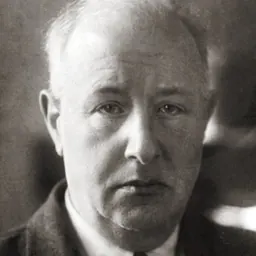
Lived 1924 – 2000 (aged 76). alberto heredia was an Argentine sculptor.
Alberto Heredia (March 4, 1924–April 23, 2000) was an Argentine Expressionist painter and sculptor. His work encompassed themes of the human condition regarding consumption and power. Through use of garbage and found objects assembled into sculptures, he created narratives of consumerism and censorship that he felt affected Argentina. Heredia’s work dealt with contemporary political issues in Argentina, as well as more universal themes such as loneliness, love, death and existence. He won the prestigious Konex Award from Argentina several times (1982, 1992 and 2002), being the last one posthumous.
Biography
Early life and childhood Alberto Carlos Heredia was born in Buenos Aires on March 4, 1924.
The "Cajas de Camembert" (Camembert Boxes) series, which was finished in 1962, remains one of Heredia’s better-known works. The rejection of spectator participation and exploring the aesthetics of residual objects is characteristic of this period in Heredia's career. The name comes from the cheese boxes where he keeps photos of children and men, baby dolls, bones, hair, and various other garbage. This series of artworks consists of mixed media with the underlying idea of life worked into them. In this way, Camembert Boxes conveys a life cycle from birth to death. The material used in the Camembert Boxes, including waste materials, bones and bandages, was characteristic of his work.
Accident, death sentence and hiding in Uruguay After a devastating fall from a horse in 1963, Heredia underwent multiple surgeries that had him immobile and covered in various plasters for two years. This was a difficult time in Heredia’s life during which he began using plaster and wrappings in his art, recalling casts and bandages. Heredia’s art continued to explore political issues, speaking out against the consumerism, censorship, and crime that he felt was endemic in Argentina during the 60s and 70s. In many ways, his work in the late 60s and early 70s prophesied the years of terror that Argentina experienced in the Dirty War which continued into the 1980s. He made the "Engendros" ("Spawn") series as a response to censorship issues in Argentina. Much of his other work in the 70s was marked by the fury and pain of contained violence that censorship imposed on people. This came in the forms of dental prosthesis, tongues, and gags which regularly made appearance in Heredia’s work.
His 1974 series "Los amordazamientos" ("The Gagged") was an allegory on censorship, and the dynamics of sex, power and religion. The series was presented in several exhibitions that year. Along with the series, he publicly denounced the violence and atrocities taking place in Argentina at the time at the Art System’s in Latin America show at the Institution of Contemporary Arts in London. This led to him being effectively exiled by the Argentine Anticommunist Alliance (Triple A), a Peronist death squad. The Triple A accused him of being a communist extremist, atheist, homosexual and drug addict. In December of 1974, they sentenced Heredia to death if he did not leave the country by January 1975. Heredia went into hiding in Uruguay for two months. Upon his return to Buenos Aires he took a step away from direct political involvement and revised works he had produced after 1960, which ended with him casting several of his earlier works in bronze.
Artwork and themes Alberto Heredia is often considered to be an Expressionist, although his work has also been described as an example of Surrealism and Pop art. Curator Carlos Basualdo has noted that in much of Heredia's later work with detritus the artist had "a coherent esthetic exploration of the residual: the wretchedness of materials and the wretchedness of the contents that those materials are forced to express." which is often satirical. Many of his works satirize middle-class Argentine values. For example, "El Caballero de la Mascara" was described as a critique of Argentine militarism and authoritarianism. The irreverent nature of his work made him controversial.
Heredia described the Camembert Boxes as "my own means of expression, an intimate medium, a personal medium. I dreamed and discovered my worlds: sex, religion, life and death. Camembert boxes begins in life and death. He will come down with debris, with traces of memory, always keeping the material in a primitive and wild state without danger of craft."
Reception and legacy Heredia has been considered to be one of Argentina's most influential sculptors, alongside Juan Carlos Distéfano and Yoel Novoa. A retrospective article on Heredia's legacy described him as "one of the great protagonists of the radical avant-garde of the 1960s". Heredia's art is kept in the Heredia Cabinet at the Buenos Aires Museum of Modern Art. The museum also holds an archive of collected correspondences, photographs, and other items which document Heredia's life.
List of exhibitions
1967, “Surrealism in Argentina”, Instituto Torcuato Di Tella 1971, “The Artist and the World of Consumption”, Carmen Gallery 1971, “Useful and Useless Objects”, Museum of Modern Art in Buenos Aires 1972, “Artist Award Salon with Acrilicopaolini III”, Museum of Modern Art in Buenos Aires 1974, “Art System’s in Latin America”, Institute of Contemporary Arts in London 1978, “Alberto Heredia”, Balmaceda Gallery in Buenos Aires 1979, “Postfiguration, curated by Jorge Glusberg”, Center for Art and Communication 1992-1993, “Latin American Artists of the 20th Century”, (traveling show)
List of works
La Estaca, 1960, mixed media Camembert Boxes, 1962, mixed media El Filmador, 1967, film El Túnel, 1971, immersive mixed media Engendro, 1972, mixed media Sandwich homus, 1972, mixed media Melba Cups, 1975, mixed media Anclada, 1978, mixed media Jean, 1984, mixed media Niños enveueltos a la Heredia, 1980, film Macho Tango, 1988, mixed media
Don’t just read it —
keep it.
Full-length biographies made to live with: read them, listen on the way to work, watch them tonight.
- E-book
- Audio
- Video
Instant download · yours to keep · every purchase keeps this site free
Important facts
People in alberto heredia's life
Named in this biography and alive at the same time



Related people
Same field, nearest in time



Contemporaries
People whose lives overlapped alberto heredia's

Frequently asked questions
Who was alberto heredia?
Argentinian sculptor (1924–2000)
When was alberto heredia born?
alberto heredia was born on 4 March 1924 in Buenos Aires.
When did alberto heredia die?
alberto heredia died on 23 April 2000 in Buenos Aires.
What was alberto heredia's occupation?
alberto heredia was a sculptor.
What nationality was alberto heredia?
alberto heredia was Argentine.
Sources & further reading
· DBpedia: Alberto Heredia (sculptor)
Cite this page
APA: Biography.guide. (2026). alberto heredia. https://biography.guide/alberto-heredia/
MLA: "alberto heredia." Biography.guide, https://biography.guide/alberto-heredia/.
Chicago: "alberto heredia." Biography.guide. https://biography.guide/alberto-heredia/.
Data last updated: 2026-09-20 · Spot an error? Report a correction.
Page generated 2026-09-27 05:18 UTC