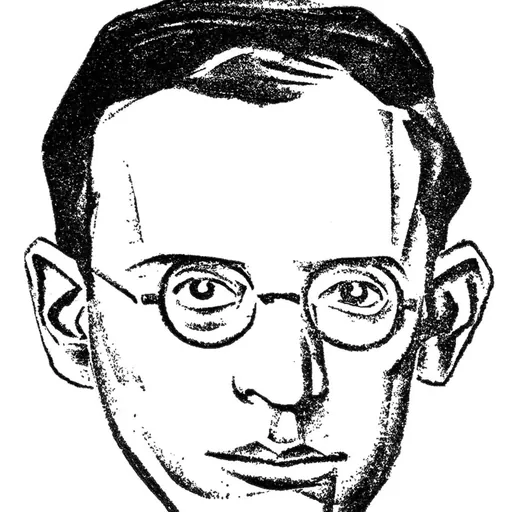
About Albert Weisbord
Lived 1900 – 1977 (aged 76). Albert Weisbord was an American trade unionist.
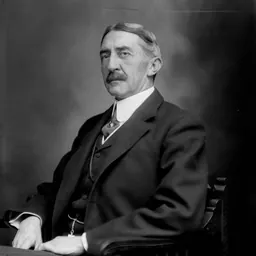
Albert Weisbord (December 9, 1900 – April 1977) was an American political activist and union organizer. He is best remembered, along his wife Vera Buch, as one of the primary union organizers of the seminal 1926 Passaic Textile Strike and as the founder of a small Trotskyist political organization of the 1930s called the Communist League of Struggle.
Biography
Early years
Albert Weisbord was born December 9, 1900, to a Russian-Jewish family in New York City. His father was a manufacturer.
Weisbord attended primary, grammar, and high school in Brooklyn, New York. He worked variously as a newsboy, a clerk in a grocery store, as a worker in a clothing factory, and in a soda shop during his earlier years.
In the summer of 1921, the party's National Executive Committee asked him to conduct a speaking tour to help reorganize the Young People's Socialist League, the bulk of which had exited the SPA to join forces with the Communists. After going on tour to reorganize the locals, a national convention was held to relaunch a new YPSL (loyal to the Socialist Party) at Fitchburg, Massachusetts. The convention named Weisbord its National Director, a position which entitled him to a seat on the party's governing NEC. Weisbord remained as National Director of the Socialist Party's youth section until the middle of 1924. Weisbord resigned from the SPA joined the Communist (Workers) Party in November 1924. The radical Weisbord was seen as an inflammatory figure by the mill owners, and in August 1926 he was removed from leadership of the strikers.
His participation as a leader of the Passaic strike as a leader of the United Textile Workers "made" Weisbord as a public face of the Workers (Communist) Party and upon termination of the strike in the fall of 1926 he was sent on a speaking tour on behalf of the party, telling of his strike experiences to a general audience. His selection no doubt was intended in part as a faction-balancing measure, owing to Weisbord's status as one of the top Lovestone loyalists in the Communist Party's labor arm, TUEL being the main center for the opposition faction of William Z. Foster.
In the fall of 1928, Weisbord was the candidate of the Workers (Communist) Party for U.S. Senate from New Jersey. Weisbord also served as the secretary-treasurer of the National Textile Workers' Union, the Communist Party-sponsored dual union affiliated with the Trade Union Unity League. By the time the CLS dissolved in 1937 it had almost no membership left, and Weisbord concentrated on publishing his book, The Conquest of Power: Liberalism, Anarchism, Syndicalism, Socialism, Fascism, and Communism which was published by Covici-Friede that year.
Death and legacy
Albert Weisbord died in April 1977.
Don’t just read it —
keep it.
Full-length biographies made to live with: read them, listen on the way to work, watch them tonight.
- E-book
- Audio
- Video
Instant download · yours to keep · every purchase keeps this site free
Important facts
Related people
Same field, nearest in time




Contemporaries
People whose lives overlapped Albert Weisbord's


Frequently asked questions
Who was Albert Weisbord?
American political activist (1900–1977)
When was Albert Weisbord born?
Albert Weisbord was born on 9 December 1900 in New York City.
When did Albert Weisbord die?
Albert Weisbord died on 1 April 1977 in Chicago.
What was Albert Weisbord's occupation?
Albert Weisbord was a trade unionist.
What nationality was Albert Weisbord?
Albert Weisbord was American.
Sources & further reading
Cite this page
APA: Biography.guide. (2026). Albert Weisbord. https://biography.guide/albert-weisbord/
MLA: "Albert Weisbord." Biography.guide, https://biography.guide/albert-weisbord/.
Chicago: "Albert Weisbord." Biography.guide. https://biography.guide/albert-weisbord/.
Data last updated: 2026-09-23 · Spot an error? Report a correction.
Portrait: Wikimedia Commons · author & licence
Page generated 2026-09-27 05:04 UTC