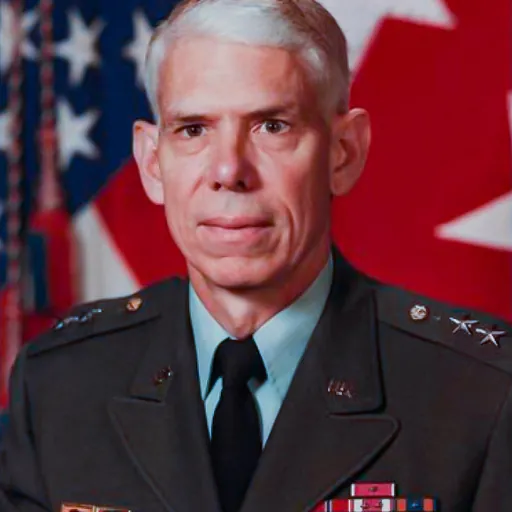
About Albert Stubblebine
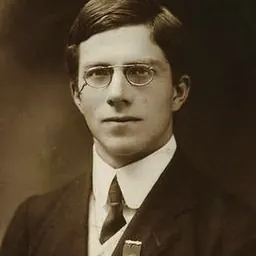
Lived 1930 – 2017 (aged 87). Albert Stubblebine was an American military personnel.
Albert "Bert" Newton Stubblebine III (February 6, 1930 – February 6, 2017) was a United States Army major general whose active-duty career spanned 32 years. Beginning as an armor officer, he later transferred to intelligence. He is credited with redesigning the U.S. Army intelligence architecture during his time as commanding general of the U.S. Army Intelligence and Security Command (INSCOM) from 1981 to '84, after which he retired from active service.
After his retirement, it became widely known that Stubblebine had maintained a keen interest in psychic warfare throughout his service. He sought to develop an army of soldiers with special powers, such as the ability to walk through walls. He married his wife, Geraldine, in 1952; they would ultimately adopt two children. Beginning his military career as an armor officer, he later transferred to military intelligence.
In 1968, Stubblebine was transferred to the staff of the Military Assistance Command, Vietnam and later was assigned to the 25th Infantry Division as its G-2 (intelligence officer). For his service in the Vietnam War, Stubblebine was awarded the Legion of Merit and the Bronze Star Medal.
As a colonel, Stubblebine participated in a special task force that defined the requirements of the U.S. Army for future conflict. By 1980, General Stubblebine commanded the Electronic Research and Development Command (ERADCOM). Stubblebine was strongly influenced by Lieutenant Colonel Jim Channon's New Age-inspired First Earth Battalion Field Manual (1979). Stubblebine became a proponent of psychic warfare and initiated a project within the U.S. Army Intelligence and Security Command (INSCOM), which he commanded from 1981 to 1984, to create "a breed of 'super soldier'" who would "have the ability to become invisible at will and to walk through walls". He attempted to walk through walls himself —but failed, as he himself described in a 2004 interview. (These activities feature prominently in Jon Ronson's 2004 book The Men Who Stare at Goats. )
A key sponsor of the Stargate Project (a remote viewing project) at Fort Meade, Maryland, Stubblebine was convinced of the reality of a wide variety of psychic phenomena. He required that all of his battalion commanders learn how to bend spoons in the manner of celebrity psychic Uri Geller, and he himself attempted several psychic feats, in addition to walking through walls, such as levitation and dispersing distant clouds with his mind. Stubblebine was a key leader in the U.S. military invasion of Grenada (1983). In addition to alleged security violations from uncleared civilian psychics working in Sensitive Compartmented Information Facilities (SCIFs), Stubblebine offended then-U.S. Army Chief of Staff General John Adams Wickham, Jr. by offering to perform a spoon-bending feat at a formal gala; Wickham, a devout Presbyterian, associated such phenomena with Satanism.
Stubblebine's successor as the INSCOM commander was Major General Harry Soyster, who had a reputation as a much more conservative and conventional intelligence officer. Soyster was not amenable to continuing paranormal experiments and the Army's participation in the Stargate Project ended during his tenure, though not until 1995.
After Stubblebine retired from the Army in 1984 he worked as a vice-president for BDM Corporation. He retired from that job in 1990. The same year, he was inducted into the Military Intelligence Hall of Fame. In 1994 his wife Geraldine was granted a divorce on grounds of adultery. Shortly thereafter, he was remarried to psychiatrist Rima E. Laibow. He also acted as a part-time consultant to two government contractors, ERIM and Space Applications Corporation.
H1N1 flu In 2009, Stubblebine said he believed the H1N1 swine flu was "a genetically engineered virus that is part of a World Health Organization-United Nations-United States scheme to sterilize untold numbers of people".
In popular culture A character ("General Hopgood") in the 2009 film The Men Who Stare at Goats — a fictionalized adaptation of Ronson's book — is loosely based on Stubblebine as commander of the "psychic spy unit" (portrayed in the film) who believed he could train himself to walk through walls.
Don’t just read it —
keep it.
Full-length biographies made to live with: read them, listen on the way to work, watch them tonight.
- E-book
- Audio
- Video
Instant download · yours to keep · every purchase keeps this site free
Important facts
People in Albert Stubblebine's life
Named in this biography and alive at the same time



Related people
Same field, nearest in time

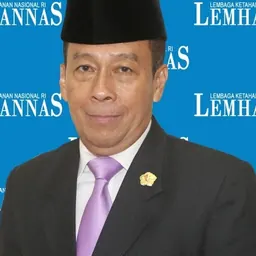

Contemporaries
People whose lives overlapped Albert Stubblebine's
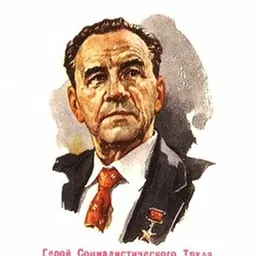

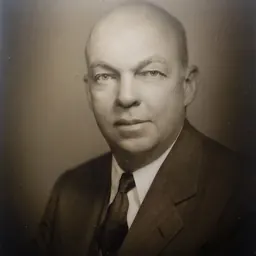
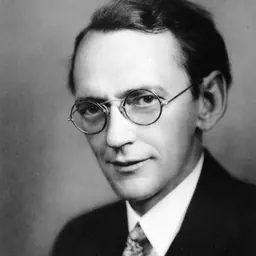
Frequently asked questions
Who was Albert Stubblebine?
US Army general (1930–2017)
When was Albert Stubblebine born?
Albert Stubblebine was born on 6 February 1930 in Fort Sill.
When did Albert Stubblebine die?
Albert Stubblebine died on 6 February 2017 in New Brunswick.
What was Albert Stubblebine's occupation?
Albert Stubblebine was a military personnel.
What nationality was Albert Stubblebine?
Albert Stubblebine was American.
Sources & further reading
· Wikipedia: Albert Stubblebine
Cite this page
APA: Biography.guide. (2026). Albert Stubblebine. https://biography.guide/albert-stubblebine/
MLA: "Albert Stubblebine." Biography.guide, https://biography.guide/albert-stubblebine/.
Chicago: "Albert Stubblebine." Biography.guide. https://biography.guide/albert-stubblebine/.
Data last updated: 2026-09-23 · Spot an error? Report a correction.
Portrait: Wikimedia Commons · author & licence
Page generated 2026-09-27 05:07 UTC