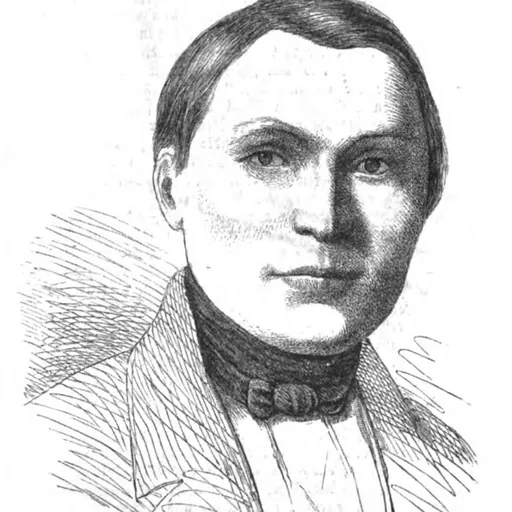
About Albert Schwegler
Lived 1819 – 1857 (aged 37). Albert Schwegler was a philologist, philosopher, theologian, university teacher, historian and writer.
Albert Schwegler (10 February 18195 January 1857) was a German philosopher and Protestant theologian.
Biography
Schwegler was born at Michelbach in Württemberg, the son of a country pastor. He entered the University of Tübingen in 1836, and was one of the earliest pupils of F. C. Baur, under whose influence he devoted himself to church history. His first work was Der Montanismus und die christliche Kirche des Zweiten Jahrhunderts (1841), in which he pointed out for the first time that Montanism was much more than an isolated outbreak of eccentric fanaticism in the early church, though he himself introduced fresh misconceptions by connecting it with Ebionitism as he conceived the latter. This work, with other essays, brought him into conflict with the authorities of the church, in consequence of which he gave up theology as his professional study and chose that of philosophy.
In 1843 he founded the Jahrbücher der Gegenwart, and became privatdozent of philosophy and classical philology at Tübingen University. In 1848 he was made an associate professor of Roman literature and archaeology, and soon afterwards a full professor of history.
He died in Tübingen.
Work
His principal theological work was Das nachapostolische Zeitalter in den Hauptmomenten seiner Entwicklung (The Post-Apostolic Age in the Principal Moments of its Development) (2 volumes, 1846). It was this book which first put before the world, with Schwegler's characteristic boldness and clearness, the results of the critical labours of the earlier representatives of the new Tübingen school in relation to the first development of Christianity.
Schwegler published also an edition of the Clementine Homilies (1847), and of Eusebius's Ecclesiastical History (1852). His work on the history of philosophy includes his excellent Geschichte der Philosophie im Umriß (History of Philosophy in Epitome, 1846–1847, 14th ed. 1887; 1st edition of English translation by James Hutchison Stirling titled Handbook of the History of Philosophy, 1867; 5th edition of English translation by Julius Hawley Seelye titled History of Philosophy in Epitome, 1877), his Übersetzung und Erläuterung der aristotelischen Metaphysik (4 volumes, 1847–48), and a posthumous Geschichte der griechischen Philosophie (History of Greek Philosophy; 1859).
In history he began a Römische Geschichte (vols. i.–iii., 1853–58, 2nd edition 1867–72), which he brought down only to the laws of Licinius.
Don’t just read it —
keep it.
Full-length biographies made to live with: read them, listen on the way to work, watch them tonight.
- E-book
- Audio
- Video
Instant download · yours to keep · every purchase keeps this site free
Important facts
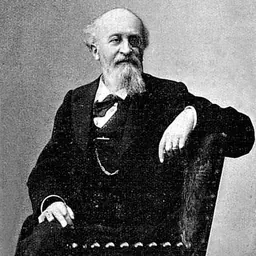
People in Albert Schwegler's life
Named in this biography and alive at the same time
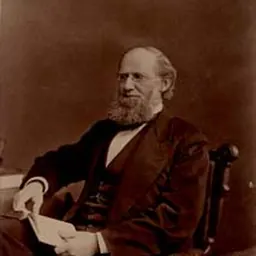
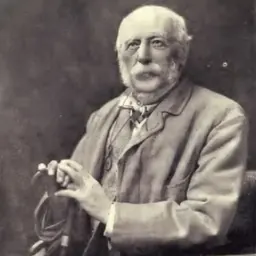
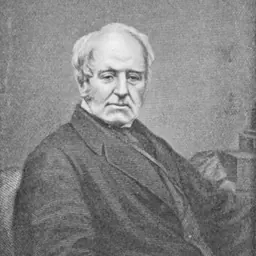
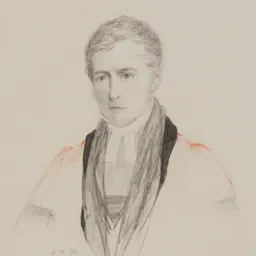
Related people
Same field, nearest in time

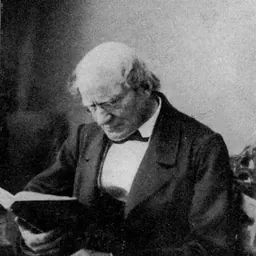

Contemporaries
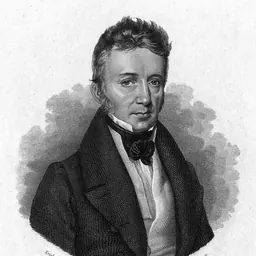
People whose lives overlapped Albert Schwegler's





Frequently asked questions
Who was Albert Schwegler?
German philosopher (1819–1857)
When was Albert Schwegler born?
Albert Schwegler was born on 10 February 1819 in Michelbach an der Bilz.
When did Albert Schwegler die?
Albert Schwegler died on 5 January 1857 in Tübingen.
What was Albert Schwegler's occupation?
Albert Schwegler was a philologist, philosopher, theologian, university teacher, historian and writer.
What nationality was Albert Schwegler?
Albert Schwegler's recorded nationality: Kingdom of Württemberg.
Sources & further reading
Cite this page
APA: Biography.guide. (2026). Albert Schwegler. https://biography.guide/albert-schwegler/
MLA: "Albert Schwegler." Biography.guide, https://biography.guide/albert-schwegler/.
Chicago: "Albert Schwegler." Biography.guide. https://biography.guide/albert-schwegler/.
Data last updated: 2026-09-21 · Spot an error? Report a correction.
Portrait: Wikimedia Commons · author & licence
Page generated 2026-09-27 04:59 UTC