
Albert Horsley
Canadian-born American miner, bigamist and assassin
About Albert Horsley
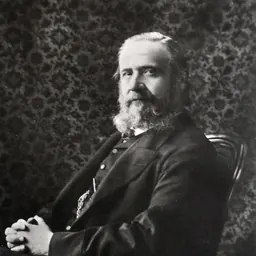
Lived 1866 – 1954 (aged 88). Albert Horsley was a Canadian cheesemaker, lumberjack, milkman and miner.
Steunenberg assassination
On December 30, 1905, Frank Steunenberg, former Governor of Idaho, was killed by a bomb rigged to the gate of his house in Caldwell. After midnight on the evening of Steunenberg's murder, Harry Orchard (as Tom Hogan) walked with Clinton Wood, the desk clerk at the hotel in Caldwell, to the site of the assassination at 1602 Dearborn Street , now hours past. Although he didn't seem to know the way to the murder scene, Orchard expressed the belief that the governor had been given a "big wad" of money by Idaho mine owners after he had left office. Such a view was common among miners, as reflected in a 1908 union pamphlet on the 1899 Coeur d'Alene mine strike.
Within an hour of the explosion, the sheriff had deputized 100 townspeople, and stationed them at all roads and paths leading out of town. Orchard made no effort to escape, and slept in his hotel room that night in Caldwell. The next day, Sunday, December 31, he was suspected and placed under parole, and was arrested for the assassination on New Year's Day. He raised suspicion when a detective for the Mine Owners' Association recognized him as Orchard; he responded that his name was Hogan; and, it was discovered that he was registered at the Saratoga Hotel. When his room #19 was searched, evidence related to the murder was discovered. Aside from using aliases, Orchard made little attempt to conceal his activities. Historian Melvyn Dubofsky has theorized that Orchard suffered from a "psychotic personality disorder" that caused him not only to engage in a life of violence, but also, perhaps subconsciously, to set up the circumstances of his own arrest.
Orchard testified that he had made numerous attempts on Steunenberg's life. In the week between Christmas and New Year's, Steunenberg had spent several days in Boise on business and returned to Caldwell on Friday the 29th, and had renewed an insurance policy on Saturday afternoon and stopped off at the Saratoga Hotel to talk with friends before returning home. Minutes before his death, Steunenberg had been sitting in the hotel, so Orchard retrieved the bomb from his room and rushed out to the residence to set it, about a dozen blocks away. On his way back to the hotel, Orchard met the governor two blocks from the house, and the explosion occurred shortly after as Orchard was running to the hotel. The fatal bomb was detonated by rigging the gate so that as it was opened, a bottle of sulfuric acid was spilled onto giant blasting caps. A blasting cap exploded in Orchard's pocket when he was back in his room. He stayed at the hotel until his Monday arrest. Errant first reports had surmised the device was wire-tripped by the assassin and used nitroglycerin.
The Haywood trial Facing the death penalty by hanging, Orchard made a confession to Pinkerton detective James McParland in the Frank Steunenberg assassination, confessing as well to the murders of at least sixteen other people. Orchard testified that the murder of Steunenberg was ordered by William Dudley Haywood, Charles Moyer and George Pettibone, all leaders of the Western Federation of Miners. The prosecution alleged that the union leaders had plotted to kill Steunenberg in retaliation for the ex-governor's severe measures against union miners, including a declaration of martial law, following violent incidents during a labor struggle in Coeur d'Alene, Idaho.
Prosecutors selected Haywood as the first of the three defendants to stand trial, thinking him the most vulnerable. His gnarled physical appearance, being blind in one eye, combined with his propensity to use politically radical language, made Haywood more likely to be associated with conspiracy and murder in the minds of the jurors, the prosecution believed. Under Idaho law, jurors were instructed to consider only those parts of Orchard's testimony that were corroborated by other evidence. This was especially difficult because a WFM official who had stayed with Orchard in Idaho had disappeared, and could not be found. The prosecution hoped to corroborate other parts of Orchard's testimony with the confession of Steve Adams, but Adams renounced his confession, claiming that it had been coerced.
The prosecution acted with significant support and direction from Agent McParland, and with assistance from Governor Gooding. Chief prosecuting attorneys were William Borah and James H. Hawley, who were paid in part by money secretly supplied by western mine operators and industrialists. Orchard's testimony was persuasive to reporters attending the trial.
The defense argued that Orchard had his own, personal motive for murdering Steunenberg. Defense attorneys Clarence Darrow and Edmund F. Richardson argued that if Orchard hadn't been forced to sell his one-sixteenth share of the mine because of the martial law decree, he would have become wealthy. Orchard had denied the accusation. The Haywood defense team produced five witnesses from three states who testified that Orchard had told them about his anger at Steunenberg. Several of them stated that Orchard had vowed to seek revenge against the former Idaho governor. Darrow later observed the date of the sale didn't seem to matter to Orchard; he "tried to sell this interest (again) a year after he had disposed of it."
The defense presented evidence of extensive infiltration, spying, and sabotage of the WFM by the Pinkertons. One witness was Morris Friedman, James McParland's former stenographer. Haywood testified in his own defense, and he stood up well under five hours of cross-examination. Then the defense presented what they claimed was "startling new evidence" about insanity in Orchard's family, including a grandfather who needed to be "chained up" and an uncle who went insane. Orchard admitted that one of his uncles was "demented" over family problems and had hanged himself, but testified to knowing nothing about his maternal grandfather, who died before his birth.
Fremont Wood, the presiding judge in both the Haywood and Pettibone trials, was highly impressed by the way Orchard held up under prolonged and severe cross-examination in each trial, and believed Orchard's testimony to be true. In Wood's experience, no one could have fabricated such a convoluted story, covering many years, in many locations, and including so many different people, and withstand such thorough cross-examination without materially contradicting himself. Wood later wrote that the prosecution case did not convincingly corroborate Orchard's testimony, but that the witnesses put on by the defense actually did a better job corroborating Orchard than the prosecution had done.
Results of the trials Even before Darrow's closing argument in the Haywood case, it was clear that the prosecution was in trouble. The prosecution relied on Orchard's testimony to make its case against the WFM leader, but the defense maintained that Orchard had confessed to crimes he could not have committed.
The state of Idaho had provided Orchard with "a library of religious tracts", which may have influenced his announced conversion to religious belief.
Idaho law required that the testimony of a confessed murderer must be independently corroborated by other evidence in order to convict others of murder. The Idaho jury found Haywood not guilty. One juror told a reporter, "There was nothing against the accused but inference and suspicion." Pettibone was found not guilty in a separate trial, after the defense declined to argue the case. in March 1908 and received a death sentence in Idaho for the murder of Steunenberg. An appeal was made by the prosecution to Idaho Governor Gooding, urging the commutation of Orchard's death sentence for his previous cooperation in the trials of the union leaders. This request was granted and Orchard's sentence was commuted to life in prison,
Last years Soon after receiving his sentence, Orchard converted to Seventh-day Adventism. His multiple pleas for a pardon over the years were all denied. He never recanted his confession, and in 1952, at 86 years of age and 45 years after the Haywood trial, Orchard wrote in his autobiography that all of his confession and his trial testimony were true.
Death Orchard died in the state penitentiary in Boise on April 13, 1954, aged 88, over 48 years after his arrest. After his sentencing in March 1908, he served more than 46 years at the Old Idaho State Penitentiary, its longest-ever term, and is buried in Morris Hill Cemetery in Boise. As a trusty, he had lived outside the prison walls in a small house for most of his later years, tending the prison's poultry flocks,
Don’t just read it —
keep it.
Full-length biographies made to live with: read them, listen on the way to work, watch them tonight.
- E-book
- Audio
- Video
Instant download · yours to keep · every purchase keeps this site free
Important facts
People in Albert Horsley's life
Named in this biography and alive at the same time



Related people
Same field, nearest in time





Contemporaries
People whose lives overlapped Albert Horsley's



Frequently asked questions
Who was Albert Horsley?
Canadian-born American miner, bigamist and assassin (1866-1954)
When was Albert Horsley born?
Albert Horsley was born on 18 March 1866 in Quinte West.
When did Albert Horsley die?
Albert Horsley died on 13 April 1954 in Boise.
What was Albert Horsley's occupation?
Albert Horsley was a cheesemaker, lumberjack, milkman and miner.
What nationality was Albert Horsley?
Albert Horsley was Canadian.
Sources & further reading
Cite this page
APA: Biography.guide. (2026). Albert Horsley. https://biography.guide/albert-horsley/
MLA: "Albert Horsley." Biography.guide, https://biography.guide/albert-horsley/.
Chicago: "Albert Horsley." Biography.guide. https://biography.guide/albert-horsley/.
Data last updated: 2026-09-20 · Spot an error? Report a correction.
Page generated 2026-09-27 05:28 UTC