
About Albert Eckstein
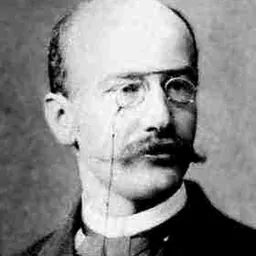
Lived 1891 – 1950 (aged 59). Albert Eckstein was a German pediatrician and university teacher.
Albert Eckstein (9 February 1891 – 18 July 1950) was a German pediatrician who in exile had worked towards improving maternal and child care in Turkey. Born in Ulm in 1891, Eckstein initially worked as a physician at the University Hospital of Düsseldorf from 1920 until 1935, while also becoming head of pediatrics department there in 1925, after working as an assistant doctor at the University of Freiburg for ten years following WWI. Going against his father's wishes, Albert had begun studying medicine in Freiburg at the age of 21. After serving as a medical officer in WWI, he worked as an assistant doctor at the Institute of Physiology and Anatomy at the University of Freiburg for ten years.
In 1920, he moved to the Children's Hospital (now University Hospital) in Düsseldorf to work under pediatrician Carl T. Noeggerath. Here he had researched on childhood encephalitis. Having habilitated to senior lecturer and physician in 1923, he later married Erna Eckstein (née Schlossmann), the daughter of Arthur Schlossmann in 1925. In the same year, he was promoted to a full time professor in the Children's Hospital. Erna at the time worked in Auguste-Viktoria children's home and was also involved in social hygiene. After Arthur's death, Eckstein was promoted to the head of pediatrics department at the hospital where he continued to research in infectious diseases such as tuberculosis and smallpox. He was recommended by German academicians including Philipp Schwartz, then in Switzerland who had started the Emergency Organization and others such as Max Meyer, August Laquer and E. M. Alsleben who resided in Turkey.
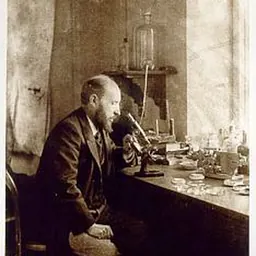
Pediatric work in Turkey The day after him and his family arrived in Ankara on September 1935, Eckstein was asked to investigate the causes of rising child and maternal mortality in Turkey, particularly in the Anatolia region. Additionally he was tasked on collecting the data for women fertility and number of surviving children. For these tasks the official contact who met Eckstein was the Minister of Health and Social Assistance and also the ex-Turkish PM, Refik Saydam. With his assistant, Selahattin Tekand, Eckstein journeyed 13 provinces in the Anatolian region in July–August 1937. He took numerous photographs in his travels around Turkey which were published by the University of Cambridge. One of the photos had been printed in Turkish pavilion at the world's fair at New York in 1939 and another in 10 lira banknote in 1942.
He also had a knowledge of the Turkish language that led him to publish books on Turkish pediatrics in 1941 and 1947. He had contributed to the study and treatment research on Noma (stomatitis ulcerosa) for which he had worked on a sulfonamide treatment. With these efforts, Noma had been effectively eradicated from Turkey, with the last case seen in 1978. Eckstein's foundational work on pediatrics had modernized Turkish healthcare by influencing doctors working there to carry the same dedicated work. One of them is the Turkish pediatrician and geneticist Burhan Say.
His son Herbert Eckstein, a member of the Royal College of Surgeons of England had established the pediatric surgery department at the children's hospital in Hacettepe University in 1958. This was the first pediatric surgery department established in Turkey and had treated bladder stones other than orthopaedic problems in children.
Selected works Encephalitis im Kindesalter (in German transl. Encephalitis in Childhood) / A. Eckstein (1929) Eckstein, Albert, Haldun Tekiner, and Necdet Özlem. Çocuk: neşvünema, tegaddî ve metabolizmasının fiziyoloji ve patolojisi (in Turkish transl. The Child: The Physiology and Pathology of Growth, Nutrition, and Metabolism) Receb Ulusoğlu Basımevi, 1941 Türkiye'de çocuk hastaliklari ve çucuklarin korunmasi problemleri (in Turkish transl. Childhood Diseases and Issues Regarding the Protection of Children in Türkiye) / Albert Eckstein. Almancadan Türkçeye çeviren: Necdet Özlem, 1947 Noeggerath, C., & Eckstein, A. (1925). Die Urogenitalerkrankungen der Kinder: Störungen und Erkrankungen der Harnbereitung und der Geschlechtssphäre sowie ihrer Organe. (in German transl. Urogenital Diseases in Children: Disorders and Diseases of Urine Formation and the Genital Sphere, as well as their Organs)
Don’t just read it —
keep it.
Full-length biographies made to live with: read them, listen on the way to work, watch them tonight.
- E-book
- Audio
- Video
Instant download · yours to keep · every purchase keeps this site free
Important facts
People in Albert Eckstein's life
Named in this biography and alive at the same time

Related people
Same field, nearest in time


Contemporaries
People whose lives overlapped Albert Eckstein's


Frequently asked questions
Who was Albert Eckstein?
German pediatrician (1891-1950)
When was Albert Eckstein born?
Albert Eckstein was born on 9 February 1891 in Ulm.
When did Albert Eckstein die?
Albert Eckstein died on 18 June 1950 in Hamburg.
What was Albert Eckstein's occupation?
Albert Eckstein was a pediatrician and university teacher.
What nationality was Albert Eckstein?
Albert Eckstein was German.
Sources & further reading
Cite this page
APA: Biography.guide. (2026). Albert Eckstein. https://biography.guide/albert-eckstein/
MLA: "Albert Eckstein." Biography.guide, https://biography.guide/albert-eckstein/.
Chicago: "Albert Eckstein." Biography.guide. https://biography.guide/albert-eckstein/.
Data last updated: 2026-09-20 · Spot an error? Report a correction.
Page generated 2026-09-27 05:17 UTC