
About Albert Buell Lewis
Lived 1867 – 1940 (aged 73). Albert Buell Lewis was an American anthropologist.
Albert Buell Lewis (June 21, 1867 – October 10, 1940) was the first American anthropologist to conduct a systematic, long-term field study in Melanesia, A. B. Lewis is best remembered for the collection and documentation of over 14,000 Melanesian objects gathered in the colonial territories of Melanesia during his time as the leader of the Joseph N. Field South Pacific Expedition from 1909 to 1913. This extensive collection and documentation is now housed at the Field Museum of Natural History in Chicago, Illinois.
Early life A. B. Lewis was born on June 21, 1867, in Clifton, Ohio. He was the only child of successful Presbyterian citizens, Charles Bennet Lewis and his wife, Anna E. Mckeehan. After the passing of Lewis’ mother, his father remarried to Susan M. Waddle. Lewis would gain six siblings from his father's second marriage with whom he was very fond of and would regularly correspond. Lewis began his education at Clifton Union School, a four-room schoolhouse, completing first grade through high school. He graduated from the small school in 1887 with three other students. Lewis briefly moved to Santa Ana, California, after his graduation to live with his family, who moved there three years earlier. But this was short lived, as Lewis returned to Ohio in 1890 to attend a university.
Academic career Lewis’ academic career began with a pursuit of biological sciences from 1890 to 1893 at Wooster College and the completion his Bachelor of Arts degree in biology at the University of Chicago in 1894. For the next three years, Lewis was a biology, histology, and bacteriology assistant in the laboratory at the University of Chicago. Upon the completion of his dissertation, Lewis graduated with a Ph.D. in 1906 from the anthropology program at Columbia University.
Time at the Field Museum Lewis arrived at the Field Museum of Natural History in March 1907 after receiving his doctorate in anthropology at Columbia University the previous spring. He was the second student of Franz Boas to be hired by the Field Museum, William Jones, the first Native American to earn an anthropology degree, being the other. A year after his arrival, Lewis was promoted to assistant curator of African and Melanesian ethnology. It is here at the Field Museum that Lewis came to fully appreciate the previous emphasis of material culture that he experienced during his time at Columbia University with Boas. Collecting examples of material culture and their data for the museum was of high significance to Lewis. Lewis's enduring legacy remains the collection of close to 14,000 objects that were acquired during the four-year Joseph N. Field South Pacific Expedition. After his return from the exhibition in 1913, Lewis spent the remainder of his time at the Field Museum cataloging collections and preparing exhibits that would demonstrate the areas of cultural diversity in Melanesia. Creating one of the largest and well known exhibits about Melanesia, Lewis opened the Joseph N. Field Hall for display in 1921 and it remained mostly unchanged until its renovation in 1986. He held the position of curator of Melanesian Ethnology at the Field Museum from 1936 up until the time of his death in 1940. As the leader of the expedition, Lewis and his team left Chicago in May 1909 bound for Fiji. Researching the regions of New Guinea, New Britain, and New Caledonia, Lewis traveled to numerous other areas, amassing an ethnographic collection for the Field Museum unparalleled anywhere in the world.
Not only did Lewis gather over 14,000 objects during his four-year expedition in the South Pacific, but he also created one of the best documented collections of its kind in the world. In an effort to expand the newly formed Field Museum's collection base and establish it as a world-class scientific and educational institution, Lewis created extensive documentation to accompany the artifacts that were shipped back to Chicago. Lewis's collection documentation contains nearly 1,600 surviving expedition photographs, specimen lists documenting items collects, field diaries, and expedition correspondence. Systematically recording information about the objects in his collection, Lewis went beyond typical practices of the time of just noting where objects were made and also documented information such as materials, uses, and local names of objects. The A. B. Lewis collection contains objects from close to 300 communities dispersed through Melanesia. Lewis would go on to view both his immense collection and the experience of the expedition as two of his greatest achievements.
Major works
1906 “Tribes of the Columbia Valley and the Coast of Washington and Oregon” [Ph. D. thesis], Memoirs of the American-Anthropological Association, vol. 1, 147–209
1924 "Block Prints from India for Textiles." Field Museum of Natural History, Anthropology of Design Series, no. 1: Chicago
1924 "Javanese Batik Designs from Metal Stamps." Field Museum of Natural History, Anthropology of Design Series, no. 2: Chicago
1925 "Decorative Art of New Guinea: Incised Designs." Field Museum of Natural History, Anthropology of Design Series, no. 4: Chicago
1929 Melanesian Shell Money in Field Museum Collections. Field Museum of Natural History Publication, no. 268; Anthropological Series, vol. 19, no. 1: Chicago
1931 “Tobacco in New Guinea,” American Anthropologist, vol. 33, 134–138
1931 "Carved and Painted Designs from New Guinea." Field Museum of Natural History, Anthropology of Design Series, no. 5: Chicago
1924 "Ethnology of Melanesia." Field Museum of Natural History, Department of Anthropology, Guide, part 5: Chicago
1988 “New Britain notebook,” Field Museum of Natural History Bulletin, vol. 59, no. 8, 16–23
Don’t just read it —
keep it.
Full-length biographies made to live with: read them, listen on the way to work, watch them tonight.
- E-book
- Audio
- Video
Instant download · yours to keep · every purchase keeps this site free
Important facts
People in Albert Buell Lewis's life
Named in this biography and alive at the same time
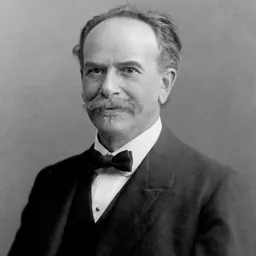

Related people
Same field, nearest in time




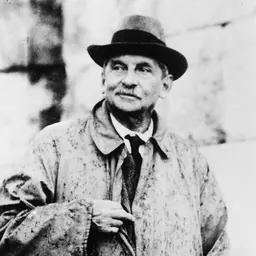
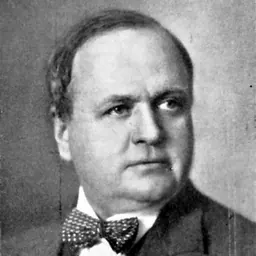
Contemporaries
People whose lives overlapped Albert Buell Lewis's
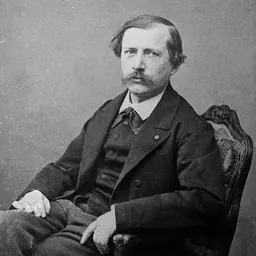

Frequently asked questions
Who was Albert Buell Lewis?
American anthropologist
When was Albert Buell Lewis born?
Albert Buell Lewis was born on 21 June 1867 in Clifton.
When did Albert Buell Lewis die?
Albert Buell Lewis died on 10 October 1940 in Chicago.
What was Albert Buell Lewis's occupation?
Albert Buell Lewis was an anthropologist.
What nationality was Albert Buell Lewis?
Albert Buell Lewis was American.
Sources & further reading
· Wikipedia: Albert Buell Lewis
Cite this page
APA: Biography.guide. (2026). Albert Buell Lewis. https://biography.guide/albert-buell-lewis/
MLA: "Albert Buell Lewis." Biography.guide, https://biography.guide/albert-buell-lewis/.
Chicago: "Albert Buell Lewis." Biography.guide. https://biography.guide/albert-buell-lewis/.
Data last updated: 2026-09-22 · Spot an error? Report a correction.
Page generated 2026-09-27 05:28 UTC