
About Albert Battel
Lived 1891 – 1952 (aged 60–61). Albert Battel was a Polish and German lawyer, military officer, jurist and soldier.
Albert Battel (; 21 January 1891 – 17 March 1952) was a German Army lieutenant, lawyer and notary recognized for his resistance during World War II to the Nazi plans for the 1942 liquidation of the Przemyśl Jewish ghetto. He was posthumously recognized as Righteous Among the Nations in 1981.
Early life Battel was born in Klein-Pramsen (Prężynka), next to Neustadt (Prudnik), Prussian Silesia in 1891. After serving in the Imperial German Army in World War I, earning an iron cross on the way, he studied economics and jurisprudence at the Ludwig-Maximilians-Universität München and the University of Breslau (Wrocław). He then worked as a lawyer and notary in the interwar years. In the 1930s, he joined the Nazi Party.
During the War Battel was drawn for the Wehrmacht in 1942 as a reserve officer.
Punishment and investigation Battel justified his actions by citing the necessity of continuing military production. As a result, the Wehrmacht imposed only disciplinary measures: house arrest, the cancellation of the Iron Cross award, which he had received in World War I, and a transfer to a different post. This relatively lenient treatment was due in part to the fact that an order dictating an "uncompromising mandatory attitude" for Wehrmacht officers toward Jews had not yet been issued (it was later released in October 1942).
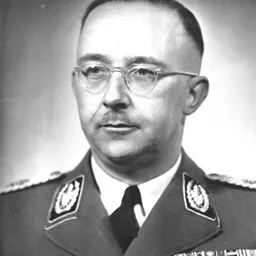
A different matter entirely was the SS, with whom Albert Battel had entered into open conflict. Their agencies initiated a closed investigation. The investigation revealed that Battel had previously shown sympathy toward Jews. The head of the SS himself, Heinrich Himmler, took an interest in the investigation. Himmler sent a copy of the investigation materials to Martin Bormann. In the accompanying note, Himmler stated that he had ordered the arrest of Albert Battel immediately after the war.
Post-war
Neither the details of the investigation nor the content of Himmler's directive were known to Battel himself. In 1944, Battel was discharged from military service due to a heart condition and returned to his native city, Breslau (now Wrocław). When Soviet forces occupied the city, he spent a period in Soviet captivity as a prisoner of war. Following his release, Battel settled in West Germany and attempted to resume his legal career as a lawyer and notary, but was denied permission by a postwar denazification court. He instead worked in a glass factory.
Death Battel died in 1952 in Hattersheim am Main, near Frankfurt from a heart attack. He was 61 years old.
Recognition and honor Battel’s stand against the SS was not recognized until years after his death, most notably through the tenacious efforts of the Israeli researcher and lawyer Dr. Zeev Goshen.
On January 22, 1981, almost 30 years after Battel's death, Yad Vashem recognized him as Righteous Among the Nations.
Don’t just read it —
keep it.
Full-length biographies made to live with: read them, listen on the way to work, watch them tonight.
- E-book
- Audio
- Video
Instant download · yours to keep · every purchase keeps this site free
Important facts
People in Albert Battel's life
Named in this biography and alive at the same time

Related people
Same field, nearest in time


Contemporaries
People whose lives overlapped Albert Battel's


Frequently asked questions
Who was Albert Battel?
German Righteous Among the Nations
When was Albert Battel born?
Albert Battel was born on 21 January 1891 in Prężynka.
When did Albert Battel die?
Albert Battel died in 1952 in Frankfurt.
What was Albert Battel's occupation?
Albert Battel was a lawyer, military officer, jurist and soldier.
What nationality was Albert Battel?
Albert Battel was Polish and German.
Sources & further reading
Cite this page
APA: Biography.guide. (2026). Albert Battel. https://biography.guide/albert-battel/
MLA: "Albert Battel." Biography.guide, https://biography.guide/albert-battel/.
Chicago: "Albert Battel." Biography.guide. https://biography.guide/albert-battel/.
Data last updated: 2026-09-20 · Spot an error? Report a correction.
Page generated 2026-09-27 05:34 UTC