
Alauddin Ahmed
Pakistan Air Force officer
About Alauddin Ahmed
Lived 1930 – 1965 (aged 34).
Squadron Leader Alauddin Ahmed (3 October 1930 — 13 September 1965), known as Butch or Butch Ahmed to his colleagues, was a Pakistan Air Force officer who led his squadron, the No. 18 Sharp Shooters in several missions during the Indo-Pakistani War of 1965, attacking Indian ground and air forces, and was killed in action while attacking an ammunition train at Gurdaspur in complete disregard to his personal safety.
In his book "Flight of the Falcon," his colleague (Retd) Air Commodore Sajad Haider, who was the last person to speak with Butch over the radio before his crash, wrote: "Butch truly never had an enemy; everybody loved Butch, especially the girls from the Burt Institute (an Anglo-Indian club operated by the Railways)."
Early life Alauddin Ahmed was born in Dacca on 3 October 1930 into a Bengali family originally from Calcutta. His father, Dr. Tajamal Ahmed was a well known eye specialist in East Pakistan and throughout the Indian subcontinent.
Personal life Alauddin married Sofia Shireen in a wedding ceremony on 3 November 1955. They had four children, two sons Zafar and Jamal, and two daughters Yasmeen and Neelofar. Others included, President Iskandar Ali Mirza, General Ayub Khan, Air Vice Marshal Asghar Khan, Air Commodore Nur Khan, Turkish Air Chief , Iraqi Air Force Chief Abdul Kadhim Abaddi and Chief of the Imperial Iranian Air Force Hedayatollah Gilanshah.
Flying in the No. 2 position, Flight Lieutenant Alauddin Ahmed was part of the Falcons aerobatic team led by Wing Commander Mitty Masud that set a world record performing a 16-aircraft diamond loop in F-86 Sabres.
On 6 September 1965, during an offensive fighter sweep near Taran Taran, a town in India's Amritsar district, Squadron Leader Ahmed led a formation of three Sabre jets. As they approached, he spotted four Indian Hawker Hunter aircraft and immediately informed his commander, Squadron Leader Alam, of the threat. Following Alam's orders, the squadron jettisoned their fuel tanks and prepared for combat. In the ensuing battle, Ahmed's Sabre shot down one of the Hunters, marking his first aerial victory of the war. All four Hunters were eventually destroyed, leaving the three Sabres victorious in the skies.
Gurdaspur train attack Squadron Leader Ahmed's final mission took place on 13 September 1965. In the morning, he led a successful attack on enemy tanks and artillery in the Chawinda-Narowal sector, as part of a support mission for Pakistani ground forces. After completing this sortie, he and his squadron returned to base for a brief rest before flying their second operational mission of the day, an armed reconnaissance patrol over the Gurdaspur area.
As the squadron approached Gurdaspur, Ahmed spotted a train in the marshalling yard of the railway station. Upon closer inspection, he identified the train as carrying military supplies, including ammunition. Without hesitation, Ahmed led his formation in a daring attack. The initial assault caused a massive explosion, sending smoke and debris into the sky. Despite the danger posed by the explosion, Ahmed pressed the attack, flying dangerously low to target the remaining wagons. His final attack triggered another massive blast, sending pressure waves that buffeted the Sabres in flight.
During this last sortie, Ahmed's aircraft was struck by flying debris, causing severe damage. He attempted to fly the crippled aircraft back toward Pakistani territory, just 12 miles away, but his cockpit was soon filled with smoke. His last radio transmission was: "My cockpit is full of smoke." His comrades attempted to locate him after he was reported missing, but tragically, Squadron Leader Alauddin Ahmed was killed in action.
Sitara-e-Jurat His Sitara-e-Jurat citation reads: Sqn Ldr Alauddin Ahmed led his Sqn in twenty combat missions against the Indian ground and air forces. His leadership throughout the operations was cool, courageous and most determined which inspired the greatest confidence amongst pilots of his formations and resulted in destruction of many Indian tanks and vehicles. In his last sortie, he attacked and blew up an important ammunition train at Gurdaspur railhead in complete disregard to his personal safety. During this attack on Sep 13, his aircraft was damaged and was reported missing over enemy territory. Subsequently, it was confirmed that the officer died in this action. For his exemplary leadership, courage, and valour, Sqn Ldr Alauddin Ahmed is awarded SJ.
Awards and decorations
(Star of Courage)(Posthumously)1965Tamgha-e-Qayam-e-Jamhuria (Republic Commemoration Medal)
1956
Don’t just read it —
keep it.
Full-length biographies made to live with: read them, listen on the way to work, watch them tonight.
- E-book
- Audio
- Video
Instant download · yours to keep · every purchase keeps this site free
Important facts
People in Alauddin Ahmed's life
Named in this biography and alive at the same time
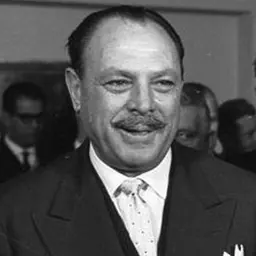
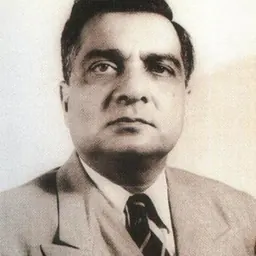

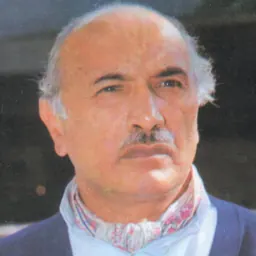



Contemporaries
People whose lives overlapped Alauddin Ahmed's

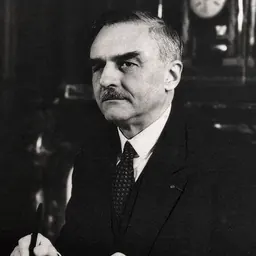




Frequently asked questions
Who was Alauddin Ahmed?
Pakistan Air Force officer (1930-1965)
When was Alauddin Ahmed born?
Alauddin Ahmed was born on 3 October 1930.
When did Alauddin Ahmed die?
Alauddin Ahmed died on 13 September 1965.
Sources & further reading
Cite this page
APA: Biography.guide. (2026). Alauddin Ahmed. https://biography.guide/alauddin-ahmed/
MLA: "Alauddin Ahmed." Biography.guide, https://biography.guide/alauddin-ahmed/.
Chicago: "Alauddin Ahmed." Biography.guide. https://biography.guide/alauddin-ahmed/.
Data last updated: 2026-09-20 · Spot an error? Report a correction.
Page generated 2026-09-27 05:05 UTC