
Alaska P. Davidson
First female FBI agent
About Alaska P. Davidson
Lived 1868 – 1934 (aged 66). Alaska P. Davidson was an American FBI.
Alaska Packard Davidson (March 1, 1868 – July 16, 1934) was an American law enforcement officer who is best known for being the first female special agent in the FBI.
Early life Davidson was born in Warren, Ohio, on March 1, 1868, to Warren and Mary Elizabeth Doud Packard. She grew up in one of the largest houses in Warren and was likely named after the U.S. Department of Alaska, which had recently been purchased. She was also said to be a "well-known equestrian" who won awards in her teenage years, and enjoyed riding bicycles. and Cornelia Olive Packard.
In 1890, she was put in charge of the New York and Ohio plant, which was unusual, as few women were running factories at that time. It later became the Ohio Lamp Division. Her management of the plant has been described as "quite an achievement." By 1910, they were living in Pittsburgh, Pennsylvania. The following year, she purchased land in Accotink, Virginia, near Mount Vernon, where she and her husband, known as Jim, lived until their deaths, raising horses. She was the first female special agent. Trained in New York City, she was later assigned to the Washington, D.C. field office. Her starting salary was $7 a day plus $4 when traveling. She was said to be earning the equivalent of $102 a day in present-day value. In a 1927 letter, Harriet Taylor Upton stated that she encouraged Attorney General Harry M. Daugherty to hire Davidson, and said that she was surprised that he appointed her to the BOI, under Burns, where she got, a "$2300.00 a year salary", in her words, driving "back and forth from her plantation" every day for her work. at the organization's Fourth International Congress in May 1924, under the name "A.P. Davidson".
After J. Edgar Hoover became acting director of the Bureau in 1924 following the Teapot Dome scandal, he asked for Davidson's resignation when the Special Agent in Charge at the Washington field office reported that he had "no particular work for a woman agent". She resigned on June 10, 1924. Before her resignation, she gave testimony before a select committee of the United States House of Representatives about her surveillance of Gaston B. Means in October 1923, watching movement in and out of Means' house, and again in March 1924.
Only three women became agents in the 1920s. With the resignation of Davidson and fellow agent Jessie B. Duckstein in 1924 and Lenore Houston in 1928, the FBI had no female agents between 1929 and 1972. While the FBI claims that Davidson and Duckstein resigned as "part of the Bureau’s reduction of force", The FBI also notes, on the agency's official website, that in the 1920s, expectations for agents "changed to a patriarchal approach as to what positions were appropriate for women."
Later life In 1925, after the death of her brother, William, she signed a petition, along with her sisters, brother, and other individuals, to the New York Supreme Court Appellate Division calling for appraisal of a transfer tax of property owned by William, known as Packard Manor, in the State of New York.
Davidson exchanged letters, in May 1927, with Carrie Chapman Catt. Catt told her about a story she heard from her friend, Harriet Taylor Upton, about a list of suffragettes which were reportedly compiled by the Bureau of Investigation, with information provided by Mary Kilberth and Robert Eichelberger. Catt asked that Davidson let her be named if the government inquired into the list, Catt, writing to Davidson in June 1927, later apologized for not responding more promptly to Davidson's letter. The same month, Upton wrote to Catt, calling Davidson someone she had known "for years" and a sister of "the Packard men who made the Packard machine." She further commented that Davidson has married "rather unfortunately," and noted that Davidson had thrown the list into the waste basket.
In May 1929, Davidson's husband, Jim, passed away. She continued living in Virginia, with her dogs, until her death. Cindee Mines, a volunteer with the National Packard Museum, stated that Davidson lived an "unusual life" and argued that she was "ahead of her time." Others called Davidson, along with other women in the same Packard family, "trailblazers in their own right."
The mention of Davidson as the first female FBI agent by Lana Kane in the Archer episode, "Waxing Gibbous" was noted as an example of the show's habit of using obscure references. In its review of the episode, Vulture noted that Kane has "pointed dialogue" about disappointing hiring practices of intelligence sector, including a "shout-out" to Davidson, who is described as a "trailblazing agent."
Don’t just read it —
keep it.
Full-length biographies made to live with: read them, listen on the way to work, watch them tonight.
- E-book
- Audio
- Video
Instant download · yours to keep · every purchase keeps this site free
Important facts
People in Alaska P. Davidson's life
Named in this biography and alive at the same time
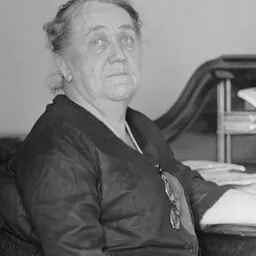
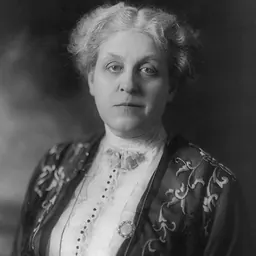
Contemporaries
People whose lives overlapped Alaska P. Davidson's



Frequently asked questions
Who was Alaska P. Davidson?
first female FBI agent
When was Alaska P. Davidson born?
Alaska P. Davidson was born on 1 March 1868 in Warren.
When did Alaska P. Davidson die?
Alaska P. Davidson died on 16 July 1934 in Alexandria.
What was Alaska P. Davidson's occupation?
Alaska P. Davidson was a FBI.
What nationality was Alaska P. Davidson?
Alaska P. Davidson was American.
Sources & further reading
· Wikipedia: Alaska P. Davidson
Cite this page
APA: Biography.guide. (2026). Alaska P. Davidson. https://biography.guide/alaska-p-davidson/
MLA: "Alaska P. Davidson." Biography.guide, https://biography.guide/alaska-p-davidson/.
Chicago: "Alaska P. Davidson." Biography.guide. https://biography.guide/alaska-p-davidson/.
Data last updated: 2026-09-26 · Spot an error? Report a correction.
Page generated 2026-09-27 05:15 UTC