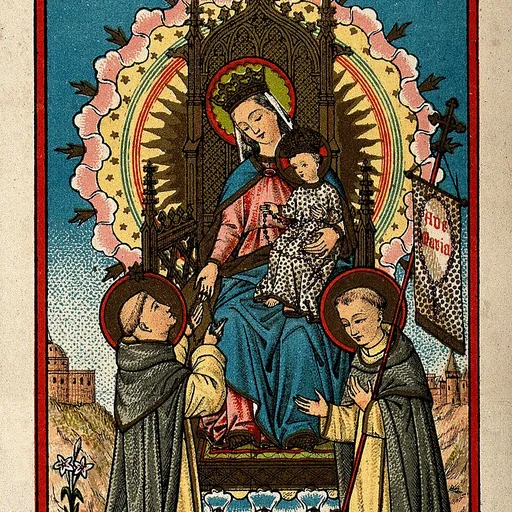
About Alanus de Rupe
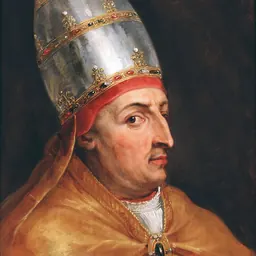
Lived 1428 – 1475 (aged 47). Alanus de Rupe was a French theologian, university teacher and writer.
Alan de la Roche (Ecclesiastical Latin: Alanus de Rupe; French: Alain – 8 September 1475), commonly referred to simply as Blessed Alan, was a Breton Dominican friar and priest, theologian, and mystic. He is known for restoring the devotion of the Rosary, which, according to tradition, had been forgotten in most of Europe in the centuries after the death of Saint Dominic in 1221.
Life Born in Dinan, Brittany in around 1428, he entered the Dominican Order in 1459 at age thirty-one. While pursuing his studies at Saint Jacques, Paris, he distinguished himself in philosophy and theology. From 1459 to 1475 he taught almost uninterruptedly at Paris, Lille, Douay, Ghent, and Rostock in Germany, where, in 1473, he was made Master of Sacred Theology. During his sixteen years of teaching he became a most renowned preacher. He was indefatigable in what he regarded as his special mission, the preaching and re-establishment of the Rosary, which he did with success throughout northern France, Flanders, and the Netherlands. He established a Confraternity of the Psalter of the Glorious Virgin Mary, around 1470 which was instrumental in disseminating the rosary throughout Europe. Some writers claim him as a native of Germany, others of Belgium; but his disciple, Cornelius Sneek, says that he was born in Brittany. He died at Zwolle.
Alan published nothing during his lifetime, but immediately after his death the brethren of his province were commanded to collect his writings for publication. These were edited at different times and have occasioned some controversy among scholars.
Alan's Works
Works At the time of Alan's death, nothing by him had been committed to print. In the year following his death, the Provincial Chapter of the Congregation of Dominicans of Holland, ordered that all priors make a diligent inquiry concerning Alan's books, treatises, or compilations. They also ordered that whatever was found, either in originals, transcripts, or copies, should be transmitted as quickly as possible to the Vicar General. This order, however, was repealed two years later at the following Chapter in 1478. What works were attributed to him were written on paper and multiplied in small numbers; And none of Alan's original manuscripts survive today. The first known collection of his works was printed in a Carthusian Monastery of Sweden in 1498 under the name Sponsus Novellus. Of this text the English Jesuit Father Herbert Thurston remarks that "the form of the Sponsus Novellus shows that it was not left for publication as it stands by Alan himself. It is obviously a collection, made by somebody else, of his miscellaneous papers, revelations, sermons, anecdotes, &c. Much of the supplementary matter inserted at the close of the volume is suggestive of a Carthusian origin, and this, seeing that the book was printed in a Carthusian monastery, is not at all unlikely." He also states that he believes that much of what we possess is originally from notes taken at Alan's spoken discourses. Noting these difficulties, at the beginning of the 17th century the Dominican Father Johann Coppenstein published his own version of Alan's writings, which he divided into five parts, under the title Beatus Alanus de Rupe, redivivus. He states in the preface to the work, that although the matter is Alan's, the form is his. Coppenstein adds that he attempted to remove what was scattered and added to the work by a posthumous collector.
The works of Alan were published by Coppenstein in the following order,
Apology to Ferricus, Bishop of Tournai. Relations, Revelations, and Visions Regarding the Rosary. The sermons of St. Dominic Revealed to Alan. Sermons and Short Treatises of Alan. Examples or Miracles of the Rosary.
Besides these, other works attribute to Alan include an exposition of the Rule of St. Augustine and a work on the Confraternity of the Psalter of Our Lady. In one text attributed to Alan; relating one-hundred and fifty articles the Blessed Virgin was supposed to have given him for meditation; a posthumous editor states that some of the articles were not to his taste, some appearing too long or too short, and therefore he changed and suppressed what did not appear authentic to him. And that he also added himself several things from the writings of the holy doctors. The Dominican Father Denys Mézard states that it is known with certainty that Alan's writings have been altered, falsified and interpolated; that the texts published under his name are at contradiction with one another. He goes on further to say that the works of Alan have come down to us under a triple-filter: That of the listeners, that of the posthumous editor, and that of Fr. Coppenstein. until the 17th century, when Bollandists concluded that the account originated with Alan, writing over two hundred years after Dominic's life. Alan attributed his descriptions of Dominic to a 1460 vision; later authors have suggested that he may have invented them to enliven sermons. John T. McNicholas, a Catholic bishop, held that Alan's accounts should not be regarded as historical. Although historical evidence for Dominic's role in the origin of the Rosary is lacking and has been questioned by scholars such as the Bollandists, several popes after the 17th century, including Pope Leo XIII and Pope Pius XI, continued to attribute its origin to Dominic in official documents such as encyclicals.
Fifteen Rosary promises
According to Alan, Mary made fifteen specific promises through Dominic de Guzmán to those who faithfully pray the Rosary. The fifteen Rosary promises range from protection from misfortune to meriting a high degree of glory in heaven.
Don’t just read it —
keep it.
Full-length biographies made to live with: read them, listen on the way to work, watch them tonight.
- E-book
- Audio
- Video
Instant download · yours to keep · every purchase keeps this site free
Important facts
People in Alanus de Rupe's life
Named in this biography and alive at the same time

Related people
Same field, nearest in time


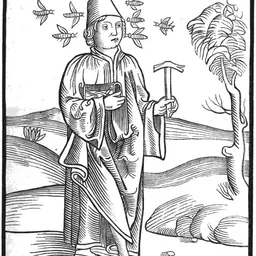
Contemporaries
People whose lives overlapped Alanus de Rupe's
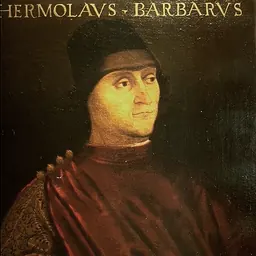

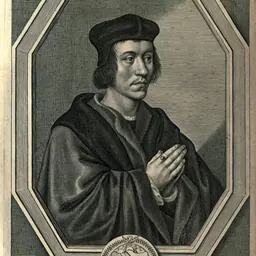
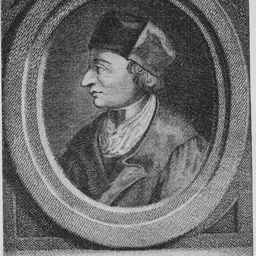
Frequently asked questions
Who was Alanus de Rupe?
Dominican theologian
When was Alanus de Rupe born?
Alanus de Rupe was born on 8 September 1428 in Brittany.
When did Alanus de Rupe die?
Alanus de Rupe died on 8 September 1475 in Zwolle.
What was Alanus de Rupe's occupation?
Alanus de Rupe was a theologian, university teacher and writer.
What nationality was Alanus de Rupe?
Alanus de Rupe was French.
Sources & further reading
Cite this page
APA: Biography.guide. (2026). Alanus de Rupe. https://biography.guide/alanus-de-rupe/
MLA: "Alanus de Rupe." Biography.guide, https://biography.guide/alanus-de-rupe/.
Chicago: "Alanus de Rupe." Biography.guide. https://biography.guide/alanus-de-rupe/.
Data last updated: 2026-09-20 · Spot an error? Report a correction.
Page generated 2026-09-27 05:09 UTC