
About Alan Rawsthorne
Lived 1905 – 1971 (aged 66). Alan Rawsthorne was a British composer, choreographer and film score composer.
Alan Rawsthorne (2 May 1905 – 24 July 1971) was a British composer. He was born in Haslingden, Lancashire, and is buried in Thaxted churchyard in Essex.
Early years Alan Rawsthorne was born in Deardengate House, Haslingden, Lancashire, to Hubert Rawsthorne (1868–1943), a well-off medical doctor, and his wife, Janet Bridge (1877/8–1927). Despite what appears to have been a happy and affectionate family life with his parents and elder sister, Barbara (the only sibling), in beautiful Lancashire countryside, as a boy Rawsthorne suffered from fragile health. Although he did at various times attend schools in Southport, much of Rawsthorne's early education came through private tutoring at home. Despite his childhood aptitude for music and literature, Rawsthorne's parents tried to steer him away from his dreams of becoming a professional musician. As a result, he unsuccessfully tried to take on degree courses at Liverpool University, first in dentistry and then architecture. Concerning dentistry, Rawsthorne is on record as having said "I gave that up, thank God, before getting near anyone's mouth", while his friend Constant Lambert quipped "Mr Rawsthorne assures me that he has given up the practice of dentistry, even as a hobby."
Career In 1925, Rawsthorne was finally able to enroll at the Royal Manchester College of Music, where his teachers included Frank Merrick for the piano and Carl Fuchs for the cello. In 1927, Rawsthorne's mother died aged just forty-nine. After graduating from the Royal Manchester College of Music around 1930, Rawsthorne spent the next couple of years pursuing his piano training with Egon Petri at Zakopane in Poland, and then briefly also in Berlin.
On his return to England in 1932, Rawsthorne took up a post as pianist and teacher at Dartington Hall in Devon, where he became composer-in-residence for the School of Dance and Mime. In 1934, Rawsthorne left for London to try his fortune as a freelance composer. His first real public success arrived four years later with a performance of his Theme and Variations for Two Violins at the 1938 International Society for Contemporary Music (ISCM) Festival in London. The next year, his large-scale Symphonic Studies for orchestra was performed in Warsaw, again at the ISCM Festival. The first in a line of completely assured orchestral scores, the Symphonic Studies, which can be heard as a concerto for orchestra in all but name, rapidly helped Rawsthorne establish himself as a composer possessing a highly distinctive musical voice.
Other acclaimed works by Rawsthorne include a viola sonata (1937), two piano concertos (1939, 1951), an oboe concerto (1947), two violin concertos (1948, 1956), a concerto for string orchestra (1949), and the Elegy for guitar (1971), a piece written for and completed by Julian Bream after the composer's death. Other works include a cello concerto, three acknowledged string quartets among other chamber works, and three symphonies.
Rawsthorne wrote a number of film scores. His best–known work in this field was the music for the 1953 British war film The Cruel Sea, and his other scores included many popular British films, such as The Captive Heart (1946), School for Secrets (1946), Uncle Silas (1947), Saraband for Dead Lovers (1948), Pandora and the Flying Dutchman (1951), Where No Vultures Fly (1951), West of Zanzibar (1954), The Man Who Never Was (1956) and Floods of Fear (1958).
Rawsthorne died from pneumonia at Addenbrooke's Hospital in Cambridge on 24 July 1971.
Family In 1934, Rawsthorne married his first wife Jessie Hinchcliffe, a violinist in the Philharmonia Orchestra. They separated in 1947 and divorced in 1954. Hinchcliffe went on to marry René Leibowitz in Paris. In 1955, he married Isabel Rawsthorne (née Isabel Nicholas), an artist and model well known in the Paris and Soho art scenes. Her contemporaries included André Derain, Alberto Giacometti, Pablo Picasso and Francis Bacon. Isabel Rawsthorne was the widow of composer Constant Lambert and stepmother to Kit Lambert, manager of the rock group the Who, who died in 1981. Alan Rawsthorne was her third husband; Sefton Delmer (a journalist and member of the Special Operations Executive during the Second World War) was her first husband. Isabel died in 1992.
Compositions
Ballet Madame Chrysanthème (1955)
Orchestral Light Music for Strings (1938) Symphonic Studies (1938) Cortèges, Fantasy Overture (1945) Concerto for String Orchestra (1949) Symphonies Symphony No. 1 (1950) Symphony No. 2 A Pastoral Symphony (1959) Symphony No. 3 (1964) Improvisations on a Theme by Constant Lambert (1960) Music from film The Cruel Sea Divertimento for Chamber Orchestra (1962) Elegiac Rhapsody for Strings (1963) Hallé Overture Suite from Madame Chrysanthème Overture for Farnham Prisoners' March – from film The Captive Heart Street Corner Overture Theme, Variations and Finale Triptych for orchestra 'Suite for Brass Band' (1964)
Concertante Clarinet Concerto (1936–37) Oboe Concerto (1947) Concertante Pastorale for flute, horn and orchestra (1951) Cello Concerto (1966) Violin Violin Concerto No. 1 (1948) Violin Concerto No. 2 (1956) Piano Piano Concerto No. 1 (1939, revised 1942) Piano Concerto No. 2 (1951) Concerto for Two Pianos and Orchestra (1968)
Chamber Sonatina for Flute, Oboe and Piano (1936) Concertante for Piano and Violin (1937) Theme and Variations for Two Violins (1937) Clarinet Quartet (1948) Concerto for Ten Instruments (1961) Piano Trio (1962) Quintet for Piano, Oboe, Clarinet, Horn & Bassoon (1963) String Quartets String Quartet No. 1 (1939) String Quartet No. 2 (1954) String Quartet No. 3 (1965) Piano Quintet (1968) Suite for Flute, Viola and Harp (1968)
Instrumental Viola Sonata (1937, revised 1953) Cello Sonata (1949) Violin Sonata (1960) Elegy for Guitar (1971) Suite for Treble Recorder & Piano
Piano Ballade in G sharp minor (Dated Christmas 1929) Bagatelles (1938) Piano Sonatina (1949) Four Romantic Pieces (1953) Ballade (1967) The Creel: suite for piano duet
Vocal orchestral Carmen Vitale: choral suite A Canticle of Man: chamber cantata The God in a Cave: cantata Medieval Diptych 962 Practical Cats for speaker and orchestra Tankas of the Four Seasons
Choral Canzonet from A Garland for the Queen Four Seasonal Songs Lament for a Sparrow The Oxen A Rose for Lidice
Vocal Three French Nursery Songs We Three Merry Maids Two Songs to Words by John Fletcher Carol Saraband (with Ernest Irving) Scena Rustica for soprano and harp Two Fish
Don’t just read it —
keep it.
Full-length biographies made to live with: read them, listen on the way to work, watch them tonight.
- E-book
- Audio
- Video
Instant download · yours to keep · every purchase keeps this site free
Important facts
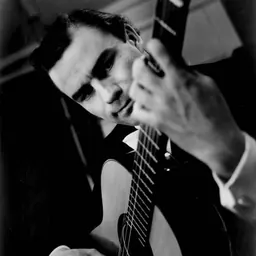
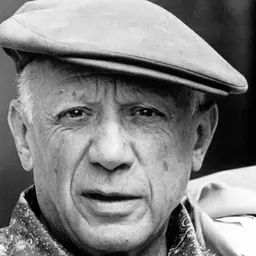
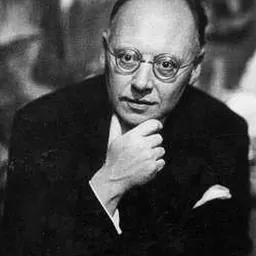
People in Alan Rawsthorne's life
Named in this biography and alive at the same time





Related people
Same field, nearest in time



Contemporaries
People whose lives overlapped Alan Rawsthorne's


Frequently asked questions
Who was Alan Rawsthorne?
British composer (1905-1971)
When was Alan Rawsthorne born?
Alan Rawsthorne was born on 2 May 1905 in Haslingden.
When did Alan Rawsthorne die?
Alan Rawsthorne died on 24 July 1971 in Cambridge.
What was Alan Rawsthorne's occupation?
Alan Rawsthorne was a composer, choreographer and film score composer.
What nationality was Alan Rawsthorne?
Alan Rawsthorne was British.
Sources & further reading
Cite this page
APA: Biography.guide. (2026). Alan Rawsthorne. https://biography.guide/alan-rawsthorne/
MLA: "Alan Rawsthorne." Biography.guide, https://biography.guide/alan-rawsthorne/.
Chicago: "Alan Rawsthorne." Biography.guide. https://biography.guide/alan-rawsthorne/.
Data last updated: 2026-09-20 · Spot an error? Report a correction.
Page generated 2026-09-27 05:04 UTC