
Alan Moncrieff
Moncrieff, Sir Alan Aird (1901–1971), paediatrician
About Alan Moncrieff
Lived 1901 – 1971 (aged 70). Alan Moncrieff was a British scientist and pediatrician.
Sir Alan Aird Moncrieff, (9 October 1901 – 24 July 1971) was a British paediatrician and professor emeritus at University of London. He was most notable for developing the first premature-baby unit in 1947. It was Moncrieff who recognised and developed the concept of daily parental visits to the ward, which he developed while at Great Ormond Street, well before the need for this became recognised, and with his ward sister, A M Walton, published an article on Hospital Visiting for Children in 1949.
Biography Moncrieff was born in East Cliff Manse, St Johns Wood Road, Bournemouth, the eldest surviving son of Rev. William Moncrieff, a Congregational Minister, and Isabella Masterson. After attending the local Council school, he received his early education at Caterham School
In 1928, Moncrieff was married to Honor Wedmore, and they had two sons and a daughter. His wife died in 1954, and in following year, he married Mary Katherine Wedmore. and the Hammersmith Hospital from 1935 to 1964. In 1934, he was appointed to the consultant staff of both the Middlesex Hospital and the Great Ormond Street Hospital as physician. All the appointments were interrupted by the World War II, when he worked at the Emergency Medical Service. at the University of London and Director of the institute, a position he held until 1964, which was based across the hospitals, Queen Elizabeth Hospital for Children, Hackney, the Royal Postgraduate Medical School, Hammersmith, and at Great Ormond Street.
The next few years were spent assisting in the organisation of child health services in Hertfordshire, where he lived, and in continuing his work on phenylketonuria, until he suffered a stroke in 1968 and had to drastically reduce his working habits.
External work During his long career, Moncrieff worked on several Home Office and Ministry of Health committees. One of the most prominent was the central training council in childcare. He worked in advisory capacity on the Ingleby committee for children and young people.
He has a position at the Medical Research Council, as an expert advisor, on the clinical research board. He acted on the expert advisory panel on maternal and child health panel. He worked on the Journal Publishing Subcommittee, becoming its chairman in 1950. He also served on the Journal Committee of the BMA, becoming it chairman in 1967. Diseases of children. Vol 1., 5th Edition by Alan A. Moncrieff; Philip Evans, 1953 Diseases of children. Vol 2., 5th Edition by Alan A. Moncrieff; Philip Evans. 1953 Progress in nursing; a survey of recent developments in medicine and surgery. Alan A. Moncrieff; Kathleen Audrey Barbara Fowler, 1954 The changing child., Alan A. Moncrieff 1956 Textbook on the nursing and diseases of sick children, for nurses Vol 1, by various authors. Ed. by A. P. Norman. 1966 Treatment of phenylketonuria : Report to the Medical Research Council of the conference on phenylketonuria. Alan A. Moncrieff; Medical Research Council. 1963
Awards
In 1934, he was elected to a Fellow of the Royal College of Physicians in 1934. In 1952, he was appointed a CBE and later Knighted in the 1964 Birthday Honours. He was made an honorary Fellow of the Royal College of Obstetricians and Gynaecologists in 1958. In 1968, he received a Légion d'honneur in 1958, reflecting on the critical collaboration he conducted in the international coordinated study on growth, with Professor Robert Debré and the Centre Internationale de l’Enfance on Paris. In 1952 he was Charles West lecturer at the Royal College of Physicians. In 1961 he was awarded the James Spence Gold Medal of Royal College of Paediatrics and Child Health, for developing the first premature-baby unit in 1947. In 1964 he was awarded the title of Professor Emeritus of the University of London.
Don’t just read it —
keep it.
Full-length biographies made to live with: read them, listen on the way to work, watch them tonight.
- E-book
- Audio
- Video
Instant download · yours to keep · every purchase keeps this site free
Important facts
People in Alan Moncrieff's life
Named in this biography and alive at the same time

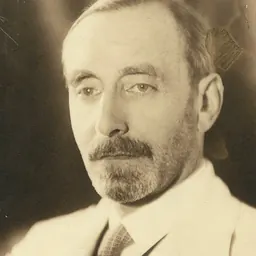


Related people
Same field, nearest in time

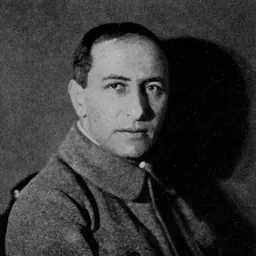
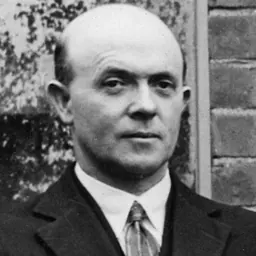
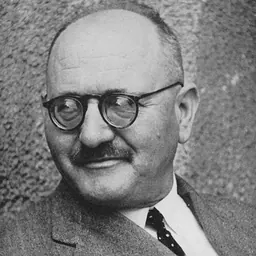

Contemporaries
People whose lives overlapped Alan Moncrieff's


Frequently asked questions
Who was Alan Moncrieff?
Moncrieff, Sir Alan Aird (1901–1971), paediatrician
When was Alan Moncrieff born?
Alan Moncrieff was born on 17 January 1901 in Bournemouth.
When did Alan Moncrieff die?
Alan Moncrieff died on 17 January 1971.
What was Alan Moncrieff's occupation?
Alan Moncrieff was a scientist and pediatrician.
What nationality was Alan Moncrieff?
Alan Moncrieff was British.
Sources & further reading
Cite this page
APA: Biography.guide. (2026). Alan Moncrieff. https://biography.guide/alan-moncrieff/
MLA: "Alan Moncrieff." Biography.guide, https://biography.guide/alan-moncrieff/.
Chicago: "Alan Moncrieff." Biography.guide. https://biography.guide/alan-moncrieff/.
Data last updated: 2026-09-20 · Spot an error? Report a correction.
Page generated 2026-09-27 05:28 UTC